
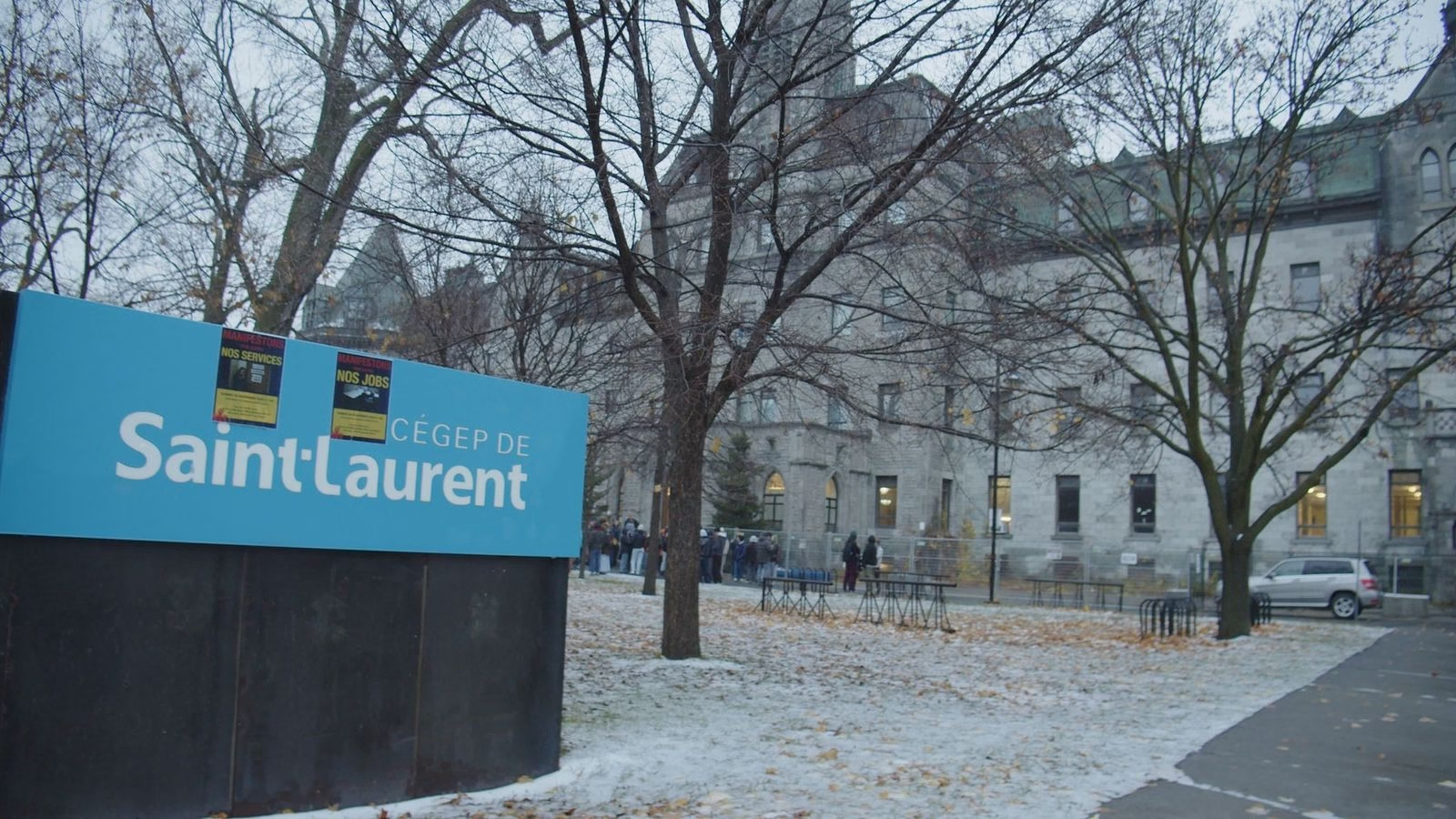
Classes were suspended at CEGEP St-Laurent on Friday, November 7 and Monday, November 10 when at least 100 students participated in a picket line called by the college’s student association.
Friday’s strike action was aimed at austerity measures enacted by the CAQ government targeting public education, while Monday’s action demanded the unionisation and salarisation of internships.
The North Star was present outside the CEGEP on the morning of November 10 as administrators counted the picketing students to see if classes would have to be cancelled. Nour El-Hage, a first-year student organiser, spoke with The North Star about the conditions leading to the strike:
“The CAQ government is implementing austerity measures in pretty much all public sectors. They are also enacting anti-union laws or drafting anti-union legislation. We are in a climate where the rights of students, the rights of workers, and the rights of the population to access services are being jeopardized. We simply want to challenge this and show our disagreement with the CAQ’s policies.”

Earlier this year, the CAQ announced budget cuts to CEGEPs totalling $151 million dollars. This move has been heavily criticized by students, workers, and the general public.
The students are demanding “an end to cuts and austerity measures, an end to the $151 million in education cuts,” explains El-Hage. “Our buildings are falling apart. We’re losing teachers. We’re losing programs. Those are our immediate demands. In the longer term, it’s clear that we must fight for affordable, free, and high-quality education.”
Annouk Bélanger, a member of the executive committee of Cégep Saint-Laurent’ student association, spoke about the beginnings of this new movement that hopes to build on the legacy of the 2012 carrés rouges student movement. The 2012 unlimited general strike in response to proposed tuition hikes became the largest and longest student strike in Canadian history. It contributed to the Liberal government’s dissolving of the national assembly and eventual defeat, and forced the overturning of the hikes by the incoming administration.
“We started creating a movement called the carrés bleus as a nod to the carrés rouges movement from back in 2012. And that’s how it began, with a small committee against the cuts. We held our first strike last year, and then we talked to UQAM (Université du Québec à Montréal), we talked to other CEGEPs, and we started organizing together to create a strike against austerity. Now, several CEGEPs and UQAM are with us. There’s a major movement underway that aims to expand and grow even larger,” she explained.

“The carrés rouges are a huge inspiration for the student movement. What’s interesting, though, is that we mostly remember the massive strike that lasted a very long time, which was unlimited. But it was necessary to have many smaller ones over the years, to create a movement, to create a symbol.”
The CAQ’s austerity measures have led to underfunding of infrastructure, facility maintenance, and resources. They also make cuts to the workforce that provides services to students, hiring freezes, and deteriorating wages and working conditions.
A new generation of student activism?
Bélanger spoke of the challenges that are inherent to student organizing that would allow for effective resistance to persistent government austerity across administrations:
“At CEGEP, we’re only here for two or three years. So we don’t have enough time to build something strong enough to last. That’s why we need people who are at the CEGEP, who know the place, who know the student body, who can help us build a stronger movement—people who will stay and teach those who come after us what we’ve done before. Every year it’s a huge task to start all over again.”
El-Hage focused on the links between the workers’ struggles and those of the students:
“As an association, we talk a lot with the teachers and the college’s inter-union committee. I think that’s our job, because it’s important to organize ourselves and build connections between the students and the staff who provide us with our services, who provide us with this education.”
“I also think it’s important to build connections between ourselves and the staff, and organizations like Workers’ Alliance [which is also here this morning]. Because at the end of the day, the students who are feeling the effects of these cuts, the students who are receiving a poorer education because of these cuts, they become workers afterward. We have to fight for good measures in the workplace.”
Be part of the conversation!
Only subscribers can comment. Subscribe to The North Star to join the conversation under our articles with our journalists and fellow community members. If you’re already subscribed, log in.