
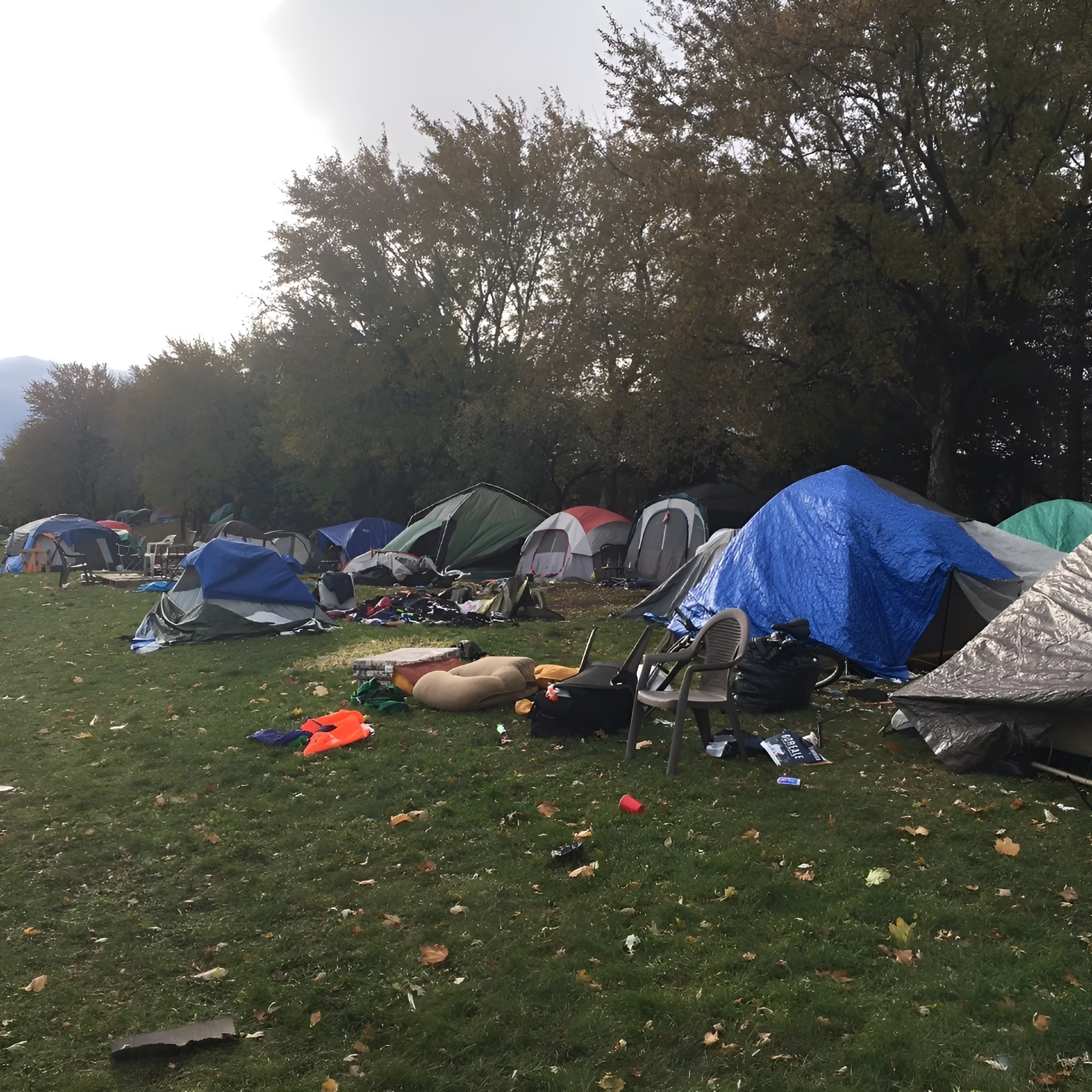
“Blue-collar workers destroy a tolerated encampment without notice,” La Presse headlined last Tuesday. The story relayed the version of the City, community groups and the people affected… but not that of the city workers themselves. A misleading angle that points to the wrong culprits. The North Star spoke with activists opposing dismantlements and with the blue-collar union to understand what really happened.
Guillaume Dupont-Croteau, from Montréal’s blue-collar union (CUPE Local 301), is still stunned. “Encampment dismantling is something we find extremely deplorable.”
On the evening of November 24, municipal employees threw out the belongings of people living in tents on a public works lot in Montréal-Nord. The operation wasn’t planned and caught everyone off guard. The city was supposed to remove another “pile” of objects located a few meters away. This intervention had been discussed in advance with the people involved.
The problem is that La Presse‘s article implied the workers were to blame. Montréal-Nord borough mayor Christine Black repeated the same line. She shifted responsibility onto her employees and announced “awareness activities” and an investigation.
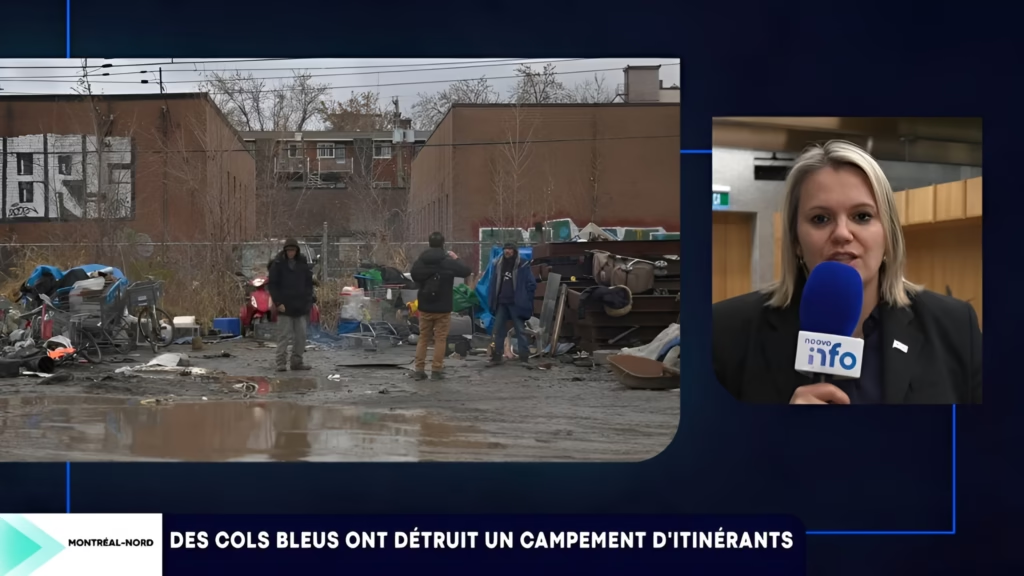
But according to Dupont-Croteau, “a foreman told them: ‘pick up this pile of belongings,’ and they did.” The responsibility lies squarely with the city, he says, since the supervisor was acting on its behalf. Blue-collar workers never intervene in these situations without a clear directive.
“What the media portrayed was quite serious,” he adds. “The headline was more than accusatory. La Presse should have contacted us before publishing the article, which they didn’t. It shows that, unfortunately, some media are much closer to management than to the people or to unions.”
The next day, the union contacted the organization supporting the affected people and offered to cover their accommodation costs while a longer-term solution is found. “To us, it’s the least we can do,” says the CUPE 301 secretary-archivist.
A major bureaucracy problem
Dupont-Croteau denounces a hierarchy that has become so bloated that those making decisions “don’t know the field.” With the rise in the number of managers, he says, they should at least have clear directives, as it sometimes happens that a manager “supervises only two people.”
But “instead of investing in services for the population and addressing real problems, new management positions and working committees are created.” And instead of relying on workers and community groups, who understand their jobs and the issues on the ground, decisions come from above, stripped of context.
“The management problem in the City of Montréal is everywhere,” says the secretary-archivist. Workers are often blindsided, to the point of witnessing “truly absurd situations,” which fuels growing discouragement in the face of poor decisions.
Even so, blue-collar workers don’t want to stay passive. They are calling for clear procedures to avoid repeating such mistakes and are debating internally how to respond.
Dupont-Croteau notes that “some are for it, others are against,” but that dismantlements “are in no way humane” and can be carried out with varying degrees of brutality. Many fear that if they refuse to do them and the job is handed to private contractors, the profit motive will push them to cut corners, making dismantlements even worse.
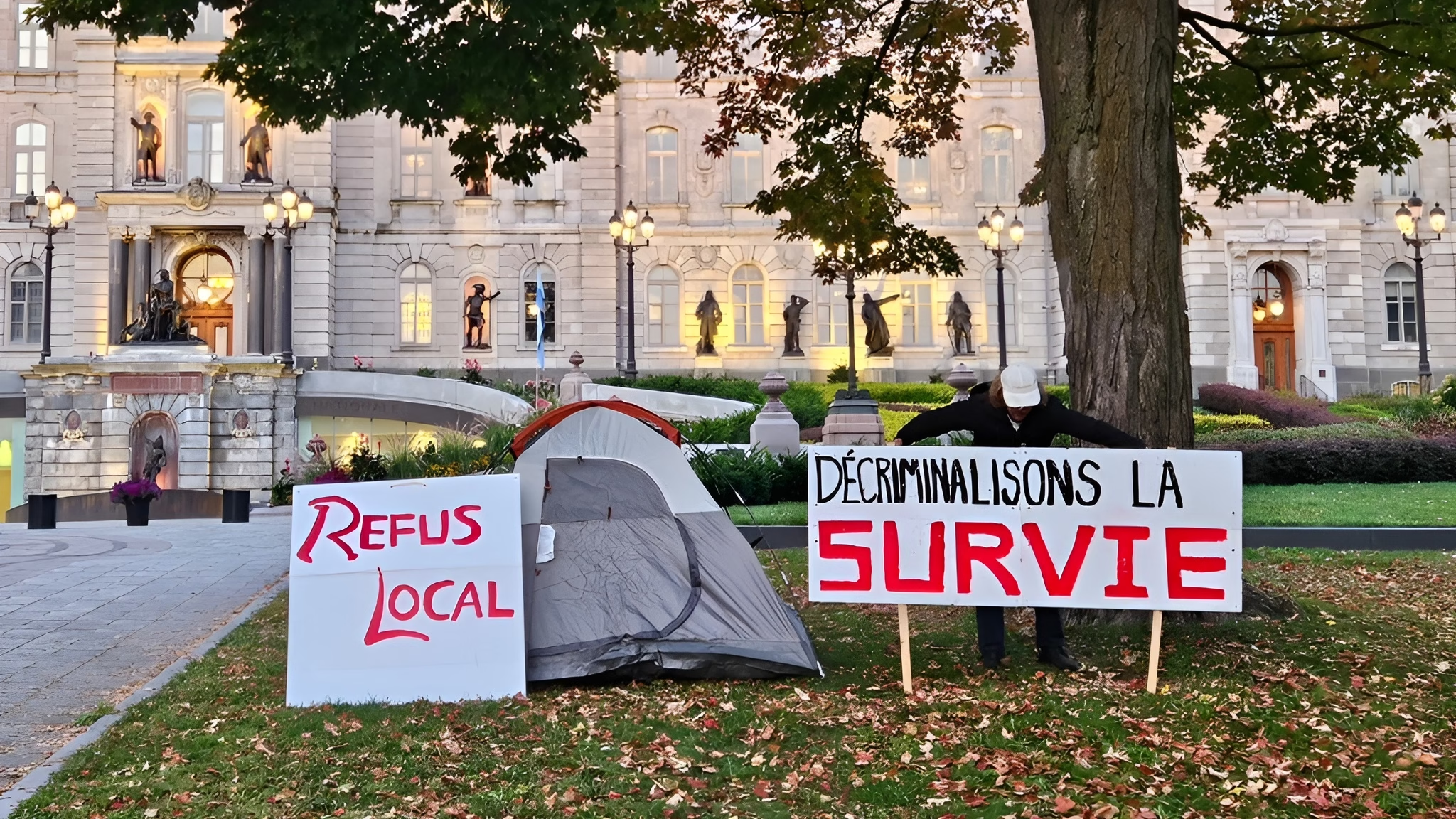
For his part, Léandre Plouffe, organizer and member of the Refus Local collective, says he understands the constraints blue-collar workers face. “The decision [to dismantle] doesn’t come from them.” But he hopes for an alliance between municipal workers and activists, arguing that dismantlements perpetuate a system that “tramples on rights.” His collective has published an open letter urging them to mobilize.
He says most people who end up on the street do so because they can no longer “fatten their landlord’s pockets,” then are criminalized instead of helped. He accuses “the state, major media, bosses and landlords” of targeting the poorest to “distract and divide us.”
Plouffe believes workers have “a clear responsibility.” Refusing to dismantle would be a strong symbolic gesture, showing that “these practices are no longer acceptable.” He stresses, however, that this isn’t about individual action, but about thinking together about “how blue-collar workers can get organized” to apply pressure and put an end to these operations.
Finally, he notes that encampments, despite their problems, offer a modicum of stability. Dismantlements wipe out what little structure people have left, without providing any viable alternative. With shelters full, expelled in the morning and pushed out of public spaces, many have nowhere else to go, he says, except the encampments—a place where they at least find a bit more dignity.
Be part of the conversation!
Only subscribers can comment. Subscribe to The North Star to join the conversation under our articles with our journalists and fellow community members. If you’re already subscribed, log in.