
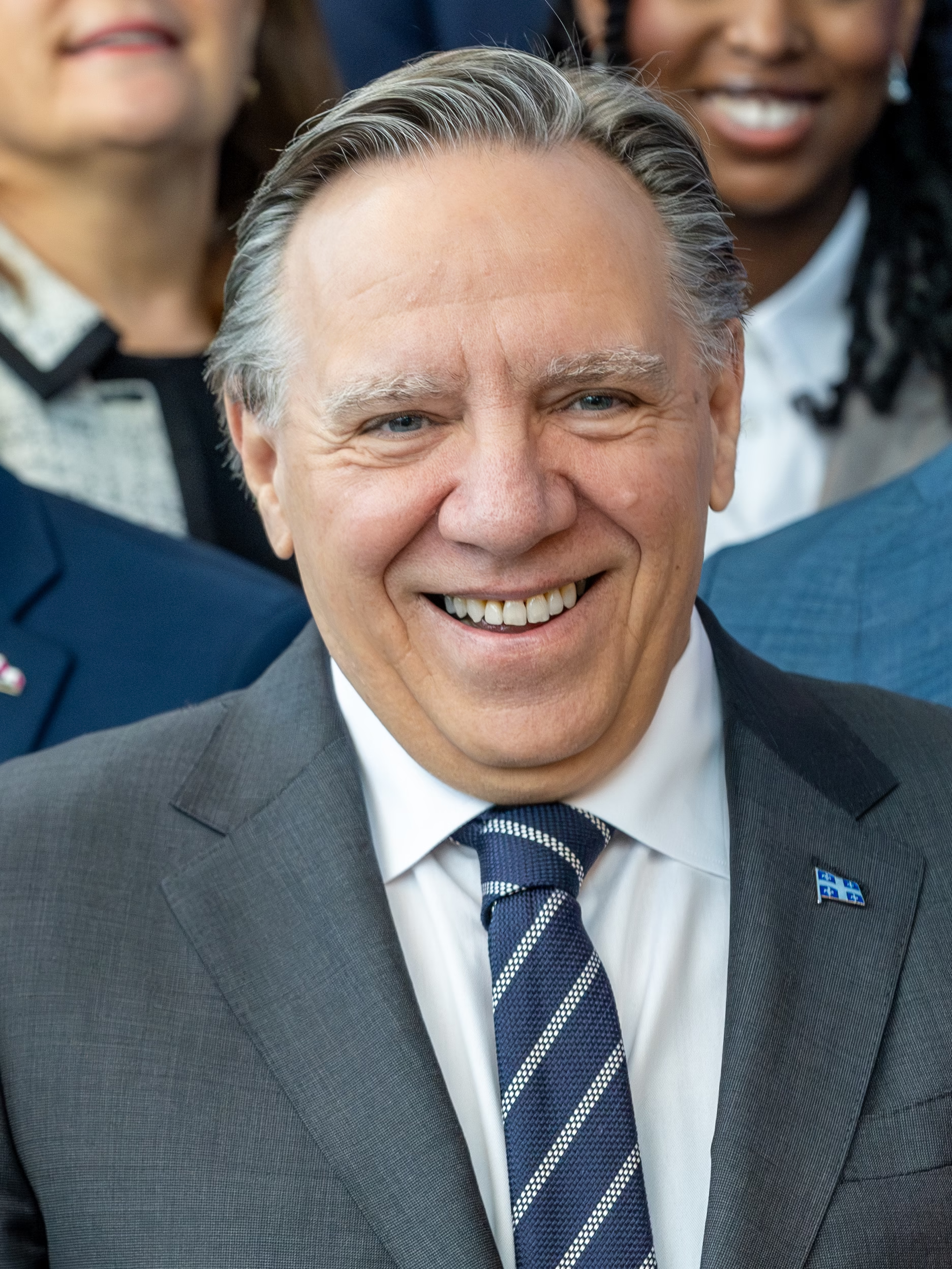
François Legault has announced that he will step down as Premier of Quebec. This sudden departure appears to be a political maneuver to try to save his party, which is struggling in the polls. He leaves behind a record marked by costly failures for the state finances and palpable anger among workers and users of public services. The Coalition Avenir Québec (CAQ) now hopes to relaunch itself with a new face.
The premier will remain in office until a new party leader is elected, a process which should be completed in March. He has stated that he is proud of his “aggressive strategy to attract much more business investment” and claims to have increased Quebec’s wealth.
Legault’s resignation is reminiscent of the federal Liberals’ strategy in the last election. They had bet on former central banker Mark Carney. His campaign promised a strong Canada, capable of withstanding US tariffs and the political instability associated with Donald Trump’s return. This strategy had allowed them to make a spectacular comeback in the polls.
The CAQ would undoubtedly like to see a similar rebound, but it’s a risky bet. Generally speaking, when Quebecers turn to nationalism, they tend to choose the Parti Québécois. Dissatisfied federalist voters could also turn to the Conservative Party. The CAQ thus finds itself caught in a vise, in fourth place, at risk of losing all its seats after the next election. It now hopes to take advantage of the Quebec Liberal Party’s corruption scandals to limit the damage.
François Legault’s time in power will be marked by several questionable investments. The Northvolt venture, a heavily subsidized battery factory, led to an explosive bankruptcy in 2025. The bill for the public would be close to $1 billion, not counting all the other failures of the CAQ’s investments in the battery industry.
The SAAQclic system fiasco also cost nearly a billion. Legault, like all his colleagues, claims he knew nothing about the astronomical cost overruns. Surprising the people of Quebec, Legault invested $100 million in public funds in the Flying Whales airship company, despite the reservations of his own technical advisors.
Healthcare was another nail in the premier’s coffin. Bill 15, which centralized the network under a mega-agency, was passed using the “bâillon” procedure, which many consider highly undemocratic. Unions denounced the stifling bureaucracy, which they said was out of touch with the realities on the ground.
This style of management has often been promoted by the CAQ. The government has increased the number of appointments of relatives and “friends,” with nearly 30 partisan appointments by the end of 2025. The Legault government has also spent hundreds of millions on American consulting firms, which often acted as a shadow government.
Its management of the pandemic has been criticized for its authoritarianism and lack of transparency. In terms of housing, his government has been described as a “government of landlords,” accused of protecting speculators at the expense of the right to housing.

It has also been described as a “bosses’ government” for its numerous labour reform projects. It has restricted the right to strike, made the construction industry more “flexible” at the expense of its workers, and now wants to undermine the ability of unions to take political action with its Bill 3.
Anger was widespread during the 2023 common front movement. The 30% increase in the salaries of MNAs was met with incomprehension, while the government offered workers minimal wage increases in the wake of the inflation crisis. That’s when the tide began to turn and the CAQ lost ground. Today, the polls are far from flattering for the party.
François Legault’s record is being criticized from all sides, and popular mistrust seems well established. It remains to be seen whether CAQ figures like Simon Jolin-Barette or Sonia Lebel will be able to turn the situation around… although this remains unlikely.
Be part of the conversation!
Only subscribers can comment. Subscribe to The North Star to join the conversation under our articles with our journalists and fellow community members. If you’re already subscribed, log in.