
In 2025, British Columbia’s working class faced attacks from employers, governments that prioritize corporate interests. The year also brought increased policing, unequal housing laws, and a growing cost of living crisis. Here are some of the events The North Star found most striking this year.
Historic public sector strike
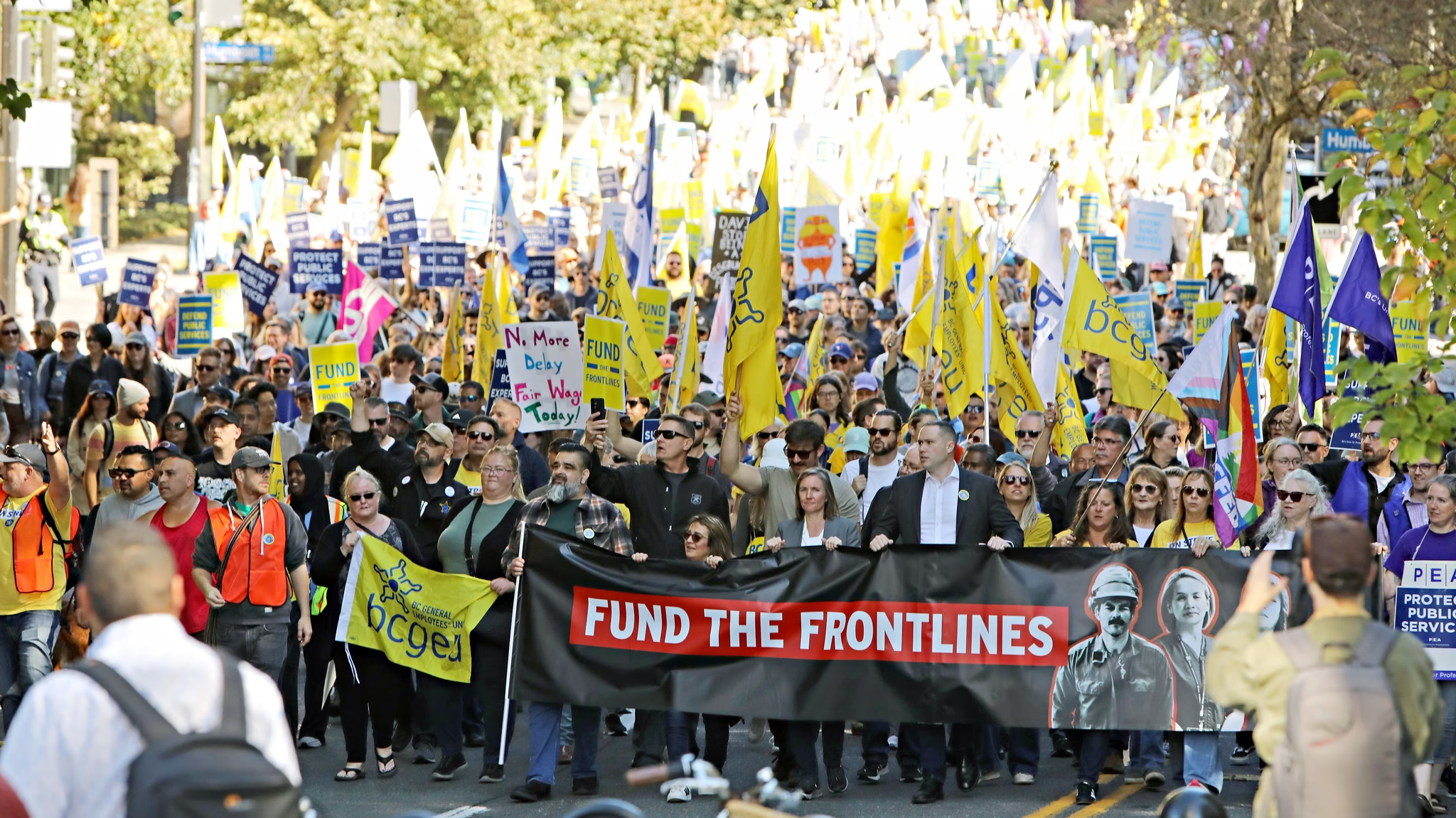
David Eby’s New Democratic Party faced off against over 34,000 public sector workers represented by the B.C. General Employees Union (BCGEU) in an historic eight-week-long strike. The government had refused to increase wages and improve working conditions in Canada’s most expensive province.
Average asking rents in Metro Vancouver and Greater Victoria, central hubs of the government, are ranked first- and third-highest in the country. As the cost of a two-bedroom apartment at the beginning of 2025 was $3,170 and $2,680 per month respectively, it’s no shock that many frontline workers in these regions report needing the food bank or a second job to support their families.
While some progress was made in the collective agreement that was ratified after months of difficult job actions, wage adjustments for many public sector workers won’t keep up with grocery prices inflating faster than the 3% yearly increases. The B.C. NDP’s misleading public statements, lowball offers, and weeks of refusing to negotiate with its own workers has many calling for a break with the party.

Big win against a giant
In a major turn of events, workers of the YVR2 Amazon Fulfillment Centre in Delta won a union certification after a long and drawn-out case in front of the BC Labour Relations Board (BCLRB).
The case was brought to the BCLRB after applying for union certification in 2024. Unifor, believing they had reached the minimum threshold of 55% signed union cards, applied to unionize the warehouse but retracted their application last minute. It appeared that Amazon had hired a large number of new workers in order to offset their numbers.
In July, the BCLRB ruled in favour of the workers, stating that Amazon had engaged in a “pervasive anti-union campaign” that breached the Labour Code.
If Delta Amazon workers win a contract with the e-commerce giant, they would be the first union North America to do so. It remains to be seen if Amazon will retaliate, as it did in Quebec, where the company shuttered all of its warehouses, leaving 4,500 workers out of a job.
SFU cleaning workers fight for a more democratic union after worker’s death
In July of this year, a cleaning worker, Kulbir Kaila, died during her shift at Simon Fraser University.
Prior to Kulbir’s death, she and her coworkers had reported their gruelling and unsafe working conditions to both their union, CUPE 3338, and their employer, BEST Services Pro. Their concerns were dismissed as stories fabricated to create “drama.”
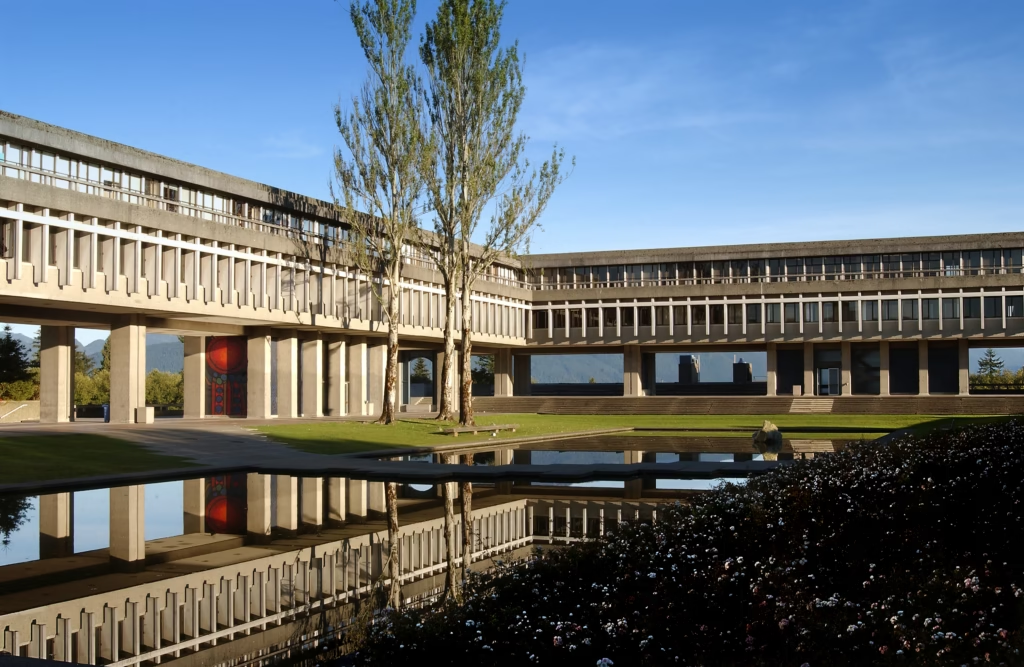
In response, cleaning workers attempted to nominate themselves for union positions during an online union general meeting, but were blocked from doing so by their own union leadership.
Some of Kulbir’s coworkers told The North Star about horrible working conditions. These included racial abuse from management, constant surveillance by supervisors, and overwork being normalized—if not necessary—to avoid being fired.
In light of these worsening conditions, SFU workers organized themselves and fought through various hurdles to get themselves on the ballot for elected leadership within their union.
Cleaning workers at SFU say that they want to rebuild CUPE 3338 so that workers are able to demand fair and safe work from their bosses through a strong and democratic union.
Municipal

Early in the year, Ken Sim’s ABC government announced it would inject at least $5 million into the Vancouver Police. It also launched the new Task Force Barrage, with the stated goal of fighting organized crime in the Downtown Eastside.
Garth Mullens, a member of the Vancouver Area Network of Drug Users and host of the Crackdown podcast, spoke to The North Star about the new task force. He said the kingpins and big players in organized crime it was meant to target are not present on the Downtown Eastside. He says that the increase in policing was all too reminiscent of the “old days of the drug war.”
Members of the community affected by issues such as substance use, criminalization, incarceration, poverty, homelessness, and its policing, felt this was just another wave of repression against them while having little effect on those profiting from the drug trade.
Housing
In May, The North Star spoke to Abby Leung, a tenant facing an eviction notice citing “landlord use” after she refused an above-limit rent increase of 42%. The landlord use policy allows owners to end any tenancy contract on the condition that they or a member of their family desires, in “good faith” to occupy the property.
Leung organized with the Vancouver Tenants Union to try to combat the eviction, taking the case to the Residential Tenancy Branch, where she was ultimately defeated.
Tragedy at Lapu-Lapu Day
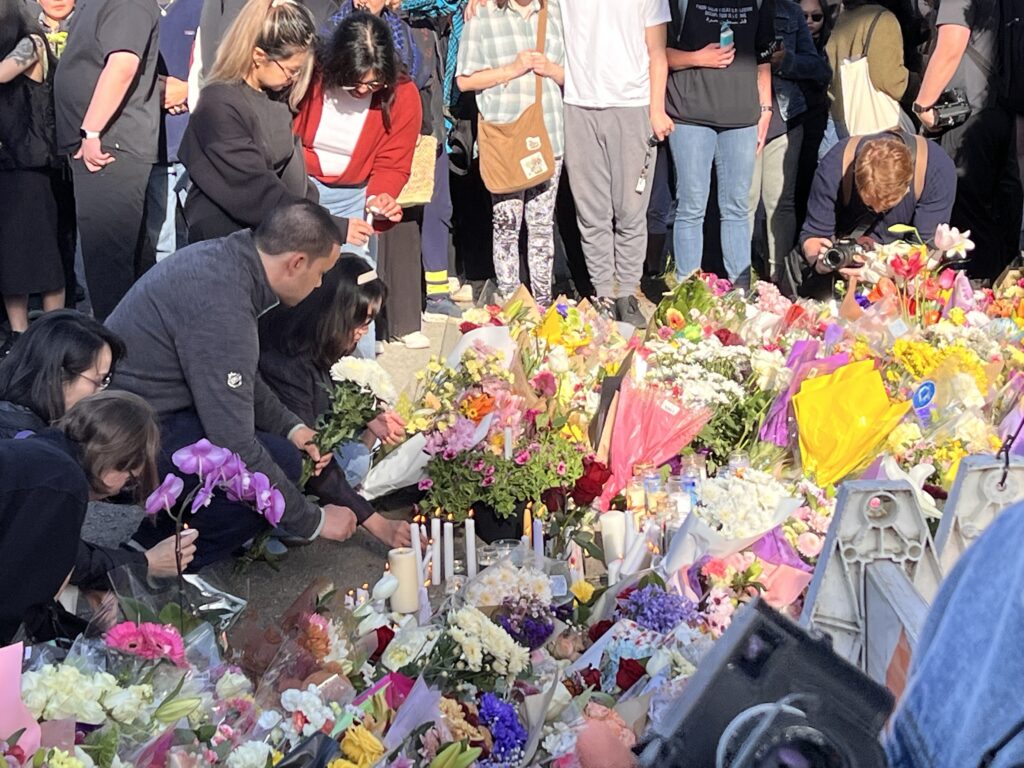
On April 26, 2025, a vehicle rammed through the Lapu Lapu Day block party—a festival honouring the legacy of Lapu-Lapu, a national hero of the Philippines—leaving 11 people dead and dozens injured.
Kevin Quicho, the chairperson of Anakbayan BC, told The North Star that local politicians were using the Lapu-Lapu Day vigils to bolster their own political agendas. Quicho also connected the repression that Anakbayan BC members face at the hands of the VPD to the repression faced by activists in the Philippines.
Filipino youth call for systemic change
In October, Tama Na BC, a coalition of local Filipino organizations, was barred from delivering a letter to the Philippine Consulate in Vancouver. The letter expressed dissatisfaction amongst local Filipinos with the corruption that resulted in widespread destruction after a super typhoon hit various parts of the Philippines.
The North Star spoke to Noa Sison, from Bayan BC, who explained that the corruption happening in the Philippines is a symptom of a deeper issue. The various problems that underlie Filipino society force large swathes of Filipinos to migrate abroad, where the promise of a better life is often shattered by repressive government legislation.
For example, the House of Commons recently approved Bill C-12, a revised version of Bill C-2, which Sison says would leave immigrating Filipinos with fewer employment opportunities and lower wages.
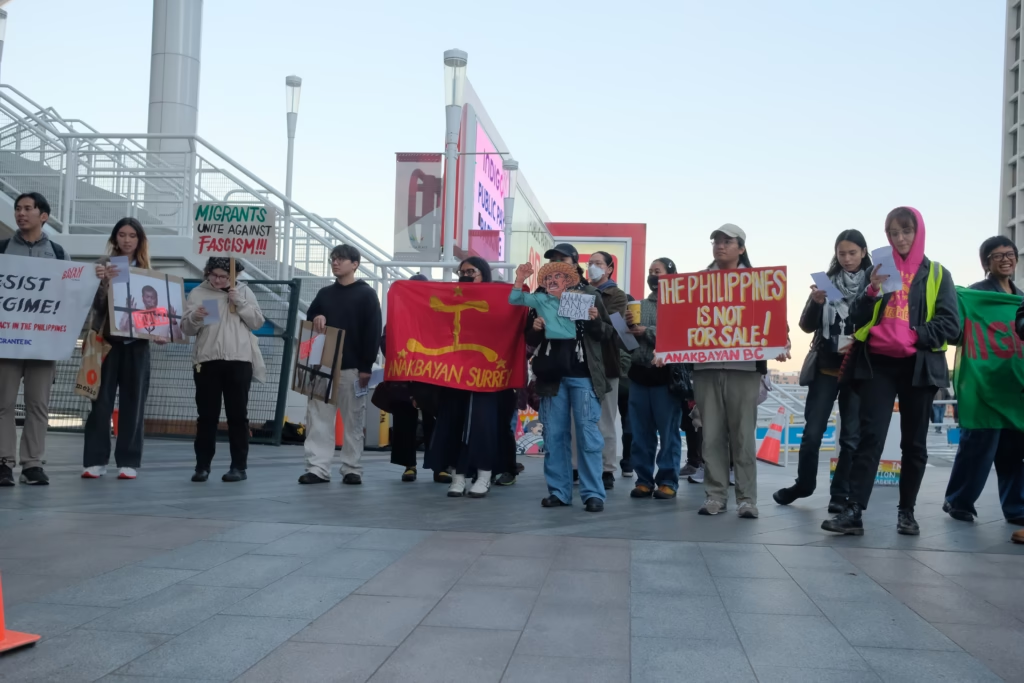
Within both of these events, however, both Quicho and Sison connected the struggles of wage stagnation, cost of living increases, inflation, and political lip service that Filipino working-class people face to the struggles of Canadian working-class people.
“Philippines, Canada, we can see basically a shared interest in the working class… and we can see a need for a change in the system that does uplift the working class,” said Sison.
Profiteering from genocide and support for ethnic cleansing
Reports released since the beginning of the year have revealed the key role of Canadian arms manufacturers in the ongoing genocide in Palestine. A factory in Delta, B.C. owned by Asco Aerospace is directly implicated in the massacres through the provision of wing bulkheads for the fleet of F-35 fighter jets that Israel has continuously used to bomb civilian targets since 2021.
Win for pro-Palestine activism in Canada
In the fight against these injustices here in Canada, a small but meaningful victory was won with a legal ruling in favour of a Langara College instructor after she was placed on leave and later fired for pro-Palestine political speech.
Dr. Natalie Knight was officially reinstated in November after the arbitrator’s conclusion that the college failed to “strike a proportionate balance” between its legal obligations, the facts, and Charter protections.
In an exclusive interview with The North Star, Dr. Knight said: “I hope that the outcome of this case encourages others to stand their ground, or step forward if they haven’t already, and stand alongside Palestinians and all exploited and oppressed people around the world.”
Be part of the conversation!
Only subscribers can comment. Subscribe to The North Star to join the conversation under our articles with our journalists and fellow community members. If you’re already subscribed, log in.