
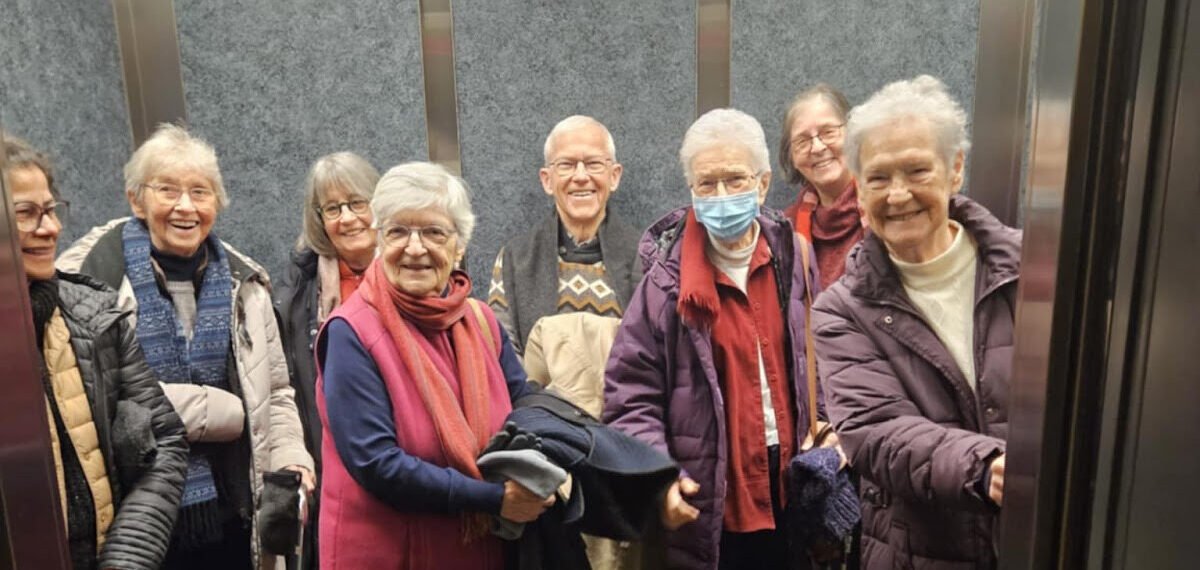
They will not give up. Nearly four years to the day after receiving an eviction notice in January 2022, the residents of Résidence Mont-Carmel are continuing their legal battle against their landlord. The fifth year of the struggle is beginning in a context where the issues go far beyond simply rent: it is about protecting a living environment for seniors and ensuring that their fundamental rights are respected.
On January 29, 2026, at 9:30 a.m., Room 13.01 of the Montreal Courthouse was packed for a crucial hearing before the Court of Quebec. The central question: can the 59 residents of Mont-Carmel, a private seniors’ residence (RPA) in downtown Montreal, claim financial compensation and a rent reduction before the Administrative Housing Tribunal (TAL)? The owner, Henry Zavriyev, and his real estate group Leyad, are also contesting a conviction for contempt of court before the Quebec Court of Appeal.
The tension was evident on the faces of the residents, accompanied by relatives, union members, and a former nursing assistant from the residence who came to show her solidarity.
Mr. Zavriyev’s lawyer, Éric Bédard, argued for the suspension of the case, saying that the two cases involved the same facts and that the “principles of judicial hierarchy and consistency” had to be respected. He downplayed the harm suffered by the residents, referring to it instead as “inconvenience.”
For his part, the residents’ lawyer, Julien Delangie, insisted that the cases be dealt with separately so that the seniors could obtain monetary compensation for the stress and loss of services they had suffered since the residence was bought out in December 2021.
“It goes without saying that the passage of time leads to departures and, unfortunately, also to deaths,” he pointed out. “Beyond the simple issue of monetary compensation and individual requests for specific orders, what is at stake is essentially the destruction of a living environment.”
This urgency has also been recognized by the Court itself. In a decision cited by the Sauvons le Mont-Carmel committee, the court explicitly asks: “Are the residents right in claiming that their right to enjoy the services they are demanding in kind and to be compensated during their lifetime is jeopardized by the suspension?”
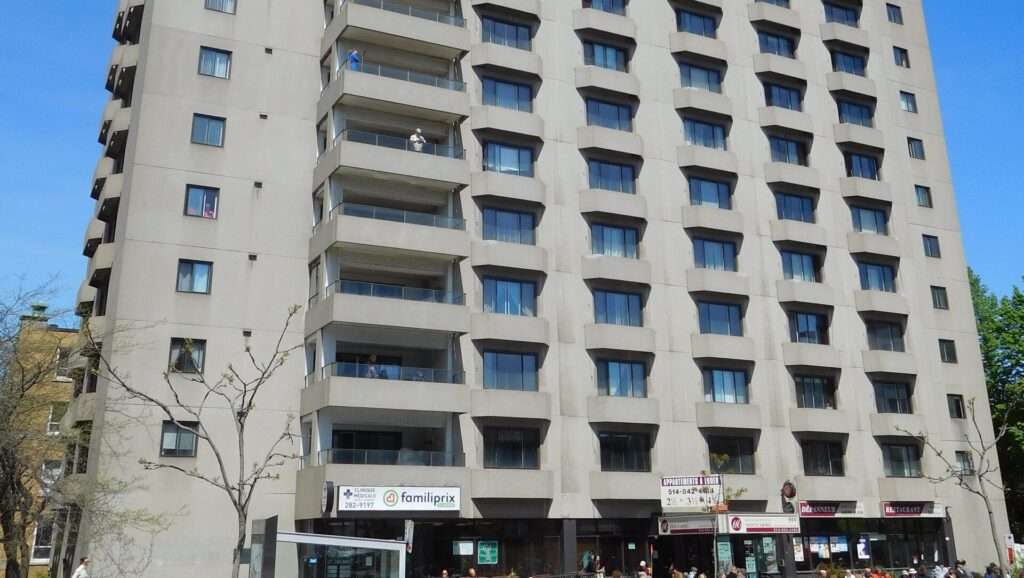
The building housing the RPA is owned by the limited partnership 955 René-Lévesque Est S.E.C., controlled by the Leyad group and headed by Henry Zavriyev. At the time of purchase, Zavriyev assured that he would maintain the RPA status and continuity of services.
A few weeks later, at the end of January 2022, residents received an eviction notice delivered by bailiff at 8 a.m., informing them of the withdrawal of services and a rent increase, thus breaking the commitments made. The planned measures included the closure of the reception area, nursing care, common areas, and the dismissal of staff.
In April 2022, 53 residents took the case to Superior Court to challenge the eviction notices and enforce the clause in the sales contract stipulating that the RPA status be maintained. They won their case, forcing the owner to maintain services and suspend the conversion of the building.
Despite this victory, the fight continued: Mr. Zavriyev was found guilty of contempt of court in May 2024 and ordered to pay $216,000 to the consolidated fund of the State, a penalty whose payment has been suspended due to his appeal.
A war of attrition
Constance Vaudrin, a member of the Sauvons le Mont-Carmel committee, speaks of a veritable “war of attrition.” “They’re dragging it out, our numbers are dwindling, and we may all be gone by the time it’s over.”
Since the beginning of the struggle, nearly 71 residents have left or plan to leave their homes. Those who remain, however, continue to organize. Every Wednesday, from 3 to 4 p.m., they meet in the “friendship lounge,” a space they managed to regain by putting pressure on management. When this lounge was condemned, they squatted in a vacant apartment on the ground floor to hold their meetings.
The residents also pooled their money to support those who could not afford the $200 required to file a case with the TAL. Open letters, a petition with more than 3,600 signatures, and participation in numerous public events also marked this mobilization.
Their daily lives have been profoundly disrupted: restricted access to common areas, furniture removed, carpets torn up, library confiscated, board games destroyed, services interrupted, intercom cut off, closure of the building’s restaurant, convenience store, and hair salon, constant noise, and increased feelings of insecurity.
Of the initial 216 units, only 45 residents retain RPA status and receive services. Other seniors have moved in, paying higher rent and without access to RPA services. The residents fighting for their rights still include them in their activities and mobilizations, strengthening their core group.
This case highlights a structural problem: the legal vacuum surrounding RPAs in Quebec. According to the Quebec Association of Public and Parapublic Sector Retirees, 88 RPAs closed between 2022 and 2023, resulting in the eviction of more than 2,500 seniors. Real estate speculation, encouraged by developers such as Zavriyev, is transforming living environments for seniors, who are insufficiently protected by the law, into more profitable housing, to the detriment of the most vulnerable.
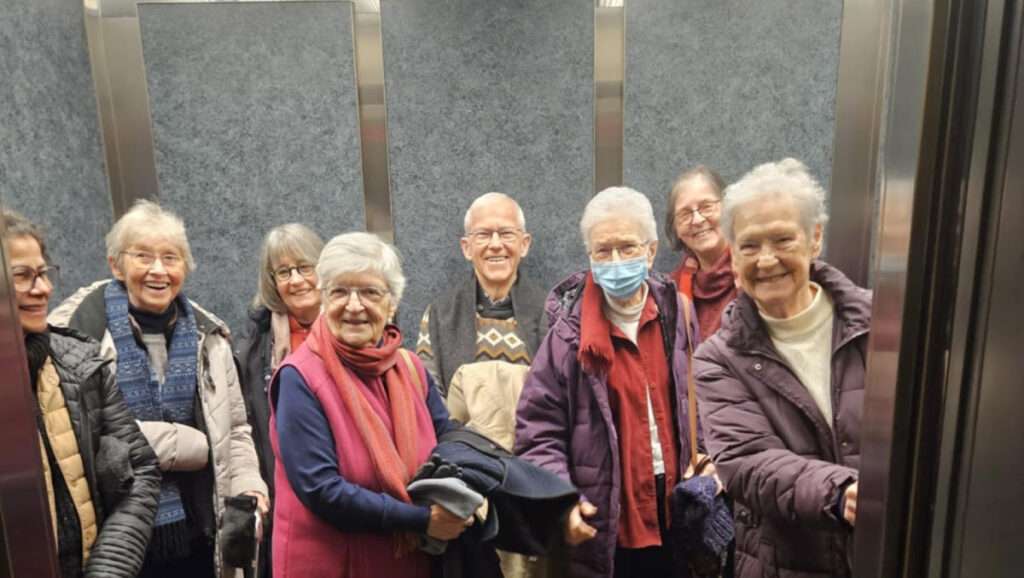
For the residents of Mont-Carmel, every legal victory, even a partial one, is a step toward the recognition of their rights. The safeguard order has been renewed three times, allowing the RPA status to be maintained until 2027.
The City has also registered its right of first refusal on the building in the event of a sale, although this does not change much. The battle therefore continues, particularly before the TAL, for damages and oversight of the actual maintenance of services.
As expected, the Court of Quebec has not yet ruled. It has three months from February 12 to render its decision, i.e., until June 12, while the parties have 15 days to file additional observations or documents.
The residents remain hopeful and expect a quick decision. They are seeking at least $25,000 per person and recognition of their right to live in an RPA that offers safe and appropriate services. Their fight goes beyond their immediate situation: according to them, it concerns the future of RPAs and the collective protection of seniors in Quebec.
Can the government intervene? “The government should, but it’s doing nothing. We met with the Minister of Housing and the Minister of Health: empty words,” sums up Marie-Paule Lebel, also a member of the Sauvons le Mont-Carmel committee.
According to her, Minister Bélanger essentially replied that as long as the case remains in court, the government cannot act. “In the meantime, legislation that truly protects RPAs: nothing on the books ”
“The government may fall before we do,” she concludes with a smile. Four years of struggle have already demonstrated their resilience and fighting spirit. The residents of Mont-Carmel do not intend to give up: they will continue to defend their living environment, their rights, and their dignity, while remaining involved in other struggles.
Be part of the conversation!
Only subscribers can comment. Subscribe to The North Star to join the conversation under our articles with our journalists and fellow community members. If you’re already subscribed, log in.