
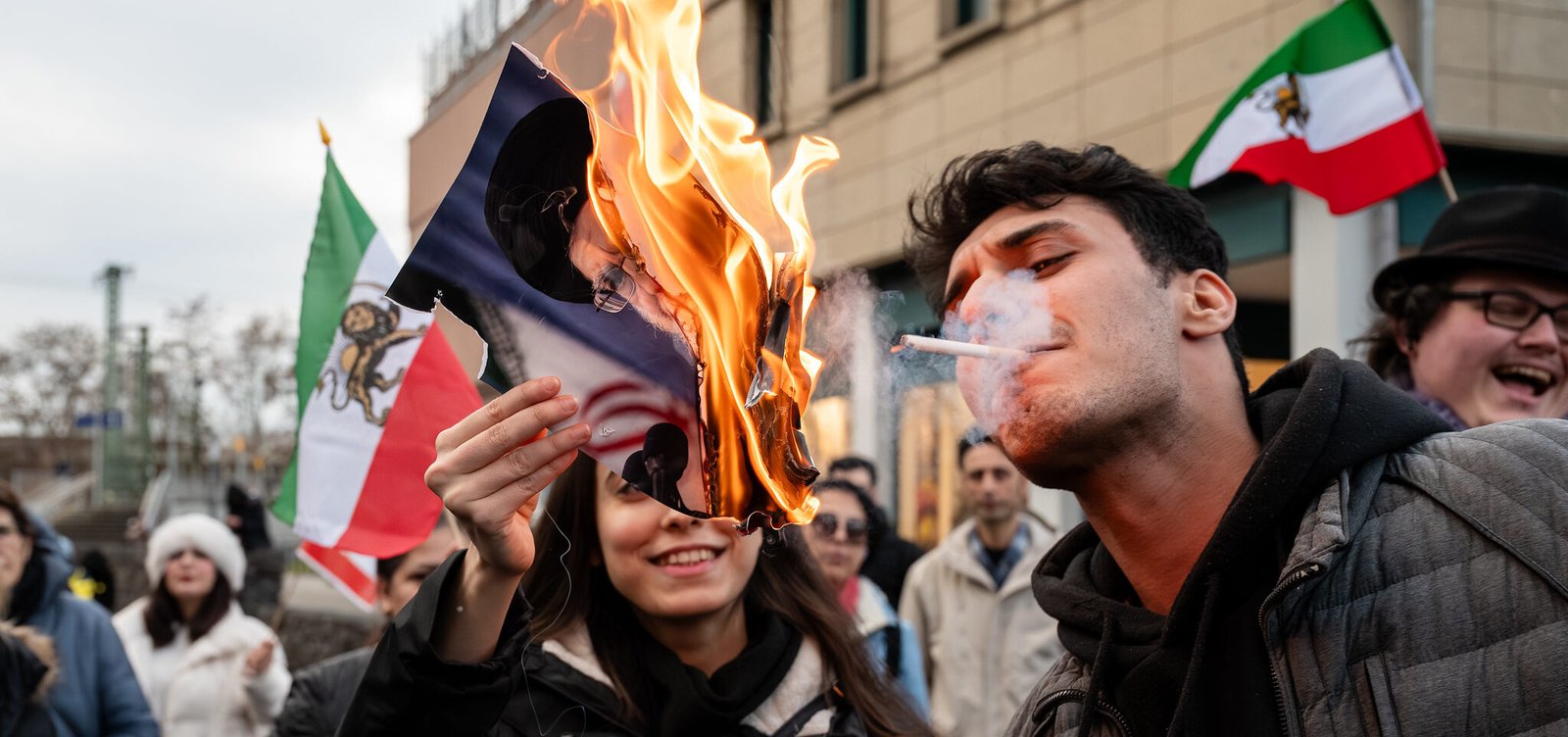
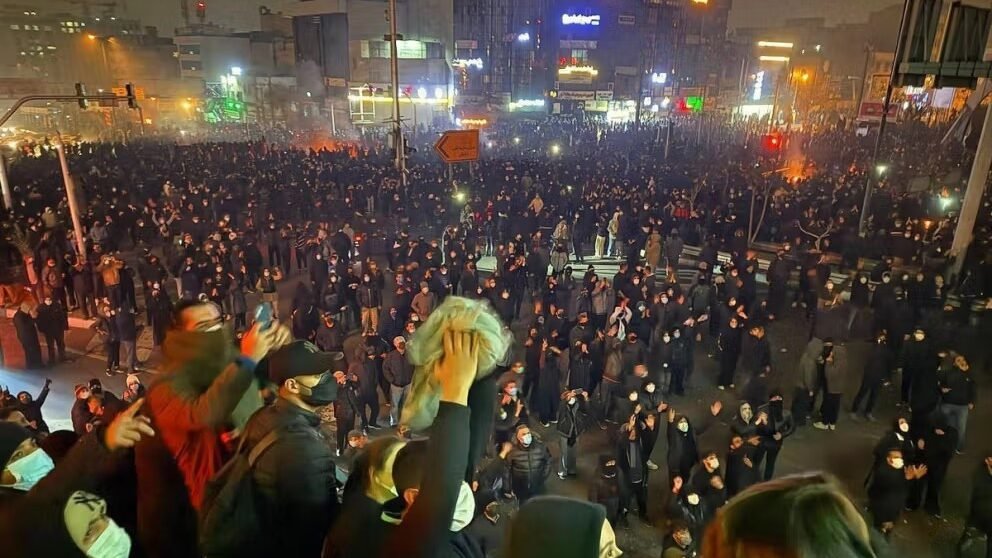
The start of the new year was marked by nearly three weeks of large-scale protests in Iran. Possibly hundreds of thousands of people took to the streets, calling for deep change in their country. Anger has been fueled by enormous economic pressure and repeated crises, but also by widespread corruption and decades of strict religious rule. Together, these grievances have driven what many describe as the largest mass demonstrations since the 1979 revolution that overthrew the Pahlavi monarchy and established the current Islamic Republic of Iran (IR).
To get insight on the context behind the protests, The North Star spoke with Amir Azizafshari, a graduate of the Imam Ali High School in Iran and member of the Iranian-Canadian diaspora. Azizafshari relocated to Canada eight years ago.
Azizafshari says that many people in Iran support regime change. He points to decades of worsening living conditions, combined with what he describes as an anti-regime propaganda campaign spread through different forms of media.
Between foreign intervention and state repression
During the last several weeks, the protests, the thousands of death and the government’s massive crackdown have caught the world’s attention. The demonstrations began on 28 December 2025, after a sharp collapse of Iran’s currency, amid soaring inflation, state mismanagement and worsening living conditions. They started with shopkeepers in Tehran’s Grand Bazaar closing their shops, before quickly spreading to street protests across cities and towns nationwide.
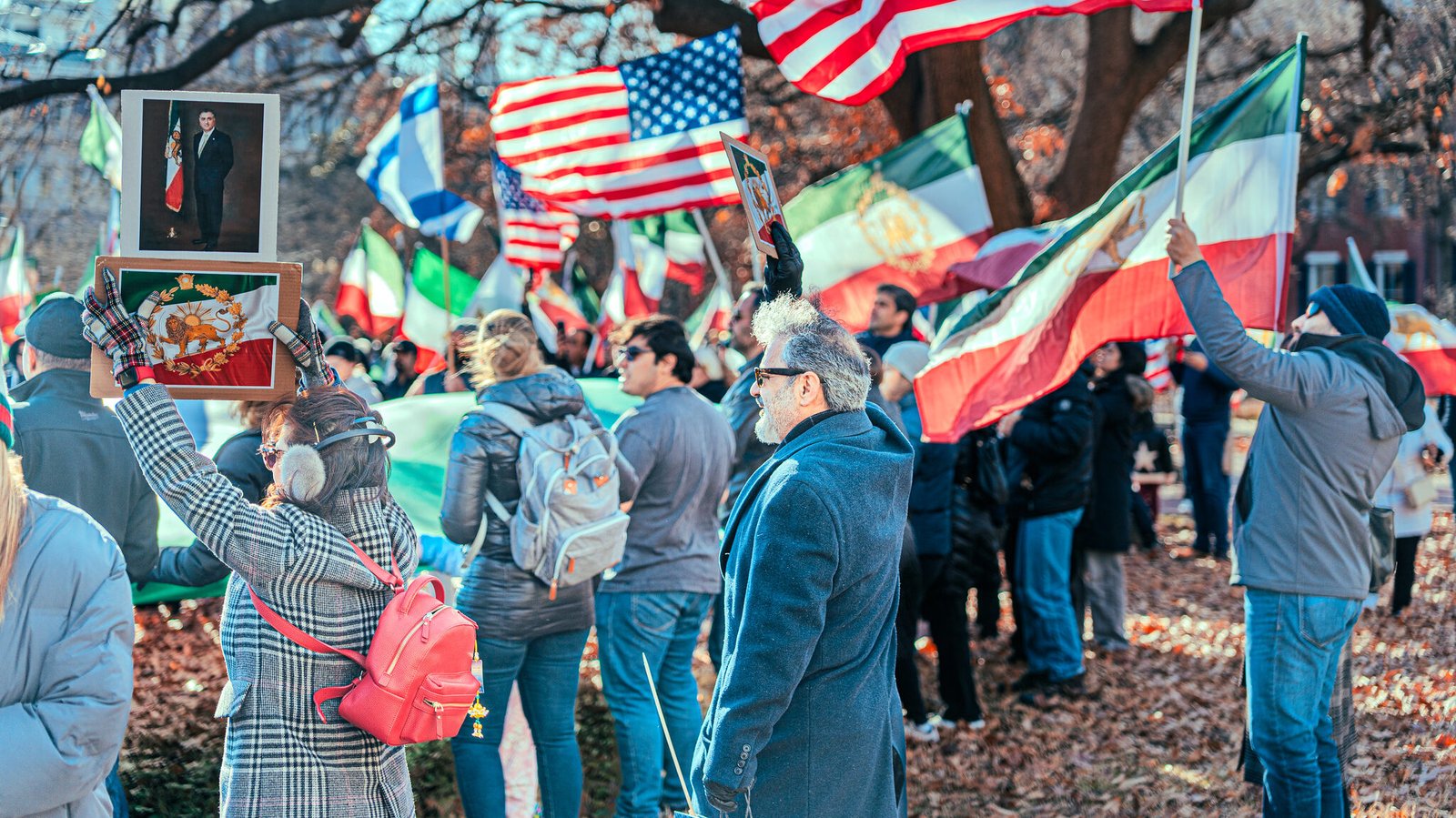
In Western countries, media coverage has often framed protestors in Iran and abroad as being in favour of foreign intervention. These calls are mainly directed at the US and its allies, who have a long history of violating Iran’s sovereignty through economic sanctions, attempts at invasion and the overthrowing of the IR.
“The U.S. and their allies have used this crisis and the contradictions within Iran to agitate the masses further towards [an imperialist] agenda due to Iran being a significant opposition to their goals in the region,” says Azizafshari.
At the same time, the IR has dismissed the protests as the product of Western influence and foreign agents. Admitedly, in response to the IR’s opposition to U.S. power in the region, Washington has led a decades-long campaign of political and economic sanctions against Iran. These sanctions have played a role in the hardships faced by the Iranian people, and it is well known that the CIA has already intervened several times in the country. However, all that does not fully account for the scale of discontent seen across the country.
“The IR government, consisting of hardliners and reformists, have failed to deliver reforms that secure the state’s hold to power” and to appease the population by giving them better conditions. Azizafshari says this failure stems from a mix of incompetence, lack of political will, and circumstances beyond the government’s control.
The IR, much like the former Pahlavi monarchy before it, also has a history of repression against the Iranian people. It “identifies radical thought and genuine worker organizing as a threat to the existence of their class. In the 1980s, there were countrywide witch hunts that executed members of leftist [and communist] organizations in Iran,” Azizafshari explains.
Despite these hardships and the repression, Azizafshari also describes an American propaganda machine aimed at shaping Iranian public opinion against the IR. He says that since his childhood, numerous satellite channels have promoted the idea of regime change among the Iranian population.
“There are massive investments of human capital with certain links to USAID, the Saudi government, and unidentified donors. These networks are propped up to point out every single contradiction within the state, even if the states sponsoring them sometimes have it way worse,” explains Azizafshari.
Mainstream media has also given significant attention to calls by some protestors, particularly members of the Iranian diaspora, for a return to monarchy through the installation of Reza Pahlavi as king. The son of the overthrown U.S.-backed Mohammad Reza Pahlavi, and a strong supporter of Israel, he has benefited from support by the same propaganda networks critical of the IR.
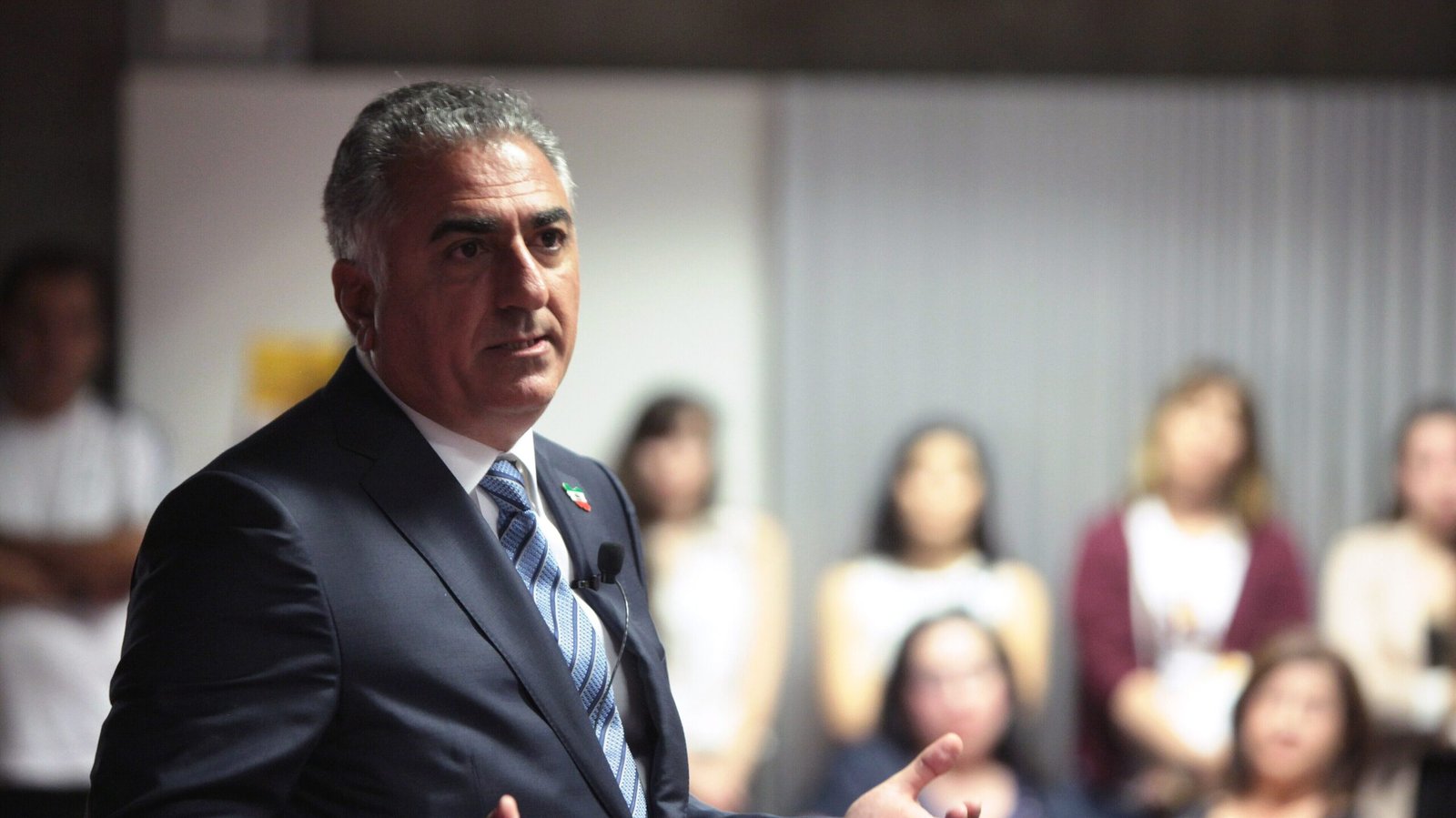
According to Azizafshari, some Iranians support the Pahlavis because they “see him as a nostalgic figure… [from when], in their opinion, Iran was ‘great.’ With that comes forgetting the crimes of his dynasty against the Iranian working people.”
This imagined glorious past corresponds to a period when both Mohammad Reza Pahlavi and his father, Reza Shah, came to power through Western-backed military coups. Both men ruled through autocratic military power with the support of foreign handlers, notably the United States and the British Empire.
After the Second World War, the U.S. replaced the British Empire as the dominant imperialist power in the region. Until 1979, when the Islamic Revolution ousted the Pahlavi dynasty, successive U.S. presidents exerted decisive control over Iran’s destiny, particularly in relation to its oil and gas resources.
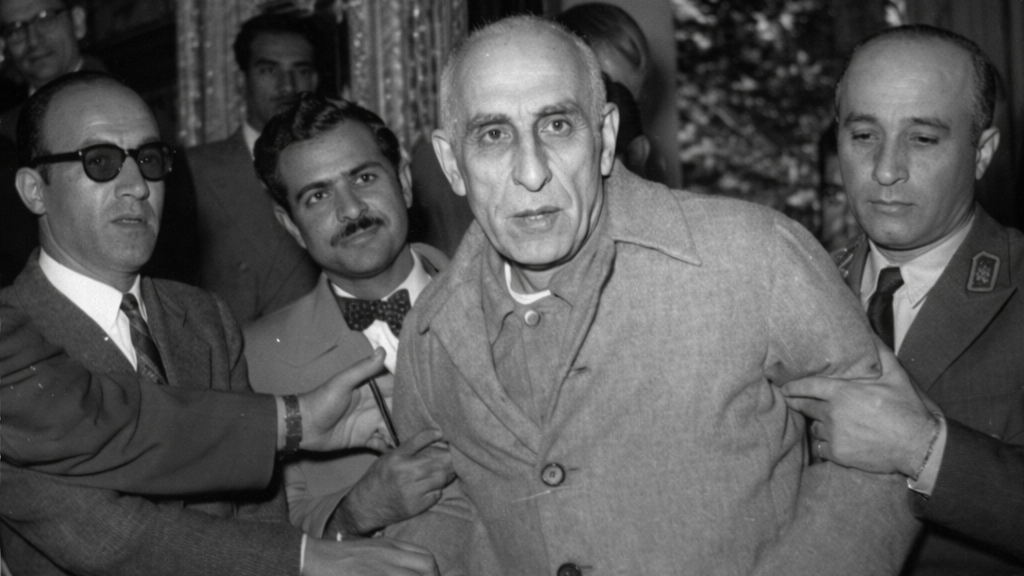
“The U.S. sees Iran as a major geopolitical threat in a resource-rich region. It has been that way since the 1953 coup orchestrated by the CIA that placed Mohammad Reza Shah as a puppet to allow the U.S. to run the country,” explains Azizafshari. The Islamic Revolution put an end to undisputed American domination and produced a regional power openly hostile to American and Israeli capitalist-imperialist interests.
‘A canary in a coal mine’
Within the last two weeks, the situation in Iran appears to have been violently halted by IR state forces, following a nationwide media and internet blackout. Human rights organizations report that security forces, including the Islamic Revolutionary Guard Corps and police, opened fire on protesters during a deadly crackdown, particularly on 8 and 9 January. According to Amnesty International, January 2026 marks the deadliest period of repression in decades, with mass arrests, nighttime curfews and heavily armed patrols imposed across major cities.
Azizafshari insists the situation is far from over. “Due to the overwhelming number of deaths at the hands of the state, this protest is a canary in the coal mine for the potential final years of the IR. I believe they will continue unless the state manages to make significant improvements to the material conditions of the Iranian masses. Regardless of who comes into power, due to Iran’s diverse nature and the Kurdish, Turkish, and Baluch provinces’ potential aspirations of independence, we could be facing a Syria-style civil war. There is one guarantee, however, and it is that the working masses of Iran will pay the price of the outcome.”
1 Commentaire
[…] The protesters in question are the Iranians who have taken to the streets in every major city to demonstrate against the deepening economic crisis and inflation, decades of strict theocratic rule, and widespread corruption. NATO aligned government officials have used last month’s protests as a vessel to promote their own interests in Iran. […]
Be part of the conversation!
Only subscribers can comment. Subscribe to The North Star to join the conversation under our articles with our journalists and fellow community members. If you’re already subscribed, log in.