
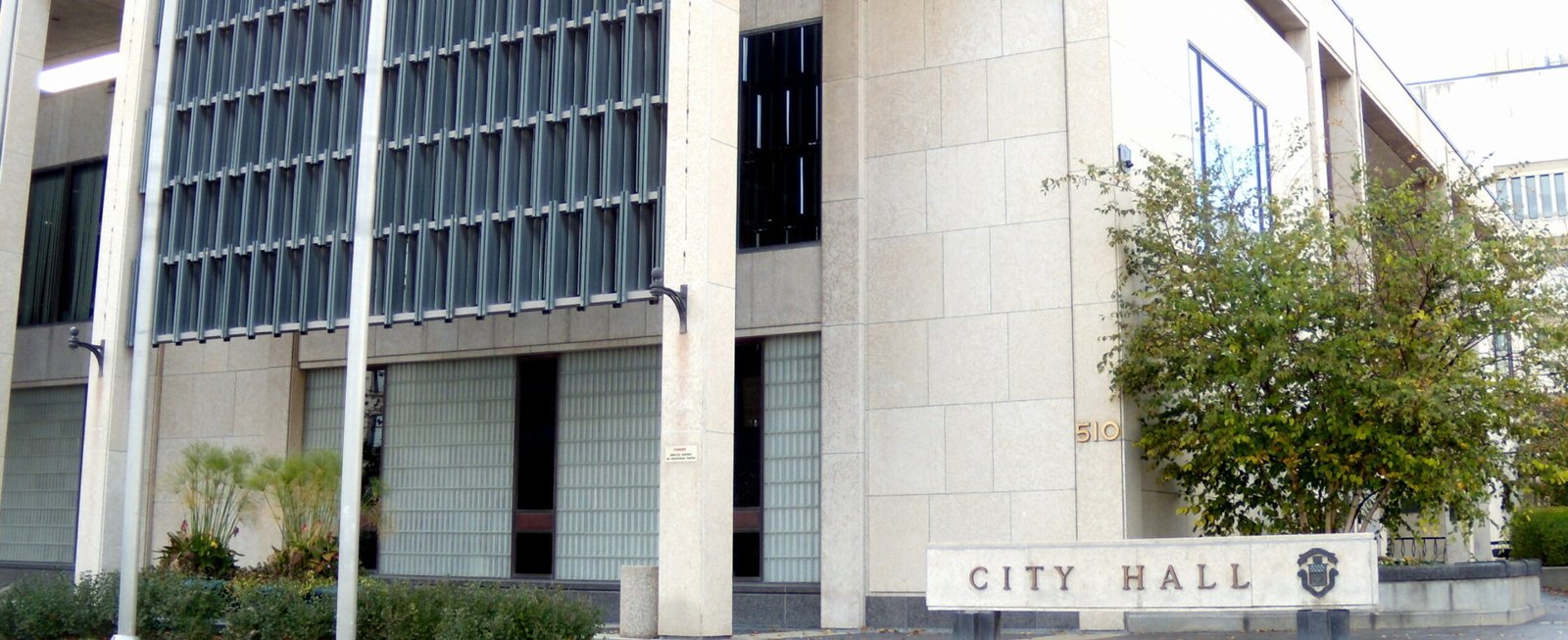
After the success of a recent campaign to shut down a proposed anti-protest by-law, Winnipegers have been left to wonder how such an anti-democratic motion could have come forward in the first place. The North Startakes a closer look, and finds some unsettling answers.
“Everybody I know with an experience of speaking to city councillors as delegates is quite struck by how hostile, scornful, and dismissive they are of people who come to speak […] almost as if it is disrespectful to come to try to voice disagreement at City Hall,” says Owen Toews, a Winnipeg-based researcher and author of Winnipeg Free For All, a report on the history of Winnipeg City Hall for the Canadian Center for Policy Alternatives.
Toews’ description is now supported by the experiences of many of the more than 100 delegates who spoke at City Hall on February 17 to oppose the hearing of a proposed by-law which would have made protesting across much of the city into a finable offense.
As a delegate on the 17th, Councillor Sherri Rollins described the by-law’s drafting by the Executive Policy Council (EPC) as “manipulated for expedience” and “lacking transparency,” adding that such behavior has “become the norm.”
“The EPC is often referred to as the mayor’s inner circle,” says Toews. “It is composed of up to 50%-minus-one of the city council, and it usually votes as a bloc.”
While similar bodies exist in other cities, Winnipeg’s EPC is unique in giving the mayor total control over its membership, and for its sheer size relative to city council as a whole.
He continues: “The mayor selects the members of the EPC, can remove people at any time, and by extension controls its policy-making process. It is easy for powerful interests to influence just one person, that’s all they really have to do—just have some words with the mayor.”
All of this begs the question: Why is Winnipeg City Hall so undemocratic? To answer this question, it is necessary to look at the city’s history.
Whose Unicity?
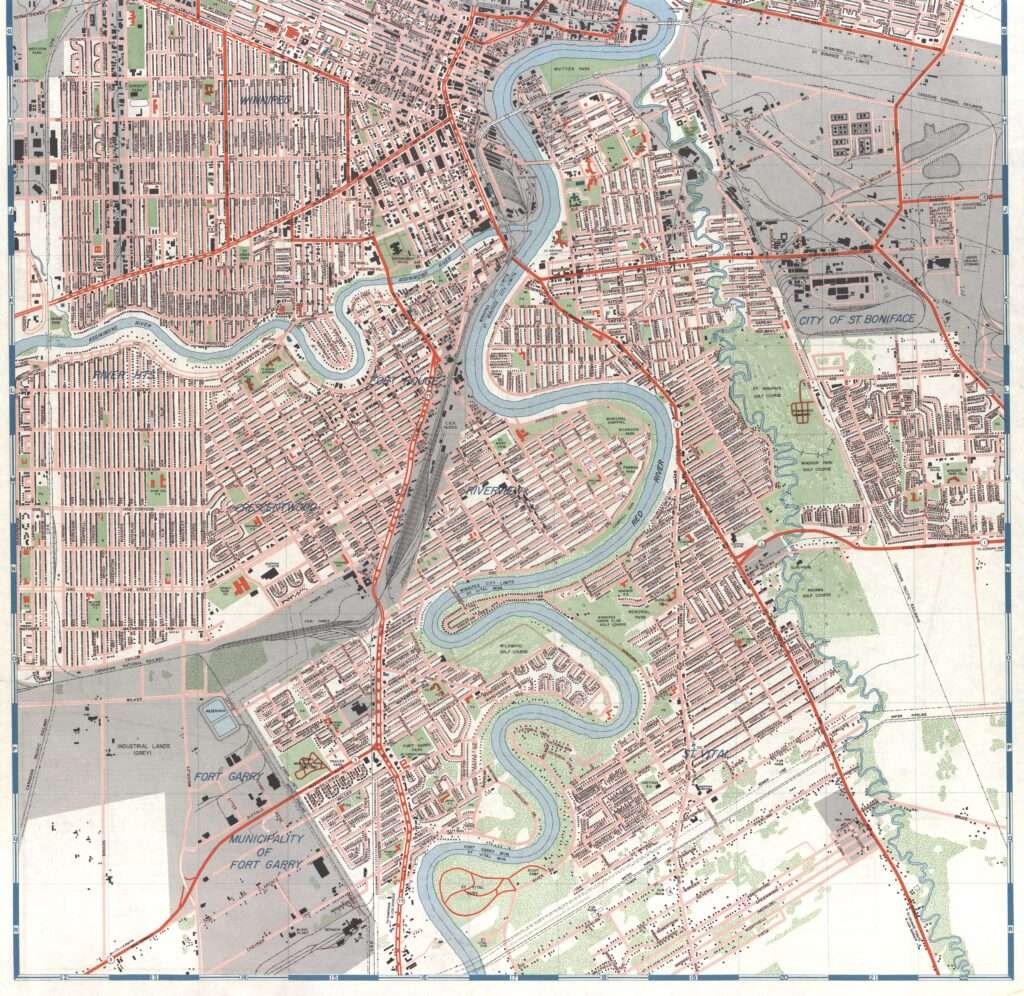
On July 27, 1971, the Schreyer provincial NDP government passed the Unicity Act, aiming to improve the efficiency of public services by incorporating Winnipeg and nearby municipalities into a single city. The EPC was one important change introduced by the amalgamation.
Composed of a core of councillors responsible for producing policy recommendations on city-wide matters, the EPC’s role was to help tighten up administration.
To sell the public on speedier administration, it was necessary to assuage concerns that it may come at the cost of civic democracy. Towards this, Unicity Winnipeg would elect a mayor and 50 councillors, one for each proposed municipal ward. In each ward, bodies composed of the public would be organized to advise councillors.
However, in the years following amalgamation, most mechanisms for community advisory were dismantled, while the number of councillors and wards was rapidly reduced. By 1992 it was down to 15, where it remains today.
Since 1971, Winnipeg’s population has grown by over 50%, meaning that today, each councillor is responsible for “representing” wards of around 50,000 people. With the city’s population increasingly shut out of City Hall, the EPC has only grown in influence.
According to Toews, this process of political closure is tied up with business interests: “The rolling back of democracy at City Hall has coincided with years and years of extreme austerity and property tax freezes, to the point that everybody knows today that the city is totally inadequate in terms of public services.”
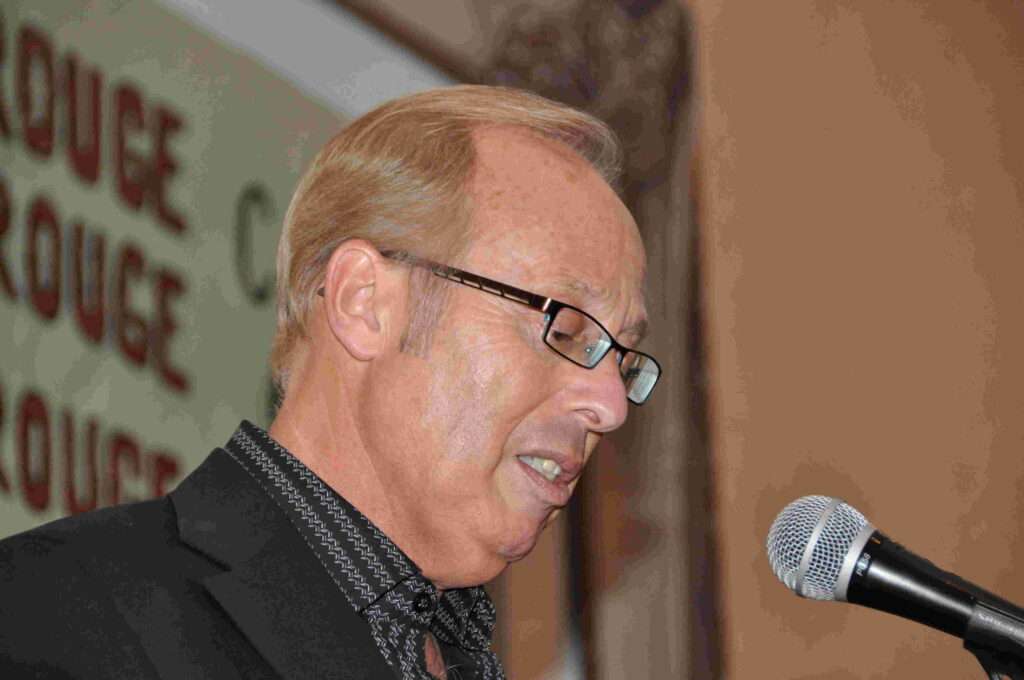
One useful case study is the ongoing corruption scandal surrounding former Mayor Sam Katz and former Chief Administrative Officer Phil Sheegl, who accepted bribes from Caspian Construction for the contract to build Winnipeg’s Police HQ. The company proceeded to run the project $79 million over budget.
“[This kind of thing] is why the community centres close, why the libraries close, why the mayors are constantly closing public pools, why we have an enormous police budget, and why the bus never comes,” he says. “This is the life we have now.”
According to Toews, the recently defeated anti-protest by-law can be understood as an expression of these broader social changes. “People have been shut out of city hall, and now city hall is trying to shut people out of public spaces. They are looking to extend a process which has been completed inside the doors of city hall outwards into the city.”
If the Safe Access to Vulnerable Infrastructure by-law was an expression of deeper problems in Winnipeg’s government, then it is worth considering what it may also have to say about changes taking place across Canada.
Similar anti-protest by-laws are being advanced by municipal governments across Canada, and with Winnipeg’s version defeated, several councillors have taken to endorsing the currently on-hold federal Bill C-9.
Meanwhile, police surveillance and repression against pro-Palestine activists is on the rise, and Federal and Provincial governments appear more and more dependent on strike-breaking legislation to resolve labour disputes.
Where to from here?
In resisting austerity and the rollback of democratic institutions, Toews says “Local and regional movements are very important. There’s a reason why big business is so interested in organizing at the local level. It’s because it matters.”
At the same time, he stresses the importance of looking beyond purely local events to understand the precedents which are being set, or responded to, and where they come from. “It’s important that we understand these things are happening in every city, to some degree or another.”
The shadow cast over city affairs by provincial politics provides one example. “Winnipeg’s governance structure is totally dictated by the provincial government. This strong mayor model was a conservative party agenda […] coming specifically from premiers Sterling Lyon, and later Gary Filmon,” he says. “At the same time, the provincial NDP has been in power for so much of the last 50 years. They have silently cosigned all of this.”
According to Toews, this has implications for Winnipeg’s social movements, which have historically tied themselves to the NDP. “We’ve had decades of supposedly left-wing provincial governments, where a lot of grassroots people have spent a lot of time and energy getting elected, and they disappoint every time, govern to the right every time, take us for granted and betray us every time.”
He stresses that this issue also extends far beyond the provincial NDP. “It’s the labour unions and the nonprofits, too. There is an issue where they compromise until they don’t resemble the original values they were created to pursue.”
When asked how he understands the link between these things, he says, “The word ‘opportunism’ comes to mind. People see an opportunity to make a career by gesturing towards serious and needed changes, but their priority is their own career, their party, or the funding for their nonprofit. And people move across these sectors, they are interconnected.”
Be part of the conversation!
Only subscribers can comment. Subscribe to The North Star to join the conversation under our articles with our journalists and fellow community members. If you’re already subscribed, log in.