
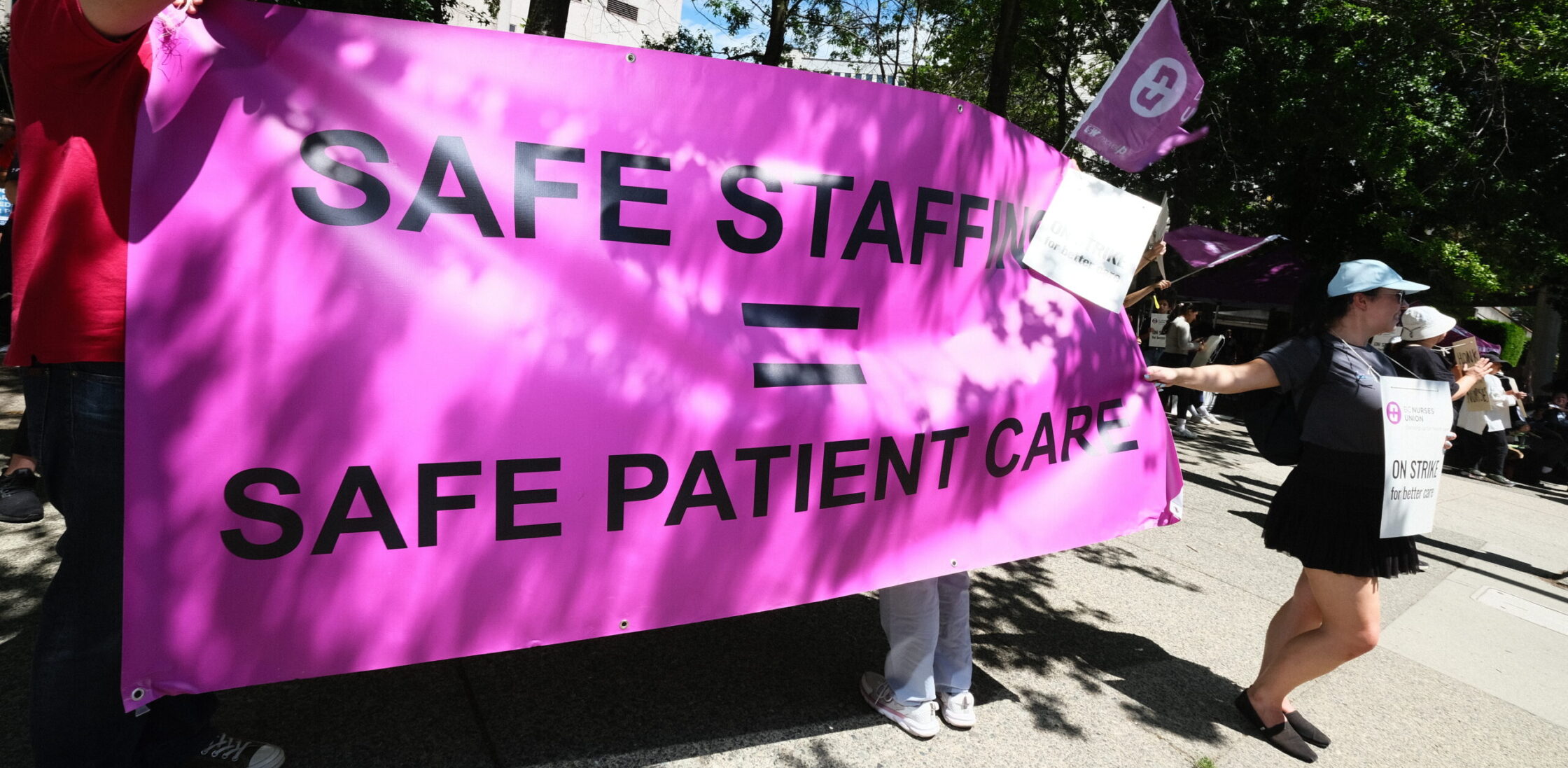
For the first time in 25 years, B.C. nurses went on strike in hopes of a collective agreement that supports fair wages, addresses workplace safety, and brings solutions to staffing shortages. I write this not only as a local B.C. resident, but as 1 of 55,000 nurses who took job action to change the priorities of a public health care system that is desperately failing.
After a 98.2% strike vote and three weeks of historic job action, the BC Nurses Union (BCNU) ended half a dozen picket lines across the province to engage in mediated bargaining with the Health Employers Association of BC. The province-wide ban on non-nursing duties and overtime restriction on employers continued throughout the mediation process, until July 23rd when ultimately, both parties were not able to reach a negotiated settlement on the topic of compensation.
The mediators Amanda Rogers and Vince Ready recommended that the outstanding issue of compensation should proceed to voluntary binding arbitration, which the union accepted.
Meanwhile, the Nurses Bargaining Association filed an unfair labour practice application with the BC Labour Relations Board after over 5200 complaints of illegal threats against workers and interference with union activity by the employer.
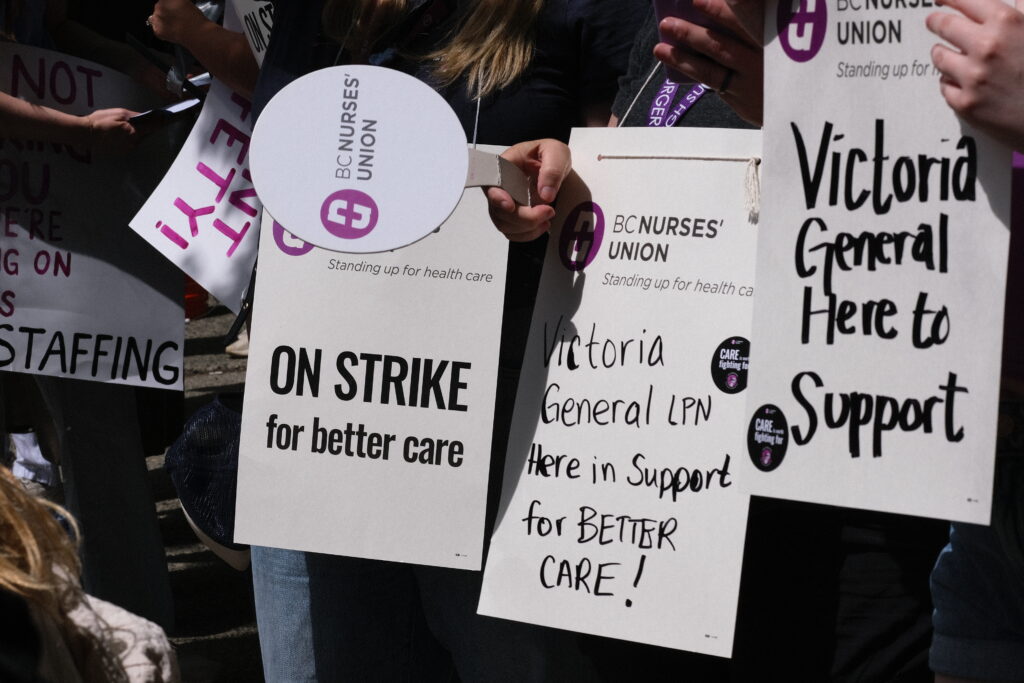
One argument that stood out to me during these negotiations is the discussion around the public-sector “me-too” clause. Over the years, it has been explained that wage increases negotiated for nurses can trigger similar increases for many other public-sector unions, making negotiations much more costly for our government and taxpayers.
The purpose of this clause was to ensure that if one bargaining unit in the public sector secures an increase in compensation, other bargaining units will receive adjustments to ensure their net compensation increases are equivalent in sum.
While this clause was presented throughout bargaining as a limitation on the compensation that can be negotiated at the bargaining table, the union accepted the new recommendations to bring the issue of compensation to arbitration, an avenue that happens to be exempt from the “me-too” clause.
The mediators’ report states that any “increases awarded through binding interest arbitration” are an exception and will not trigger the same “me-too” mechanism that would have acted as a safeguard against one bargaining group receiving more than another.
Is this worth celebrating? We’re constantly told that because a fair wage increase for nurses could extend to other public-sector workers, it becomes too expensive for taxpayers. Meanwhile, we rarely stop to question where the money is already being spent. If the concern is about affordability, it makes me wonder, who actually benefits from the projects our government prioritizes spending our taxpayer money on?
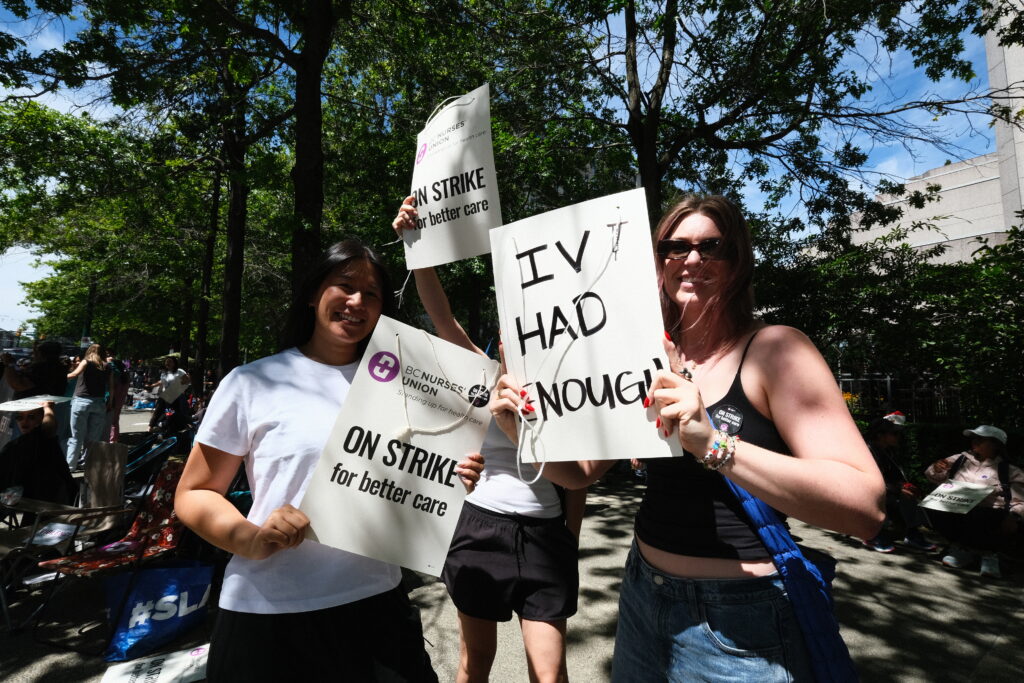
Our employers “can’t afford to maintain baseline staffing” but can afford paying triple for travel contracts. They “can’t afford to keep health benefits,” but can afford endless vacancies from the daily violence and workplace hazards they refuse to address.
Furthermore, the CEOs of B.C.’s health authorities each earn base salaries of more than $300,000. I find it odd that we’re told there isn’t enough money to share wins across public sector workers across B.C. If we’re serious about talking affordability, why do we only talk about the wages of the people providing care?
One thing that this strike has highlighted is that nurses regularly fill in the gaps when the employer fails to maintain baseline staffing for other essential support roles. Our job action to refuse this extra workload literally shows that patients don’t receive timely health care without janitorial services, porters, unit clerks, supply stockers, laboratory workers, therapists, and care aides.
If we say we can’t afford meaningful wage increases because those increases would extend to hospital support staff, paramedics, social workers, teachers, and other public-sector workers, I see a system that is forcing workers to compete against one another for fairness.
The strike may be over but our hospitals are still backed up, patients are in the waiting room for over 20 hours, admissions are delayed, and people don’t get the care they deserve on time. We can either recognize that public services depend on all workers standing together or continue accepting a health care system that cannot viably support our populations’ needs.
Be part of the conversation!
Only subscribers can comment. Subscribe to The North Star to join the conversation under our articles with our journalists and fellow community members. If you’re already subscribed, log in.