
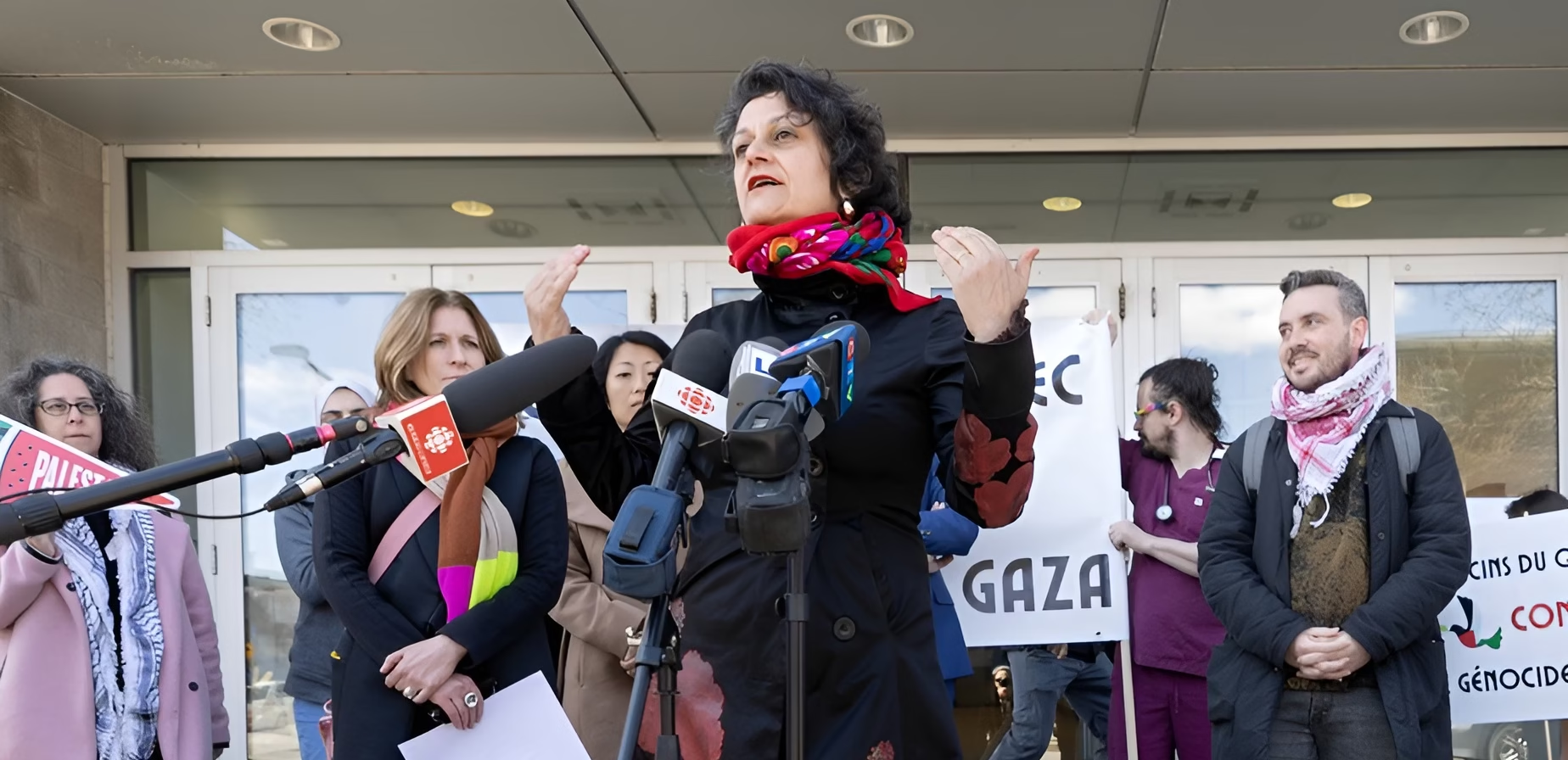
In October, five Canadians were detained in deplorable conditions by the Israeli army after trying to bring humanitarian aid by boat to the Gaza Strip. The North Star spoke with one of them, Dr. Nimâ Machouf, an epidemiologist and lecturer at the Université de Montréal.
The “Freedom Flotilla” movement emerged after the imposition of the Gaza blockade in 2007, an act considered illegal under international law. Since then, Israel has controlled everything entering and leaving the territory, pushing activists to try to break the siege by sea. Except for one mission in 2008, the Israeli army has always stopped the boats, sometimes even bombing them to prevent them from moving forward.
The flotilla movement also aims to draw media attention and raise public awareness. Because Machouf was already well known in Quebec, she agreed to take part in the mission to help generate broader coverage.
But after the announcement of a new wave of flotillas, the Israeli government warned that any humanitarian aid sent by boat to Gaza would be treated by the army as an act of terrorism. Despite these threats, Machouf decided to join the mission.
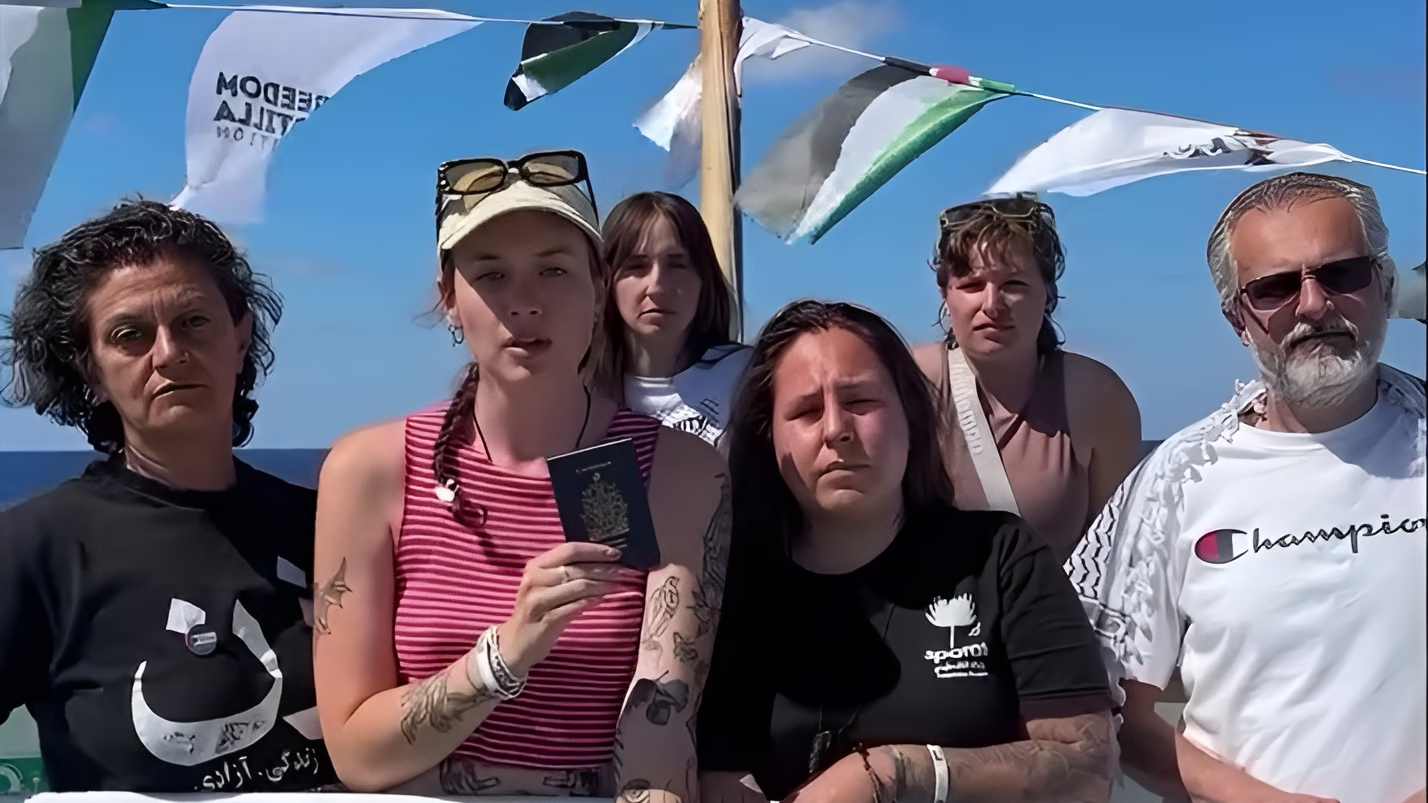
Her boat, Conscience, a small 1972 vessel that had previously been bombed, had been designated to carry media and medical teams. It also carried food and medical supplies worth roughly $200,000.
Machouf noted that over the past two years, the Israeli army has deliberately targeted journalists and health workers to control what information leaves Gaza and to block any independent reporting. Reporters Without Borders has recorded more than 200 journalists killed, a level never before seen in a conflict.
She also points out that the Israeli army has killed nearly 1,600 doctors and first responders and bombed health centers, hospitals, and ambulances, even though these professions are supposed to be protected in wartime.
A kidnapping at sea
After leaving Italy on October 1, Conscience was intercepted on October 8 by the Israeli army while still in international waters, an intervention that violates maritime law. Two military helicopters first hovered over the boat before the arrest operation.
“They came down very, very low. It was terrifying. From each helicopter, about seven or eight commandos slid down on ropes, heavily armed, masked, wearing goggles. They pointed lasers at us, like in the movies.”
“They knew perfectly well we weren’t armed. They knew we wouldn’t resist. They knew we were on a humanitarian mission. So when they treat us like this, it says a lot about what they do to [Palestinians].”
Machouf stresses that the passengers were not in Israeli territory and had no intention of going there. Once taken off the boat, the arrested activists were handcuffed and forced to remain on their knees for hours, clearly meant to humiliate them.
“Our heads bent forward, hands tied behind our backs. It was very hard. Meanwhile they stood around talking loudly, laughing. They threw our passports at us. They treated us with humiliation, contempt, and violence.”
In prison, some detainees were subjected to psychological and even physical violence. “First, they tied our hands again. They blindfolded us.”
They were placed in a small room with metal walls and chains hanging from a ceiling barely two meters high. The air conditioning was turned up to the maximum, leaving them freezing and unable to move for hours.
“On the wall in front of us, there was a large Israeli flag.” Beside it, an even larger poster “written in Arabic read ‘the new Gaza’, a black-and-white image of nothing but ruins”.
After several days in detention, Machouf was deported to Canada. She returned on October 12.
Demanding respect for international law
For the doctor and activist, even though she and her companions were kidnapped and prevented from reaching Gaza, the flotilla is far from a failure. She believes the action had a real impact on governments and on activist movements internationally.
“If only through the international mobilization it sparked. We were reaching a breaking point: it wasn’t just the flotillas, the streets were mobilized. Unions didn’t stop. Strikes didn’t stop.”
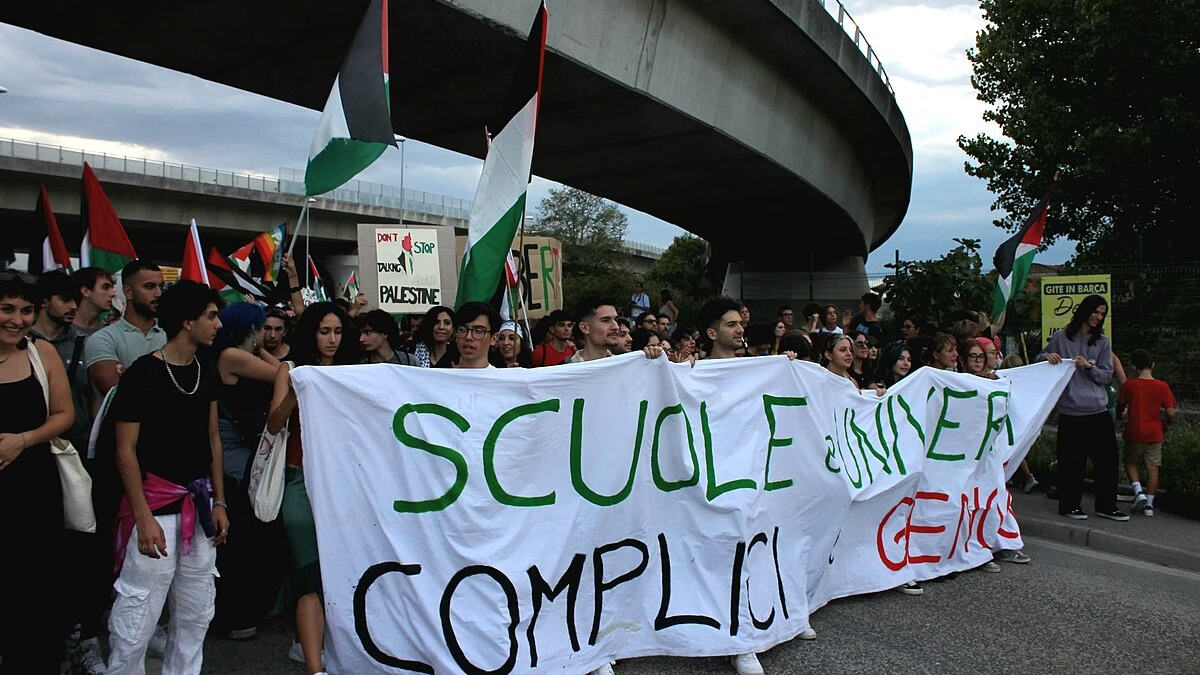
Indeed, large demonstrations and strikes took place around the world. In Italy, nearly one million people marched in Rome. Dockworkers refused to load any containers bound for Israel, and other activists blocked a plane on the tarmac.
This international pressure pushed several Western countries to recognize the Palestinian state and to halt certain arms sales to Israel. Canada, however, has not fully met its commitments. Even though Parliament ruled these sales illegal, the government allowed ongoing contracts to continue, saying they involved private deals, parts rather than full weapons, or non-lethal equipment.
Machouf believes that despite its limits, this was still a necessary step. “Even if the recognition was bogus, Israel did not want the word Palestine to be anchored at the United Nations.”
For her, this is why mobilization and actions like this are essential. “Why does Israel allow itself to violate all international laws? Because our countries say nothing. So if we want them to respect international law, we have to force them. Economic pressure is a very strong tool to push Israel to comply with international norms. So we have to keep working on that.”
Be part of the conversation!
Only subscribers can comment. Subscribe to The North Star to join the conversation under our articles with our journalists and fellow community members. If you’re already subscribed, log in.