
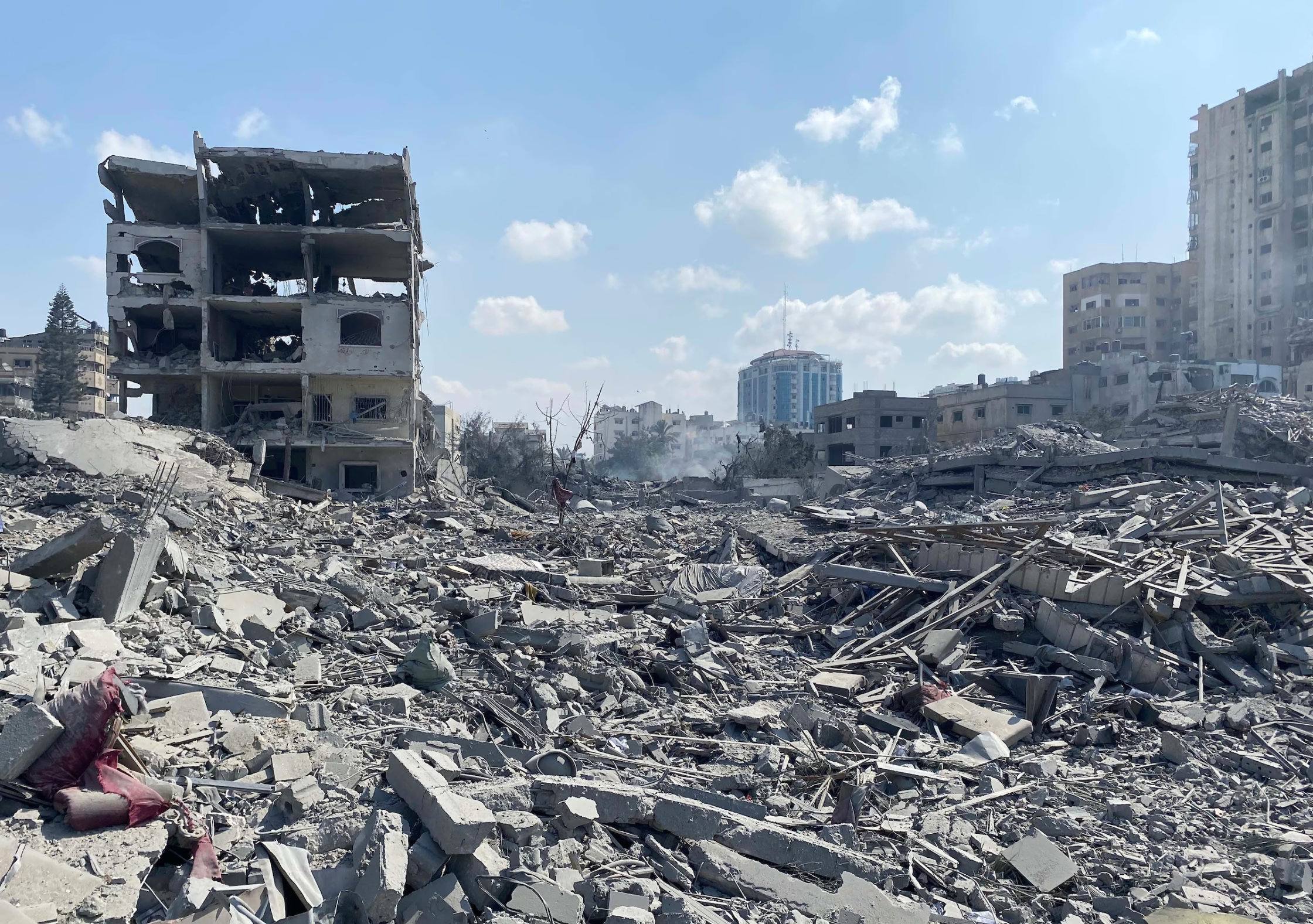
In tents amid the ruins, families in Gaza are trying to survive, while in Western and Gulf capitals, there is already talk of “reconstruction.” On the table are tens of billions of dollars; around the table are rich states, banks, and investment funds… but no Gazans.
The UN, the European Union, and the World Bank estimate that the reconstruction of Gaza will cost nearly $70 billion. This is not surprising: Israel‘s bombings have destroyed most of the homes, schools, hospitals, and infrastructure.
Of course, the mainstream media presents reconstruction as a humanitarian issue. But behind this facade, many see the potential for huge profits. The United States, several European countries, Canada, and Gulf monarchies have already raised their hands to invest in this major redevelopment project.
A Trump-signed “ceasefire”
What has made all these discussions possible is the “Trump plan.” In October, Trump established a shaky ceasefire, dividing Gaza in two with a “yellow line.” This line leaves more than half of the territory under Israeli military control, with the rest under Hamas control. But even with an agreement to end the fighting, bombings continue in this area.
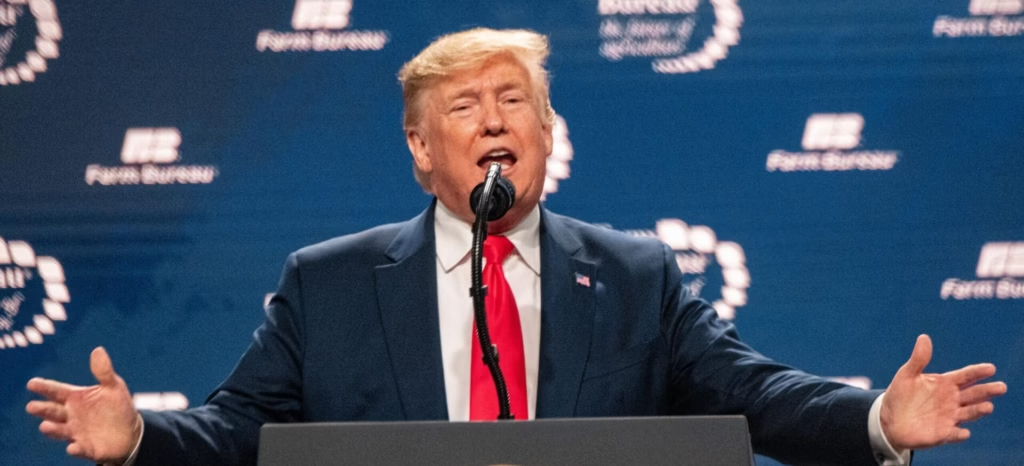
Reconstruction is expected to begin in the Israeli “green zone,” managed by the “Board of Peace,” headed by Donald Trump. The reconstruction plan proposed by the United States is not yet clear, but Trump had dangled the possibility of creating an ultramodern oasis, intended for tourism and controlled by the Americans.
An international force is expected to be tasked with disarming Hamas in the near future. Subsequently, the day-to-day management of the territory is expected to be handed over to a Palestinian technocratic committee with no real political power and no elected members.
A poll by the Palestinian Center for Policy and Survey Research, published at the end of October, shows the dissonance between this plan and the population. The majority of Gazans are still opposed to the disarmament of Hamas and support the armed group’s reaction to Trump’s plan.
Several proposals, same idea
For its part, the Institute for Middle East Understanding has issued a memo condemning the absence of Palestinian institutions from these discussions. The American institute believes that this plan paves the way for the partition of Gaza and will allow a few major economic powers (and Donald Trump’s associates) to secure reconstruction contracts and political power.
The idea of the Americans taking control of Gaza has created considerable controversy in the Arab world. In response, Egypt has submitted its own plan, which has been endorsed by the Arab League. It proposes the creation of “safe zones” where refugees could live while large companies clear the ruins and rebuild the infrastructure.
The Palestinian Authority, led by Fatah, the ruling party in the West Bank, has also proposed its own plan. Its cost is estimated at $67 billion, and it would be financed by the same donors as the other plans (banks, multinationals, Western countries).
The problem? Fatah is already contested in the West Bank and has not been in power in Gaza since 2007. According to the October poll, only 33% of Palestinians want the Palestinian Authority to resume governance of Gaza.
In any case, these plans have one thing in common: they rely on investment and profits. Public-private partnerships would offer vast business opportunities for Western companies and Gulf monarchies in the construction of infrastructure, tourist complexes, hotels, industrial parks, and housing. A report linked to a group of Israeli businessmen close to Donald Trump estimates that profits could exceed $180 billion over ten years.
And Canada?
The Canadian government says it is “exploring a role” to play in this large post-war market. But it already seems clear that it wants its share of the pie. An official with the United Nations Development Program cited Canada among the countries that would like to participate in financing the reconstruction of Gaza.
Global Affairs Canada also confirms the possibility of getting involved by training Palestinian security forces and participating in mechanisms for “stabilizing” and monitoring Gaza.
And that’s not counting the fact that the Canadian war machine remains well oiled. Even though the government said it would freeze all arms exports to the Israeli army, a recent report confirms that this is not true.Direct exports are indeed blocked, but an NGO has revealed that hundreds of shipments of fighter jet parts and explosives manufactured in Canada were sent to the United States before being shipped on to Israel. These regulatory exceptions, referred to as the “American loophole” in the report, give the Canadian oligarchy options for making a profit, war or no war.
Be part of the conversation!
Only subscribers can comment. Subscribe to The North Star to join the conversation under our articles with our journalists and fellow community members. If you’re already subscribed, log in.