
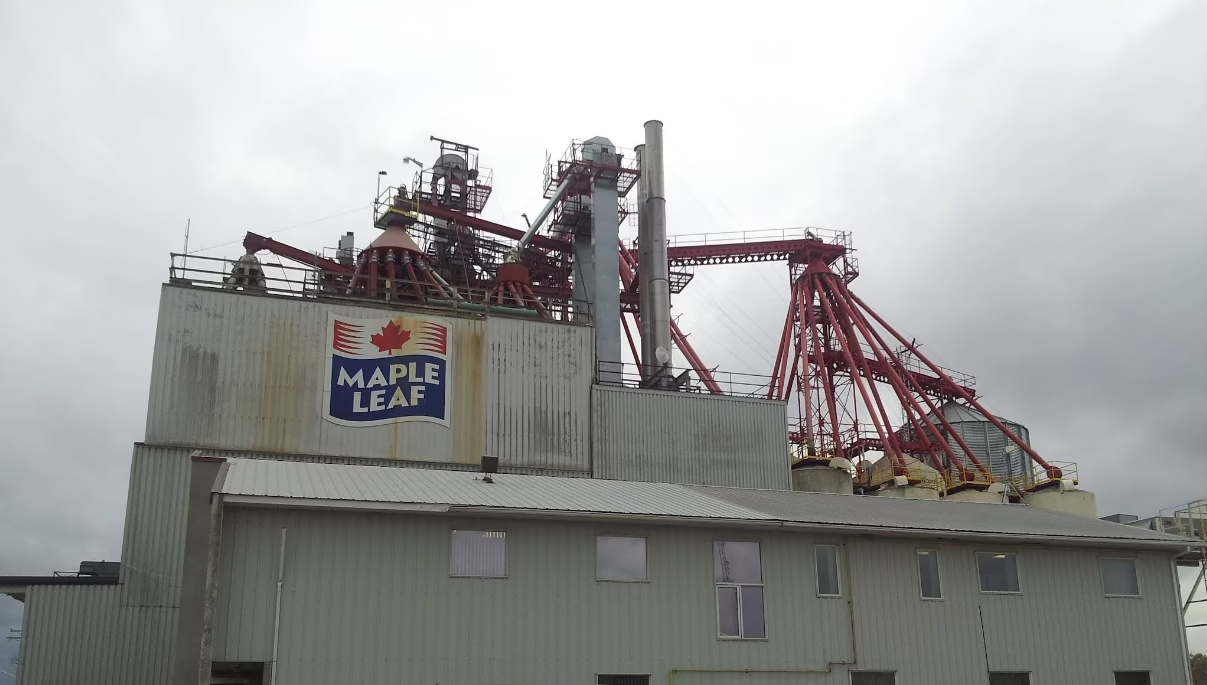
After months of stalled negotiations, workers at Winnipeg‘s Maple Leaf meat packing facility voted overwhelmingly last month to authorize a strike mandate. The North Star spoke to workers about their organizing efforts in response to an “unacceptable” offer by the company.
The November 15 vote marks the first time a strike has been authorized at the plant since it was purchased by Maple Leaf over twenty years ago. Workers describe a climate of “fear” and “intimidation” at the Winnipeg plant.
“The supervisors are like ghosts. You feel the hair standing up on the back of your neck, and you turn around and there’s a supervisor staring at you. They use fear to keep production running,” says Maria*, who has worked at the plant for a year.
“It is very physically demanding,” she says. “A lot of carrying, it’s a lot of weight to sustain and carry all day. It’s exhausting … They treat us like robots. They just want us to keep going faster, faster, faster.”
Workers told The North Star they have been disciplined for refusing unsafe work, that they endure racism and discrimination from management, and are arbitrarily bullied and shouted at by supervisors.
The conditions at Maple Leaf have taken a psychological toll on the workers. “It’s just tiring, really. It’s demoralizing. It’s hard for people to keep motivated to do their job,” says Ray*, who has worked for the company for two years.
“When I started, the wages were okay. They were about $3.50 above the minimum wage,” says Jose*, who hopes to start a family with his partner some day. He says stagnating wages at the company are causing uncertainty. “We are only 50 cents above minimum wage now.”
An offer that doesn’t measure up
On November 12, UFCW Local 832, which represents over 1,800 workers at the facility, detailed the company’s latest offer in conference calls.
Workers were shocked by the company’s offer. If accepted, it would spread out $2.75 in wage increases over seven years, end the defined benefit pension plan in favour of a defined contribution plan, and refuse their demand for paid sick leave.
Between November 12 and November 15, workers turned out to vote 98% in favour of a strike mandate.
“The 98% vote means that workers are angry. We are fed up. We don’t want the company’s offer. We don’t want a seven-year contract. A lot can change in seven years. We want sick leave. We want pensions. We want good wages,” says Maria. “An acceptable contract is four, five years, max.”
Maria stresses that the workers’ demands are widely and deeply felt. “Lots of my coworkers have families, kids they need to support. They can’t just leave, especially with how hard it is to find other jobs at this point.”
Ray explains that the plant currently has no paid sick leave policy. “This is Canada. We get sick a lot. We work with meat and other people and stuff like that, so there’s germs that are around.”
“It leads to stress. When you’re sick, you don’t want to go in. You feel miserable, but you have to worry about being able to pay bills,” he says.
Maria explains the change to pensions would threaten the safety net of hundreds of Maple Leaf’s senior and immigrant workers.
“Anybody I’ve talked to who has been in the company who is older than I am, they say they need their pensions. Especially immigrants who have recently moved here and haven’t had the chance to work as long as somebody who was recently born here. It is important for folks.”
Ray says that the declining wages have caused a lot of stress, “In the past five years, the minimum wage has gone up only a few times. But our wages have stayed at the same level.”
He hopes that negotiations can help make up for what has been lost. “What is fair is between $1.00 and $1.50 every year.”
Maria agrees that a dollar a year would be the bare minimum. “Lots of us here are doing tons of heavy physical labour. It’s only fair that we make a livable wage, doing what we do.”
Jose, who is from Latin America, sees the contract fight as an opportunity to gain dignity at his workplace. “I want equality in the plant, because I don’t feel like there is equality here. You feel discriminated against, depending on what race you belong to.”
In the year leading up to this round of bargaining, workers began organizing at Maple Leaf. They held meetings, handed out flyers, and circulated petitions to the union and boss among their coworkers.
Workers say that taking collective action on the shop floor has inspired them to think about how change is possible.
Worker fired for organizing
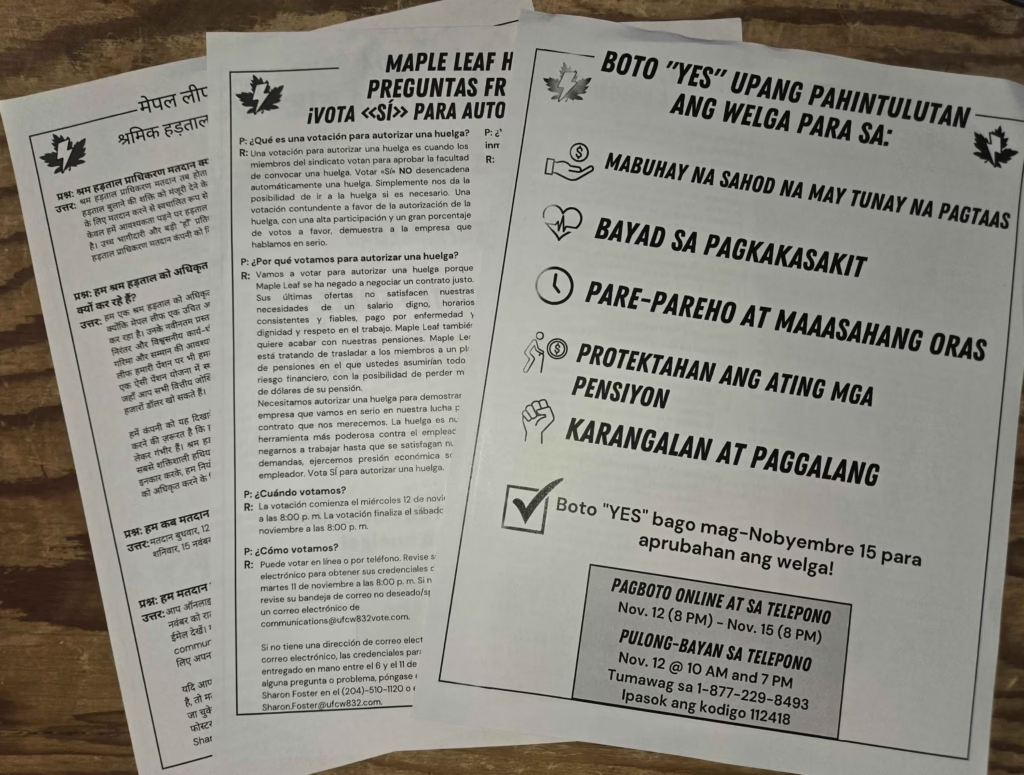
On the first day of the strike mandate vote, Maple Leaf summarily terminated Charles Martel-Marquis, who had worked at the plant for two years, for distributing flyers on company property.
The flyers contained information the union had publicized to members about the strike vote translated to Punjabi, Tagalog, and other languages commonly spoken by workers at the plant.
“[The company] didn’t want people to know about the strike vote. They’re trying to put a divide between members,” explained Maria. “In Filipino circles, some people didn’t know what the strike mandate vote was. Some people were even afraid to vote. The flyer was to address this.”
She and several other coworkers distributed the flyers alongside Martel-Marquis.
“Without getting in touch with other workers, I don’t think we would have had such a strong vote for the strike mandate because people wouldn’t have been informed in the languages that they speak fluently,” she explained.
Jose says the firing exposes that the company sees workers’ activity as a threat. “If we have the information as employees, if we are united and we know our rights, then we have the power to change things, like the unfairness and the low wages at the company. They saw a chance that we could stand to change things, and to me, that’s why he was fired. They knew he was making a difference, and they were afraid of that.”
Resolving to stand together
Maria says the company is using the firing and the contract offer to put workers in line. “What Maple Leaf wants, at the end of the day, is for us to throw in the towel and say, ‘Yeah, okay, we’ll take this subpar agreement.’ They want us to think that if we speak up, we might get fired too, so that we will say yes to whatever the company wants.”
“We need to be angry together as a community, rally people, show Maple Leaf that we aren’t going to bend over. We’re going to stand up and say we want to be respected, we want a livable wage, and we don’t want to live in fear.”
Ray stresses the importance of overcoming fear. “We gotta communicate what we want. Some people are scared, but that shouldn’t matter. Our voices need to be heard. We need to make sure that we get what we want. So we need to drop this fear and just talk. Because we’re allowed to talk. The more that we talk to each other, Maple Leaf is going to hear that, and they’re going to know that we want what we deserve.”
Jose agrees. “We need to get everybody on board. Once everybody is on board, we are going to be unstoppable. But if we are divided, there is no chance to win. People have to be united and they have to be convinced that there is going to be a good outcome if everyone is on board,” he told The North Star.
The company and the union reached a tentative agreement on November 28, with details being made public in the coming weeks.
*Pseudonyms have been used at the request of the workers interviewed.
Be part of the conversation!
Only subscribers can comment. Subscribe to The North Star to join the conversation under our articles with our journalists and fellow community members. If you’re already subscribed, log in.