
Four months after a historic 92.3% vote in favour of strike action, the bargaining association representing 26,000 community health workers reached a tentative agreement with their employer last week. Community health workers told The North Star they won’t accept concessions and are still ready to strike if their demands are not fulfilled by this tentative agreement. In the coming weeks, members will receive full details of the agreement before voting on whether to ratify it as their next contract.
The union association comprises the BC General Employees’ Union (BCGEU), the Hospital Employees’ Union (HEU), the Health Sciences Association, the Canadian Union of Public Employees, the United Food and Commercial Workers’ Union, the BC Nurses’ Union and the United Steelworkers.
“Enough is enough”
Amid an escalating cost-of-living crisis in B.C., the rollback of drug decriminalization, the toxic drug supply epidemic, and the worsening housing crisis, community health workers are on the front lines of the New Democratic Party’s repeated failures to address widening gaps in social welfare.
“We can be the difference between somebody living or dying every single day,” says Che Baines, an outreach worker represented by the Community Bargaining Association (CBA). She works at the Coast Mental Health Resource Center, a support services non-profit. “We find people housing. We connect people to different resources around mental health. We provide support around substances via harm reduction-based supplies. We help folks get into detox and treatment.”
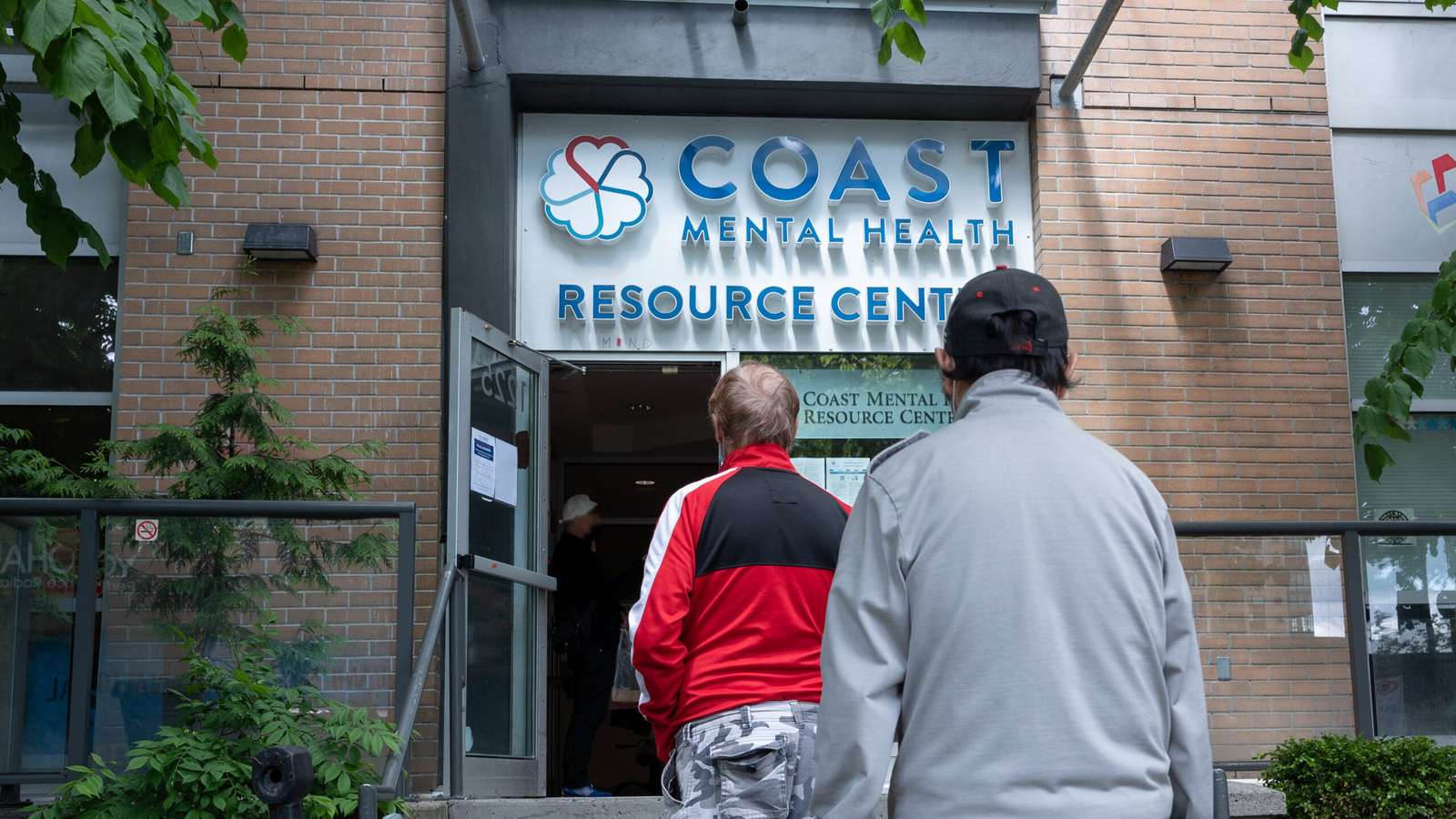
Baines and her fellow community health workers occupy essential roles in B.C., forming the backbone of home care support, detox and treatment programmes, emergency shelters, mental health group homes, and regional health units. The CBA is led by the BCGEU representing 16,000 community health workers, negotiating against their employer, the Health Employers Association of BC.
Fatima*, a home care support worker and BCGEU member, said, “When I heard about the strike vote passing with such a huge majority, I felt relieved. [Community health workers] know that things have been going from bad to worse year after year. This was a clear sign from all of us that enough is enough.”
“We are chronically understaffed and overworked,” says Baines. She says workers like herself face worsening pressures due to the compounding crises in Vancouver‘s Downtown East Side. “The way that people who use substances and people who are homeless are treated by a government that supposedly cares about solving the homelessness and opioid toxicity crisis is unforgivable. Our clients aren’t supported like they should be. We aren’t supported like we should be.”
“I’ve basically been working two or three jobs’ worth of work for close to a decade now,” says Natasha*, a group home worker. “We are expected to work this way out of the goodness of our hearts. The importance of our work and the fact that we care about who we serve is weaponized against us by our bosses whenever we ask for the most basic things.”

Workers say no to “gig work scheduling”
The association says one of its main demands is protection against “the precarious scheduling practices CHWs endured for 30 years”, comparing them to “gig work scheduling”. The workers interviewed by The North Star agreed with the BCGEU’s assertion that “CHWs deserve the same security of fixed shifts and breaks that other health care workers have had for decades”.
“The NGO industry runs on the assumption that we will do more work than is mandated … because of our passion for the work, which isn’t fair,” said Che. “We’re told, ‘Do free overtime, your people need it. You should do things that are way beyond your job description because there’s no one else to do it.’”
Matthew, an administrator at Foundry, a youth mental health support non-profit, explained, “Our job can be stressful. Ideally, we would need counselling support for this work, but that is extremely limited. Even when I did find a counsellor, I was like, I don’t know how I’m going to find time to do this … am I going to just take my lunch off for this?”
Strike would look like work-to-rule
The large amount of unpaid overtime which has been normalized amongst community health workers means that if a strike were to happen, these workers would likely engage in overtime bans and “work-to-rule” actions. Work-to-rule action involves workers doing no more than the minimum required by a contract.
“I don’t think most of my colleagues would have supported the strike vote if they thought we would completely abandon our patients”, says Fatima, “but honestly, even an overtime ban would bring our bosses to their knees. I’d say half of the industry runs on our unpaid labour.”
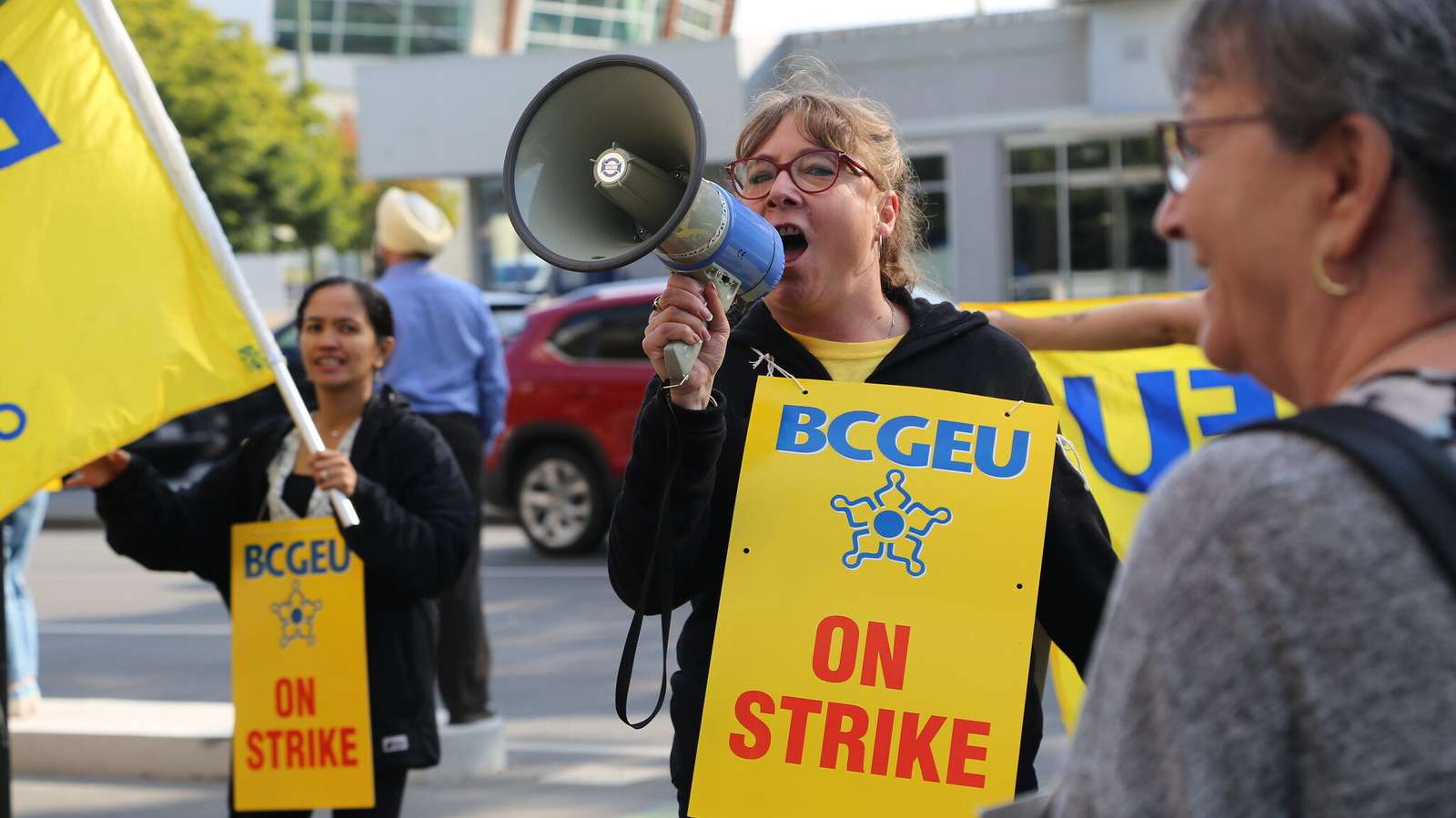
“I’d give [management] two days,” says Baines. “It would take just two days for them to be hounding employers to bring us back to work.”
Even though the workers have increased leverage due to the essential nature of their work, their status as “essential workers” complicates their decision to strike. Federal and provincial anti-worker legislation can effectively ban essential worker strikes, such as Section 72 of the BC Labour Relations Code, and Section 107 of the Canada Labour Code.
“The way that the government has used [essential worker legislation] against port workers and postal workers recently is disgusting,” says Baines. “It completely undermines the whole concept of collective bargaining. It’s setting a new precedent that you don’t have to bargain.”
“My mum was a nurse in Alberta in the ‘80s, and when the United Nurses of Alberta went on strike, it was immediately deemed illegal,” recalled Natasha. “The union got sued multiple times, and people even went to prison. That’s what it took for nurses to have basic protections and fair wages. Since then, federal and provincial governments have made up laws that would make a similar strike essentially a suicide pact. We’re disadvantaged from the get go. That’s how things got to this point.”
Challenges of association bargaining
According to Natasha, the ethos of UNA’s historic 1988 strike is “the kind of fighting spirit we need our unions to have for us, that’s what we deserve”.
However, workers like Matthew expressed doubt and confusion about what his union, the HEU, was willing to do to represent community health. “I wish there were more channels for communication between my union and us. I’ve been working in this role for two years now, and the first time one of our shop stewards ever engaged with us was in November 2025, when they brought a flyer with the date for the next local meeting.”
Baines acknowledges that “communication isn’t happening as fast as people would like it,” but she stresses that this comes with the territory of association bargaining. “Association bargaining is often closed bargaining,” she explains. “It can be very challenging for membership. They only get updates when an entire union coalition agrees that it’s appropriate. We’re more powerful when we band together, but that has drawbacks. We need to work on this and reach out to every single rank and file member […] not just those that already have more knowledge or hold positions in the union.”
Ready to struggle
While the BGGEU reports that the tentative agreement comes with “improvements”, workers say that only the rank-and-file can judge whether the agreement is enough to address longstanding issues in the industry.
“Even before we’ve been able to see the details of the agreement, we’re already being told by our union that the strike probably won’t happen”, says Natasha. “I want to see what’s in [the agreement] first. You can’t just say that. The strike vote was our strongest leverage.”
“Only we get to say something is an improvement,” says Fatima. “If you don’t work my job, you can’t tell me something is better just because it looks good on paper. So we’ll wait and see, but we still need to be ready in case it’s not good.”
“If I could say anything to my coworkers across B.C., I’d want to remind them that our work is important. We have power. We need to believe that we can use that power to get what we’re owed, if we still want to do the work that we care so much about,” says Baines.
As members prepare to vote on the tentative agreement, the outcome could test not only the strength of the bargaining association but also the limits placed on essential workers’ right to strike in B.C. For many on the front lines, the question now is whether this moment will mark real change in a strained social support system, or simply another pause in a long-running fight over who bears the cost of caring for the province’s most vulnerable.
*Pseudonyms have been used to protect workers.
Be part of the conversation!
Only subscribers can comment. Subscribe to The North Star to join the conversation under our articles with our journalists and fellow community members. If you’re already subscribed, log in.