
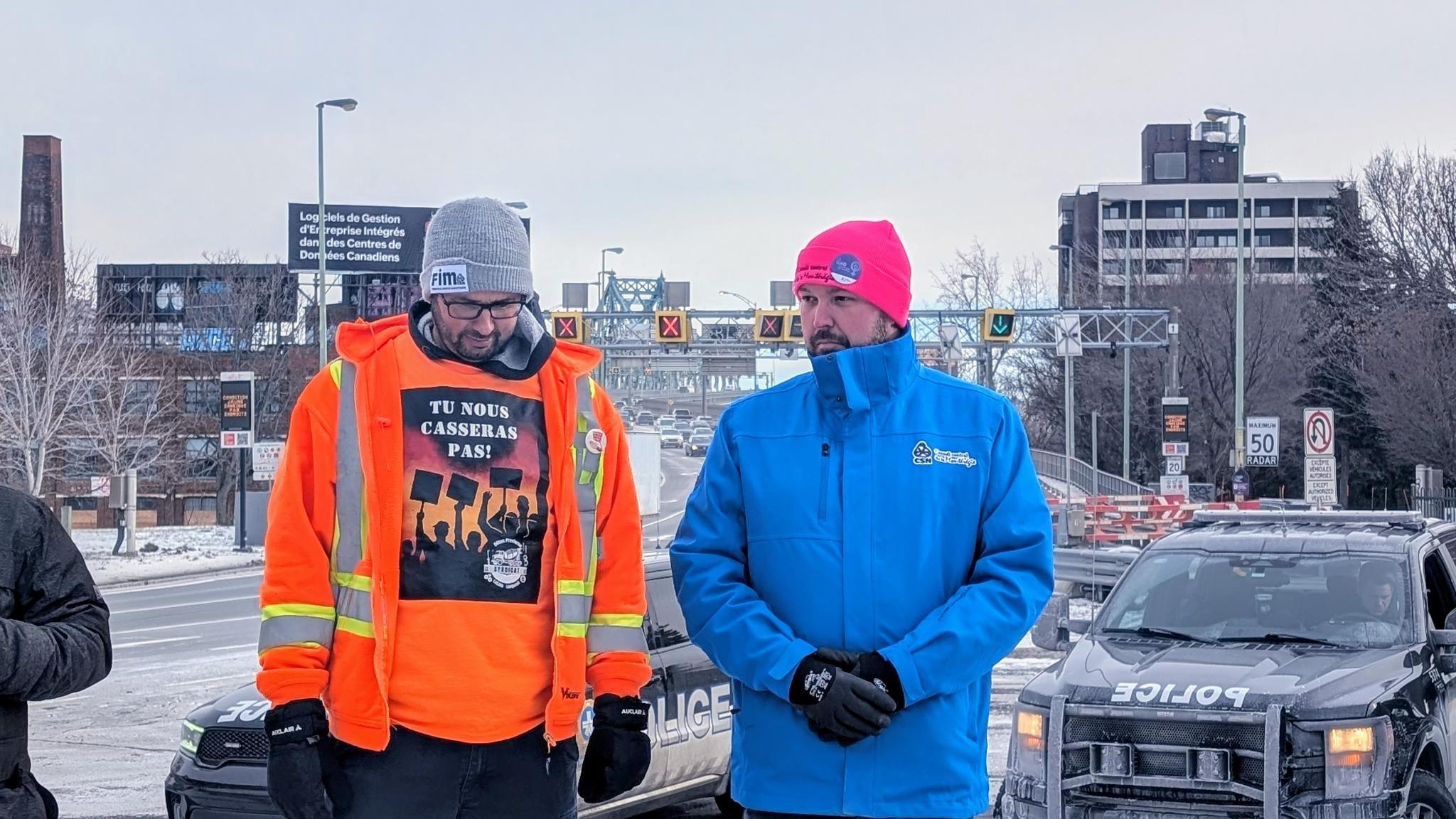
A year without work, living on subsistence wages and under the pressure of a never-ending conflict: this is what the workers at Béton Provincial’s LaSalle and Longueuil plants have been through, yet they remain steadfast despite everything. Their boss, the wealthy André Bélanger, has been preventing them from returning to work since December 5, 2024.
This lockout affects some 50 concrete mixer drivers, mechanics, and yard workers who are members of the Syndicat des travailleurs de Béton Provincial (LaSalle-Longueuil)–CSN.
Since the beginning of the dispute, the Quebec concrete giant has not changed its offer. It is proposing a real wage freeze for four years and minimal wage increases in 2028 and 2029. It also wants to abolish the pension and group insurance plans.

Major setbacks in working conditions
For Jean-François Gagné, concrete mixer operator and interim president of the union, it’s not just a question of percentages. “Yes, wages are important, but so are working conditions.”
Their boss wants to include Saturdays in the normal work week and calculate overtime on a weekly basis, not daily. In an environment where workdays often exceed 12 hours, this means a significant drop in wages and less family life.
In addition, the employer wants to prevent workers from choosing whether they will work eight-hour, 12-hour, or even 14-hour days. For Gagné, this is unacceptable. There are workers nearing retirement “who have given 50 years of their lives to the employer, and they just want to work eight hours a day!” he exclaims.

Beyond working hours, the future of workers at both plants is under threat. Their pension plan, into which the employer contributes the equivalent of 5.5% of their salary, would be replaced by a “retention bonus” of $0.50 per hour. Group insurance would be replaced by a “flex” plan paid for by employees, which Gagné describes as “really mediocre.”
Despite a year without a normal salary, the group is holding strong. “There are fewer of us, but we are united,” says Gagné. “Those who remain are here for the fight, for the cause.” He repeats that ”we won’t break. It’s the employer who will break.”
The union members denounce the company’s contempt for them. They point out that management declared its lockout just before Christmas last year and delayed workers’ access to unemployment benefits. “Everything to hurt us,” sums up Gagné. “From the beginning, everything to hurt the workers.”

A conflict bigger than themselves
For the workers in LaSalle and Longueuil, this conflict goes far beyond their situation. They are convinced that management wants to make an example of them in order to impose setbacks elsewhere in the company. According to Gagné, the message sent to others is clear: “You accept my offers, or you’ll end up like Longueuil–LaSalle, out on the street.”
Meanwhile, the Legault government remains silent. The workers point out that Béton Provincial has hired a former aide to Minister Pierre Fitzgibbon and that it “has connections within the CAQ.”
Indeed, Alexandre Ramacieri, chief of staff at the Ministry of Economy, Innovation, and Energy until September 2024, now works for André Bélanger’s company. He is now vice president of corporate development and communications, a role that often brings him into contact with the government.
Gagné is categorical: “We agree that the CAQ will not take any action against an employer who is its buddy. A buddy is a buddy.”

The Minister of Labour did not intervene on behalf of the workers, despite a year of conflict and a report confirming the use of strike breakers in the summer of 2025. Yet he was quick to act in the conflict between the STM and its workers, which was causing major traffic problems.
Meanwhile, Montreal and its surrounding area face a huge need for concrete to repair aging bridges, highways, and tunnels, which contributes to traffic jams. But the strategic plants in LaSalle and Longueuil, among the best placed to respond to these infrastructure projects, remain shut down because a single owner refuses to negotiate.
After a year-long lockout, workers at both plants still want to return to work, but not at any price. “We’ve wanted to negotiate since day one. We love our jobs. But there’s no way I’m going back under these conditions,” insists Gagné.
“Our demands were not unreasonable,” adds Serge Savage, vice president of the union. “We just wanted to be respected for what we were asking for, and above all, we didn’t want to back down or lose what we had gained over the years.”
Be part of the conversation!
Only subscribers can comment. Subscribe to The North Star to join the conversation under our articles with our journalists and fellow community members. If you’re already subscribed, log in.