
Even though the Canadian government says it has “suspended” arms exports to Israel, a report shows that it is lying to the public. Canadian fighter jet parts and explosives continue to be used in bombs dropped on Gaza, thanks to a loophole that allows them to pass discreetly through the United States.
Published in late November, the report Exposing the U.S. Loophole uses trade data and Pentagon contracts to identify and track hundreds of Canadian military shipments between 2023 and 2025, including after the “suspension” of arms exports.
It shows that 34 shipments of military aircraft parts were sent to the Israeli military from Lockheed Martin factories in the United States after receiving identical shipments from Canadian suppliers.
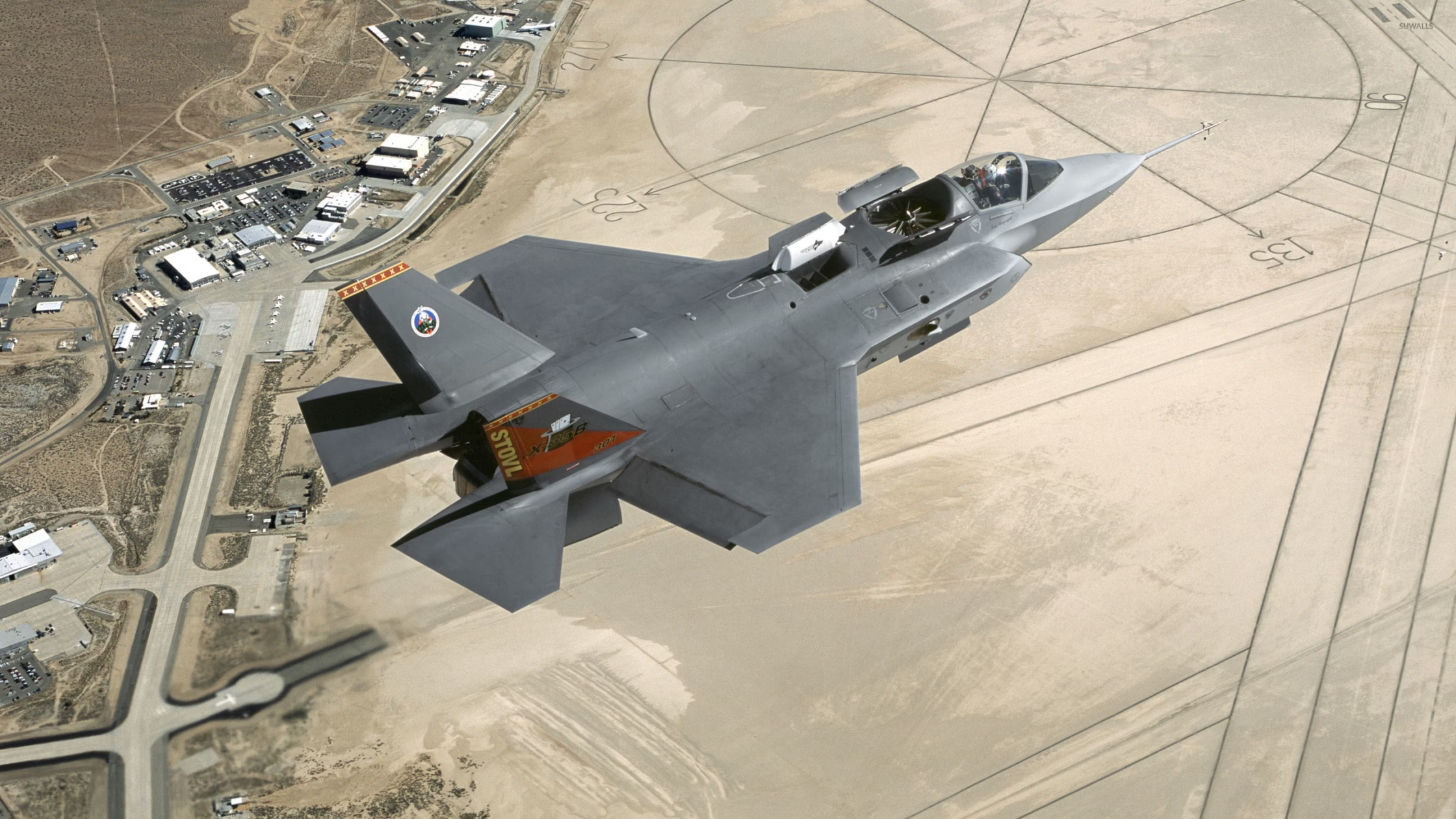
In total, the report identified 360 additional shipments of aircraft parts sent to Lockheed Martin in Texas. These parts would be used in the construction of the F-35, used by the Israeli army.
In addition, there were 150 shipments of explosives to U.S. munitions factories from General Dynamics, located in the Quebec towns of Valleyfield and Repentigny. The American factories in question produce bombs, shells, and tank ammunition for Israel.
Finally, the report lists 433 shipments of TNT manufactured in Poland, unloaded at the port of Saguenay, Quebec, and then transported by truck to these same factories.

Loophole in the law
This export route exploits a loophole in the Export and Import Permits Act. How? Normally, an export permit is required to take military goods out of the country. But for the United States, there are plenty of exemptions. This allows Canadian companies in the industry of death to discreetly ship their products via their southern neighbour.
Furthermore, shipments are not included in official statistics, and no assessment of the “risk” to human rights is made. Yet this assessment is required of all signatories to the Arms Trade Treaty. And once shipments arrive on U.S. soil, the Canadian government stops tracking them and claims no further responsibility for their use.
Each year, this regulatory loophole allows more than $1 billion worth of Canadian military products to be exported to the United States. Yet former Foreign Affairs Minister Mélanie Joly had said that Canada would not allow “any weapons or parts of weapons” to reach Gaza, either directly or indirectly. Her successor, Anita Anand, has promised not to “fuel this conflict.”
Quasi-Canadian fighter jets
Several Canadian companies supply essential parts for the F-35, which is being used extensively in the bombing of Gaza. For example, Honeywell in Mississauga produces controllers for the power management and cooling system, considered the “heart” of the aircraft.
But that’s not all. Héroux-Devtek, in Laval, is the exclusive supplier of landing gear locking mechanisms. Magellan Aerospace, in Kitchener, builds the wing struts. Cyclone Manufacturing, in Mississauga, manufactures wing spar components.
According to the report, each F-35 contains more than US$2.3 million worth of parts manufactured in Canada. Israel has already received 45 of these aircraft and is expected to receive 30 more by 2030. Since October 2023, Israeli F-35s have been used to drop 2,000-pound bombs on residential buildings, refugee camps, and civilian infrastructure in Gaza.
The authors of the report speak of “deliberate negligence” on the part of Ottawa. They explain that by allowing exports to the United States without oversight, the government avoids debates in Parliament and legal challenges. This allows it to protect the profits of the Canadian death industry.
On the ground, it is families, workers, and refugees who suffer the consequences of this production chain. That is why the report calls for a complete arms embargo with Israel, the closure of the loophole that allows exports to the United States without a license, and the use of the Special Economic Measures Act to cut off exports of arms, explosives, and parts.
Be part of the conversation!
Only subscribers can comment. Subscribe to The North Star to join the conversation under our articles with our journalists and fellow community members. If you’re already subscribed, log in.