

Another year, another election cycle, another year of the Ford government. For Ontario, 2025 brought contractions, squeezes, and belt tightening—proverbial and literal. The year saw thousands of jobs disappear overnight, increased scarcity of affordable housing, and even more open repression of working-class Ontarians.
Another Ford mandate
The Progressive Conservatives triggered an early election this year, stating that the Tories needed “the strongest mandate in Ontario’s history” to fight Donald Trump’s tariffs. With a 45% voter turnout, the election ended with a PC majority chosen by only approximately 20% of eligible voters. The PCs only gained one seat after all the ballots were counted.
While Ford stated that this election was needed to unite Ontario against the United States exercising their immense economic sway over Ontario’s economy, it also conveniently solidified the position of Ford and his many friends in real estate, development, and resource extraction for another four years.
In June, the province passed the “Protect Ontario by Unleashing our Economy Act,” opening swathes of land for resource development while removing or ignoring environmental regulations and consultation with First Nations.
Despite the province’s rhetoric of “cutting red tape” and “encouraging development,” housing starts were at an all-time low, having only met a third of 2025’s developmental goal by October. Ontario was also the leading province in unemployment this year, with a rate of 7.8%.
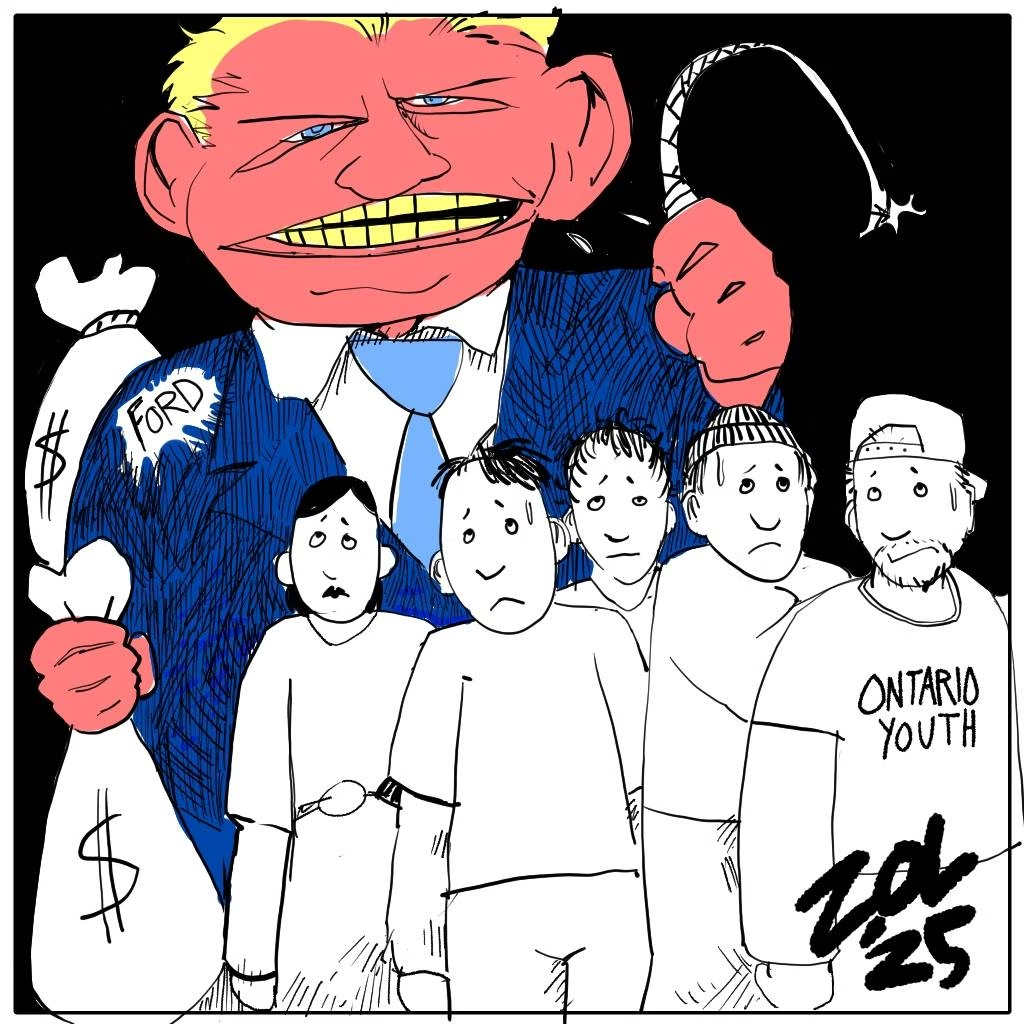
Workers ignored and abandoned
In a desperate bid to hold onto power in late 2024, the Trudeau Liberals made a complete 180 on immigration policy, drastically downsizing the temporary foreign worker program (TFWP), and using immigrants as a scapegoat for the housing crisis.
The Naujawan Support Network’s Post Graduate Work Permit Committee held a 143-day-long encampment near Highway 410 and Queen Street in Brampton, which they wrapped up in late January. The workers camped out to protest changes in the TFWP that would result in them losing their employment, and residency in Canada.
In November, the Ontario government followed the federal government‘s lead by suspending the skilled trades stream of the Ontario Immigrant Nominee Program, citing “systemic misrepresentation and fraud,” resulting in protest by skilled trades workers.
In spite of claims by mainstream media outlets, the reduction of permanent residence acceptance from 485,000 in 2024, to 395,000 in 2025, as well as a 10% decrease in study permits has not alleviated the housing crisis for the average Ontarian.
Thousands of workers have found themselves at the mercy of the Canada-U.S. trade war. How exactly tariffs and retaliation were going to unfold changed with the wind, and workers found themselves held hostage by U.S. and Canadian states oligarchs.
Cities such as Windsor, Guelph, Kitchener-Waterloo-Cambridge, and Hamilton were hit hard due to manufacturing and export-related economies. In the automotive sector, Windsor and Brampton were hit hard by the loss of Stellantis plants and thousands of jobs.
Ontario’s steel industry also took a hit from tariffs this year. Algoma Steel laid off 1,000 workers in December alone. The federal government had been planning to save the steel industry since Trump election in February. However, it seemingly never had a plan to keep steelworkers employed or protected whatsoever, instead deferring to retraining and welfare programs.

The offensive on tenants ramps up
With Doug Ford back in office, Ontario passed more housing legislation in favour of developers and landlords. The passing of Bill 60, “Fighting Delays, Building Faster” Act in late November squashes tenant rights at the Landlord and Tenant Board and gives more powers to landlords to evict, and in turn, upcharge on housing.
In the face of people across Ontario being thrown onto the streets, the mainstream media has continued to run cover for the big landlords and real-estate trusts responsible for the housing crisis.
The assault on tenants rights hasn’t come without backlash. In Toronto, housing organizers and tenant unions across the city have mobilized against the Ontario government and the landlord lobbying body, the Federation of Rental-Housing Providers of Ontario (FRPO) with whom the government has with whom the government has close ties.
Repression of activists
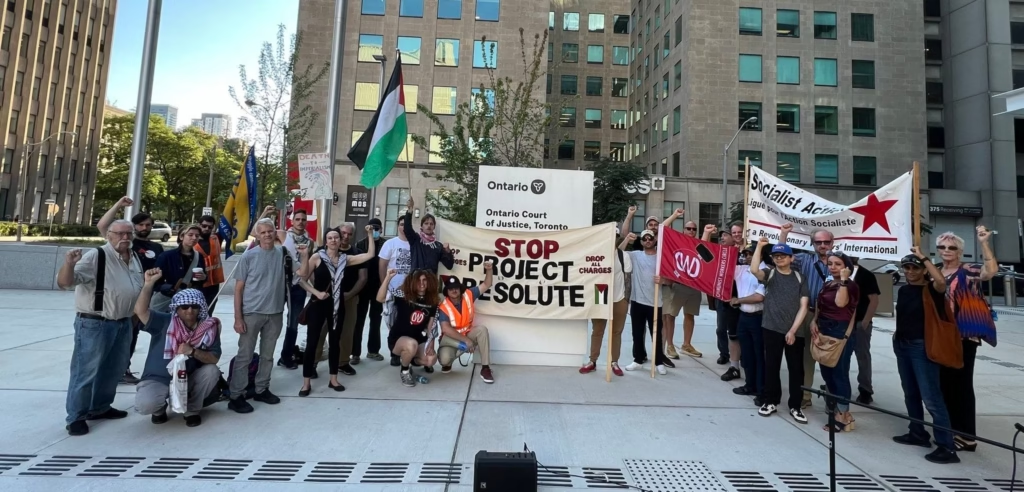
In Toronto, a union activist was convicted and sentenced for assault as part of “Project Resolute,” a project by the city to clamp down on Palestinian solidarity organizing via predawn raids and targeted surveillance. In late November after activists blockaded “The Best Defence” arms expo in London, police raided four homes to arrest six people allegedly involved with the demonstration.
Further suppression of free expression includes Toronto and Vaughan’s “bubble bylaws,” where demonstrations within 100 metres of “vulnerable places” have become illegal. Bylaws were passed that make demonstrating punishable by up to several thousands of dollars in fines as a response to a protest passing by Mt. Sinai Hospital and demonstrations against illegal land sales held in synagogues in Vaughan.
With the increased targeting of organizers via legal sanctions and reprisals, it is important to highlight the state of the provincial justice and corrections system during the last year.
The “Protect Ontario Through Safer Streets and Stronger Communities” Act passed this summer allows the province to streamline the hiring of what Premier Ford calls “tough on crime” judges, and to restrict who is eligible for bail.
2025 was a year of contraction and austerity for the average Ontarian; high unemployment, high cost of living, and a renewed government that represents all manners of cartels and oligarchs. Much more open and united disdain by Ford, the province, and its oligarchy against the working class was the theme of the year.
In this context, 2026 will be a boiling point for the poor, working, and dispossessed in Ontario.
Be part of the conversation!
Only subscribers can comment. Subscribe to The North Star to join the conversation under our articles with our journalists and fellow community members. If you’re already subscribed, log in.