
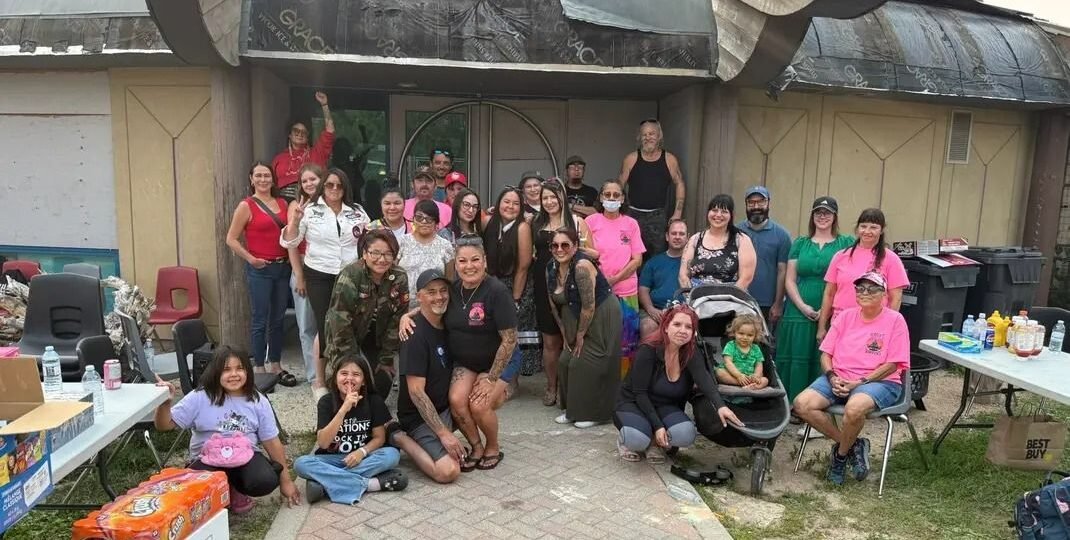
On January 26, Winnipeg police evicted organizers from Thunderbird House, an Indigenous community centre which they had occupied for the past year in protest of its board of directors, who organizers say have neglected the building and prevented it from fulfilling its role in the community. For its part, the board justified the eviction by claiming the organizers have prevented the building’s restoration, and represented a danger to themselves, the building, and the construction workers. Organizer Meagan Salwan tells a different story.
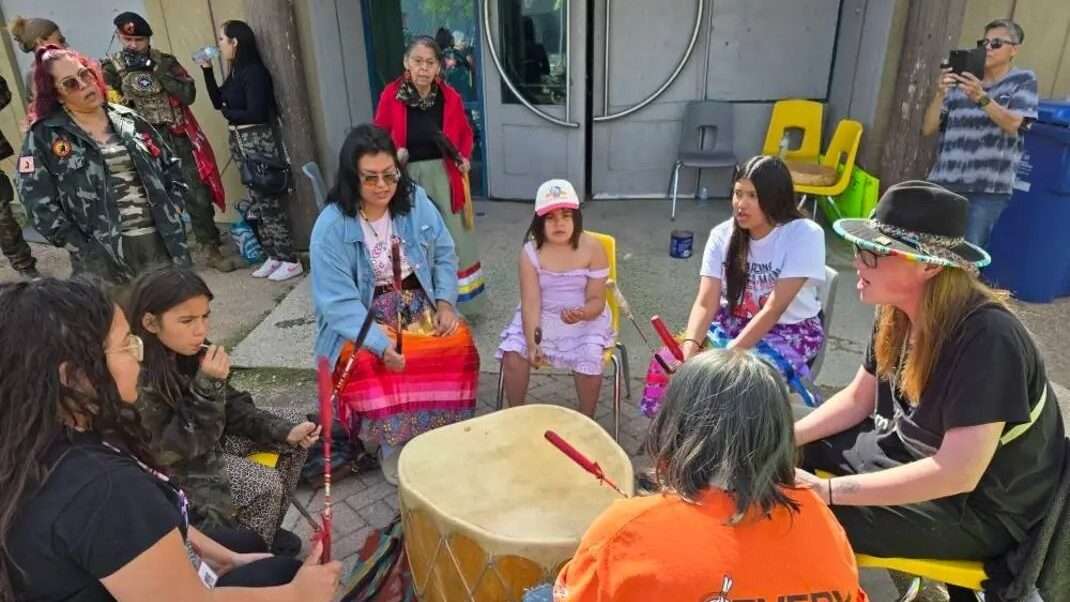
Built in 2000, Thunderbird House is a community centre in Downtown Winnipeg intended to provide opportunities for the city’s large urban Indigenous population to reconnect with Indigenous culture and to seek guidance from elders. For years, it hosted countless programs and community initiatives, including sweat lodges, men’s and women’s groups, drum circles, alongside classes on several topics including life skills.
Thunderbird House’s current board of directors consists of 6 members: Tammy Christensen, Randy Way, Coleen Rojette, Della Herrera, Eric Robinson, and Marileen Bartlett. All are directly involved with the management and direction of dozens of other organizations, ranging from provincial and Indigenous bureaucratic government institutions, to banks, to NGOs dealing in human resources and arts and culture. The North Star will publish an in-depth investigation into this board of directors in the coming weeks.
Salwan describes that over the last decade, the building has been neglected and mismanaged, leading to a steady decline in programs which culminated in 2024. “I was very involved in the community programming at Thunderbird House for so long, up until 2024, when the Board cut all public access to the building, saying it was no longer safe.”
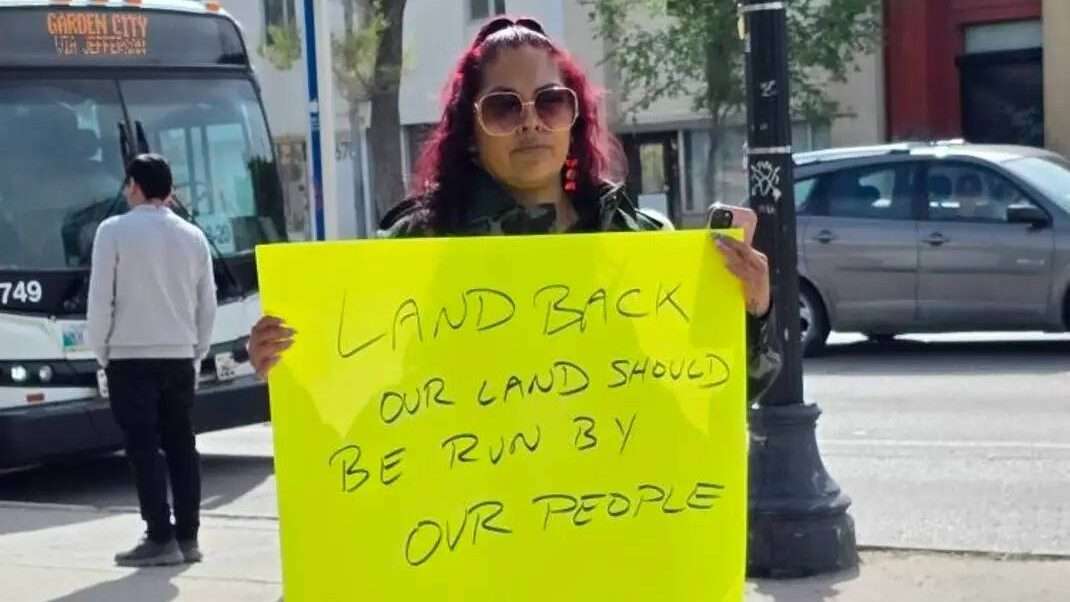
After being kicked out, Salwan says she didn’t stop thinking about her community centre. “I’d drive by and notice people are still going in and out, and thought, ‘Well, if the community’s not allowed, how come they have people going in there?’” Further investigation revealed the building was renting out some of its offices for use by Main Street Project, one of the city’s major homeless shelters. “I thought that was strange.”
This got Salwan thinking about what might be going on. “I started looking through the by-laws, and found out the board is supposed to have an elders council. But they don’t have an elders council, and they haven’t for years.”
Salwan saw that properly observing the building’s governance structure was a first step to restoring the centre. “I reached out to community members, and we put together a list of elders who could form a council and turned it into a petition. I brought the petition to pow-wows and into the streets. I got hundreds of signatures.” However, Salwan says the petition was ignored.
“The board should need the say of the elders to make decisions, but they won’t reinstate the elders because they know the elders will vote them off. That’s why they’re avoiding it.”
Not content to leave things at the petition, Salwan tried something else. One day she caught the door open, walked in, initiated ceremony, and refused to leave.
“I don’t know what I was thinking, I just did it,” says Salwan. “The occupation got a huge amount of support immediately […] We were trying to bring spirit back into the building because everybody knows it has been run down, and nobody was taking care of it. We cleaned it up, we fixed plumbing and leaks, we were taking care of the relatives outside, we were holding a ceremony again. It got the community back caring about the building.”
The occupation demanded the Board submit to a financial audit, reinstate a council of elders elected by the community, host a public AGM, and begin renovations with the millions of dollars which the Board had received for that purpose in 2023. As of this article’s publication, only the demand for renovations has been met.
Salwan accuses the board of trying to co-opt the occupation, offering her a position early on. “I said I’d take it if they reinstated the elders council, and they said they could talk about it. So I said absolutely not. It makes no point to join if they’re so corrupt. I had to make a point. The board has to go, the community needs to vote, and the elders council needs to be reinstated.”
Eviction
The eviction came suddenly and without warning. In the early morning on January 26th, Ernie and Drew Stacey of Winnipeg-based private security contractor ES Security stormed into the building. Five Winnipeg Police officers followed shortly after.
Salwan says that the organizers were shouted at, and intimidated into leaving the building with threats of arrest. There was clearly no plan in place for the recovery of countless items, including objects of spiritual, cultural, and historical significance.
“We had the Tipi poles from Camp Morgan and Camp Mercedes,” she says. “After they found Morgan Harris, Morgan’s Warriors held the ceremony for her in Thunderbird House. We had her ashes in there with the tipis. We kept telling the police that these are sacred items, that we needed to get them out. They kept saying it would be too much work, and that we couldn’t get them out today.”
When organizers pleaded that they be given the time necessary to respectfully retrieve the numerous sacred items which were still in the building, Salwan says, “Private security kept provoking and mocking us, and the cops would laugh. It was just humiliating.”
By that afternoon, ES Security had chained the doors shut from the inside and blotted out the windows, leaving a crowd of a little over a dozen activists, mostly Indigenous women and elders, to stand out in the cold for hours awaiting updates. At the time of writing, many personal and sacred items, including tipi poles, remain locked inside.
A different story
Salwan says the board’s justification for the eviction is totally baseless. “The board are the ones who allowed the building to fall into disrepair. If the building was being managed properly, it would still be operating. We’ve proved this by running things successfully there for the last year. We got it done by relying on the community. The board doesn’t have a connection to the community because they are busy kicking us around.”
While the board secured almost three million dollars in public funds for renovations in 2023, Salwan explains that nothing was done with the money until the occupation drew attention to the issue. “They asked for an extension in 2024. So why have they been sitting on this funding?”
Regarding supposed safety concerns, she points out this has been an unfounded excuse for years. “If it was a safety concern [in 2024], why did they have the Main Street Project renting out rooms? If it was a safety concern [in 2025], why weren’t we evicted at the beginning when we first occupied the building? If the construction is a safety concern now, how come [ES Security] is in there now, even though the board tells us it isn’t safe for anybody to be in there?”
Speaking to an undercover journalist from The North Star over text, Ernie Stacey said that rules for safety are easily followed because they are “posted all over” the interior of the building, and that those inside have “nothing to worry about from construction.”

Investigating the board’s claims of the occupation’s danger to the community, The North Star spoke to social workers and community members in the surrounding area and heard unanimous praise of the group for their service to the community. The occupation was described as reliable, serious, and responsible to people’s needs, offering food, warm clothing, and breaking up fights.
While the people who have organized at Thunderbird House for the last year do not appear to have been a danger to the community, the private security company hired by the board to replace them may be. After posting about the aggressive behaviour of ES Security owners Ernie Stacey and his son Drew Stacey at Thunderbird House, several family members came forward to alert Megs to facts about the self-proclaimed “Proud Indigenous” company.
Curtis Stacey told The North Star that Ernie, his father, “from what I know, does not have a Metis card, and hires whoever he can hire. Not just Aboriginal people.” He also described his father’s approach to security work as “aggressive.”
On top of this, “My brother [Drew] was charged with possession of child pornography,” says Curtis. “He went to jail for it, and he’s still on parole, after he previously violated it by having a cell phone […] Obviously, working for my dad, he’s on the sex offender list, and my dad knows that… It’s quite shady.”
Much of what has been said by Salwan and others involved has gone unreported in coverage by major outlets like the CBC and Winnipeg Free Press, which organizers accuse of amplifying the board’s narrative without sufficient scrutiny.
“People don’t see what is happening because the media doesn’t ask us,” Salwan says, explaining that mainstream media are often unaccountable when they misrepresent people’s struggles.
“[Because of media coverage] lots of people don’t realize that we have homes, lives, and families, and that we are making sacrifices to be here for our community. There’s no personal benefit. If I wanted to benefit, I would have accepted their offer to join the board at the beginning.”
“The board tries to control the narrative and to confuse people, because they want people asking the wrong questions and at each other’s throats. When the media always sides with the institutions, it’s unfortunate.”
Be part of the conversation!
Only subscribers can comment. Subscribe to The North Star to join the conversation under our articles with our journalists and fellow community members. If you’re already subscribed, log in.