
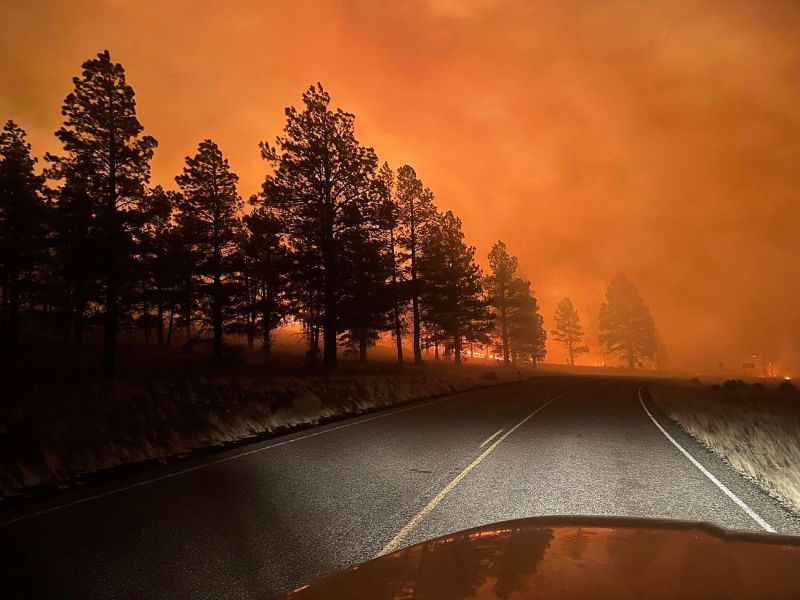
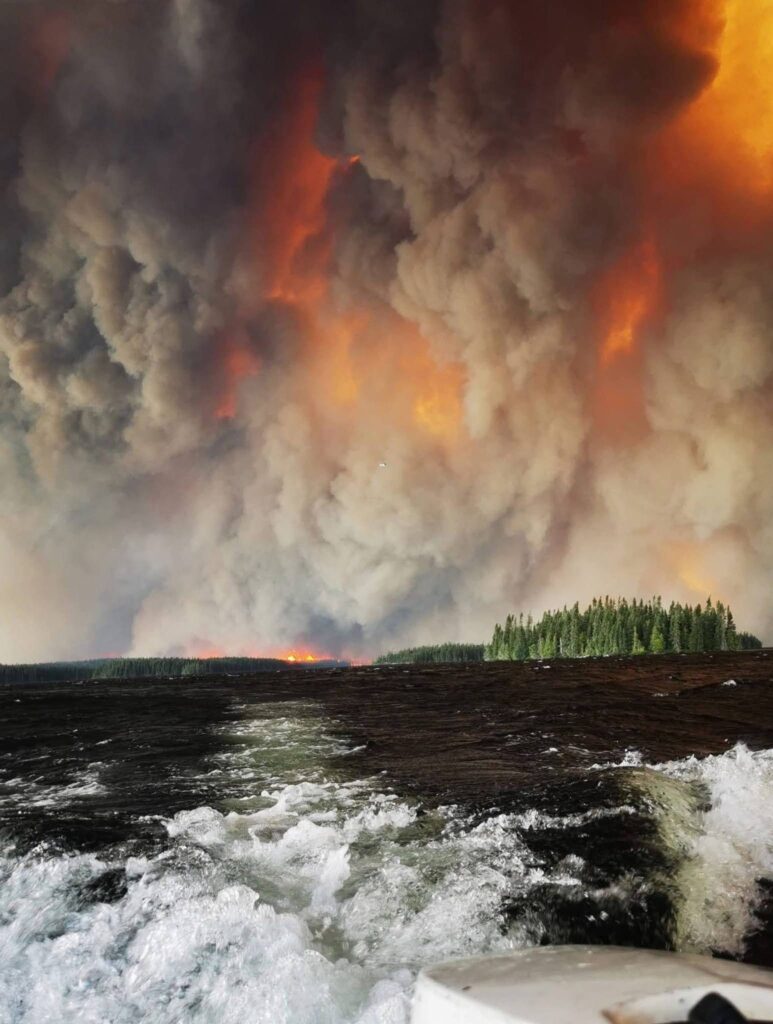
A series of wildfires in northwestern Ontario are ravaging communities, forcing widespread evacuations and leaving much of the province exposed to dangerous levels of smoke, extremely poor air quality, low visibility, and exceptionally high temperatures.
As of July 14, there were at least 185 active fires in Ontario, with more reports identifying the number to be closer to 200. Multiple northern communities, including Armstrong, Collins First Nation, Gakijiwanong Anishinaabe Nation (Lac La Croix First Nation), Gull Bay First Nation, Lac des Mille Lacs First Nation, and Whitesand First Nation, were forced to evacuate due to rapidly spreading fires.
Anishinabek Nation Grand Council Chief Linda Debassige shared in a statement on Wednesday that Namaygoosisagagun First Nation, or Collins First Nation, has been “devastated” by a fast-moving fire that caused extensive damage and destruction to the community infrastructure. The damage in other communities remains to be assessed.
CN sends rail workers into dangerous conditions
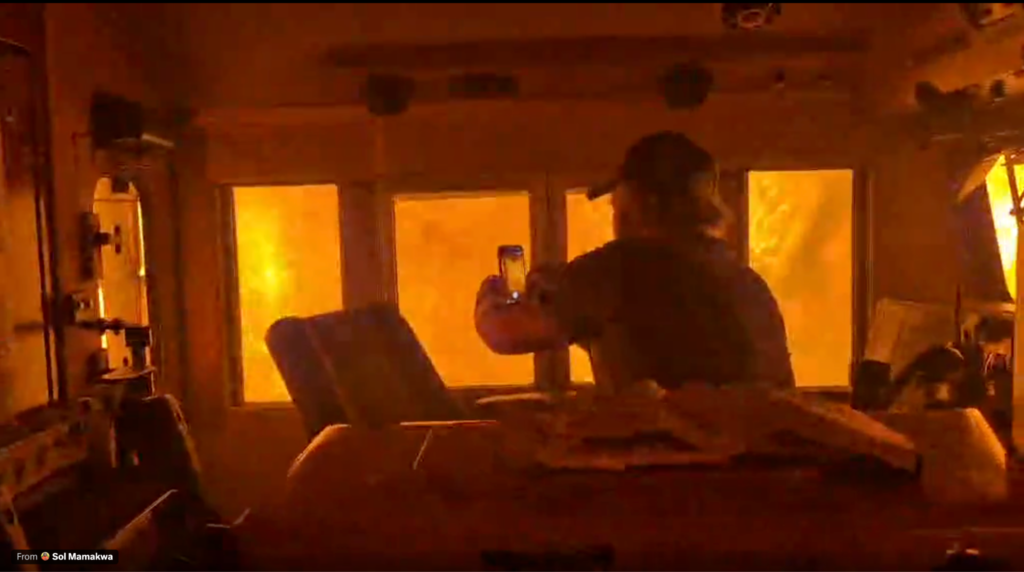
A viral video showed a crew of CN rail workers surrounded by flames in Armstrong, Ontario. One worker can be heard saying, “This [the fire] could potentially overtake us here. This is getting a little scary.”
The rail workers handled the situation courageously and were evacuated safely. Their union, the Teamsters Canada Rail Conference (TCRC) denounced CN for knowingly sending workers into the region for the sake of “operational efficiency” and “supply chain fluidity.”
The TCRC said that “CN should never have sent a train down those lines. The company knows exactly how bad the situation is in that region. That fire has been raging for five weeks.” It called on CN to stop running trains through active wildfire zones, emphasizing that “no shipment is worth a human life.” The Canadian National Railway Company has yet to respond to the union’s statement or comment on the incident.
Prevention budget and regulations slashed
While Premier Ford claimed in his statement on Wednesday that Ontario is “not sparing a penny to keep people safe,” his government has progressively decreased the province’s forest firefighting budget since 2019 when they first cut the budget by nearly 67 percent.
The Ford government is also responsible for passing Bill 5, the Protect Ontario by Unleashing Our Economy Act, which reduces regulation and gives private industry the greenlight to expedite resource extraction projects in northern Ontario.
Critics of this law and communities in northern Ontario, especially First Nations whose lands remain at risk of resource extraction, have long raised alarm about the dire environmental consequences of putting profits over the protection of people and the environment.
Be part of the conversation!
Only subscribers can comment. Subscribe to The North Star to join the conversation under our articles with our journalists and fellow community members. If you’re already subscribed, log in.