
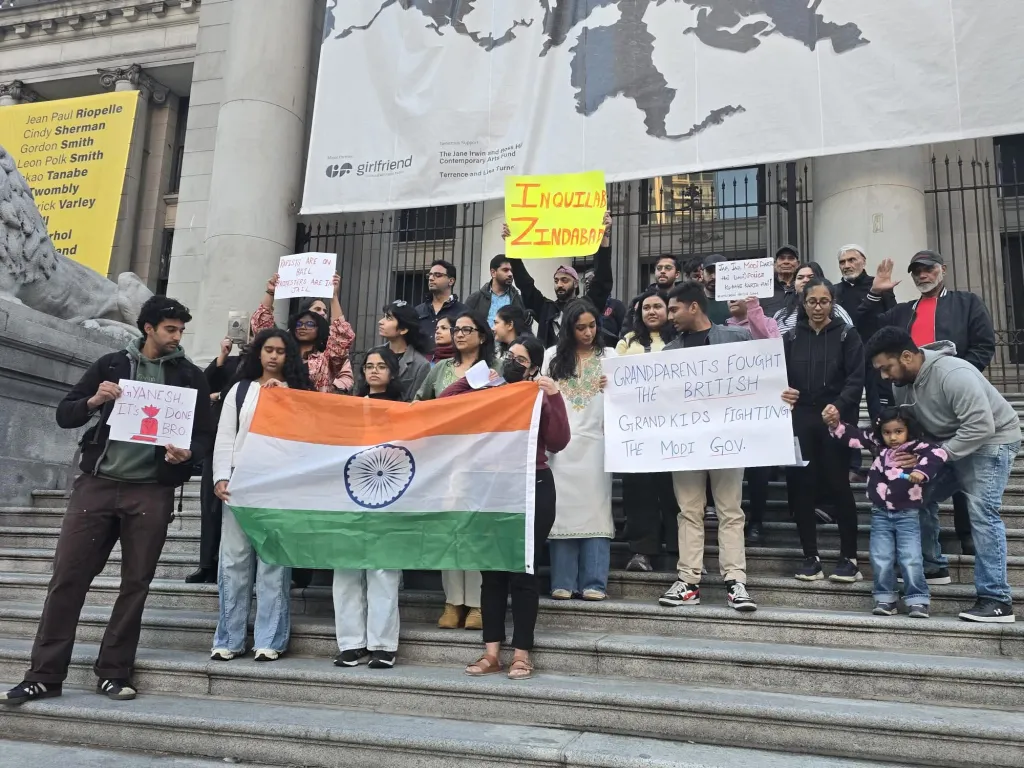
130 million voters were removed from the voting lists across India, following an exercise by the Election Commission of India called the Special Intensive Revision (SIR). Protests sparked across India and the diaspora, demanding accountability and resignation of the Chief Election Commissioner. Protestors in Vancouver called the SIR a “threat to Indian democracy.”
The nationwide revision has been making its way across the country in multiple phases, covering different states and union territories of India at a time. As of October 2026, over 130 million voters have been removed from a number of different voter lists. The capital territory of India, Delhi, saw the loss of 32.78% from its previous electorate with the SIR developments.
The SIR was introduced earlier in 2025 by Chief Election Commissioner Gyanesh Kumar. It is described as an exercise being conducted by the election commission which verifies the existence of citizens on electoral rolls across the country in national and state level elections. The exercise requires individuals who have been removed to appeal by proving their existence through 11 different documents.
After making its way to the capital region in its third phase, the growing level of public outrage against the SIR reached its peak, with millions speaking out and hundreds of thousands gathering in and around the capital. In response, thousands of activists have been detained, lead figures of the movement have been arrested and over forty thousand security personnel were deployed against the demonstrators. The Jantar mantar — well-known for a tradition of demonstrations taking place there — has also been denotified of its official protest site status, making any gathering there illegal.
Protests in solidarity with the activists in India, and against the SIR have sprouted across Canada on September 11th in major cities like Toronto, Montreal, and Vancouver. Protestors asked for an immediate release to all political prisoners, the resignation of Gyanesh Kumar, and the readmission of all those removed from the voting lists.
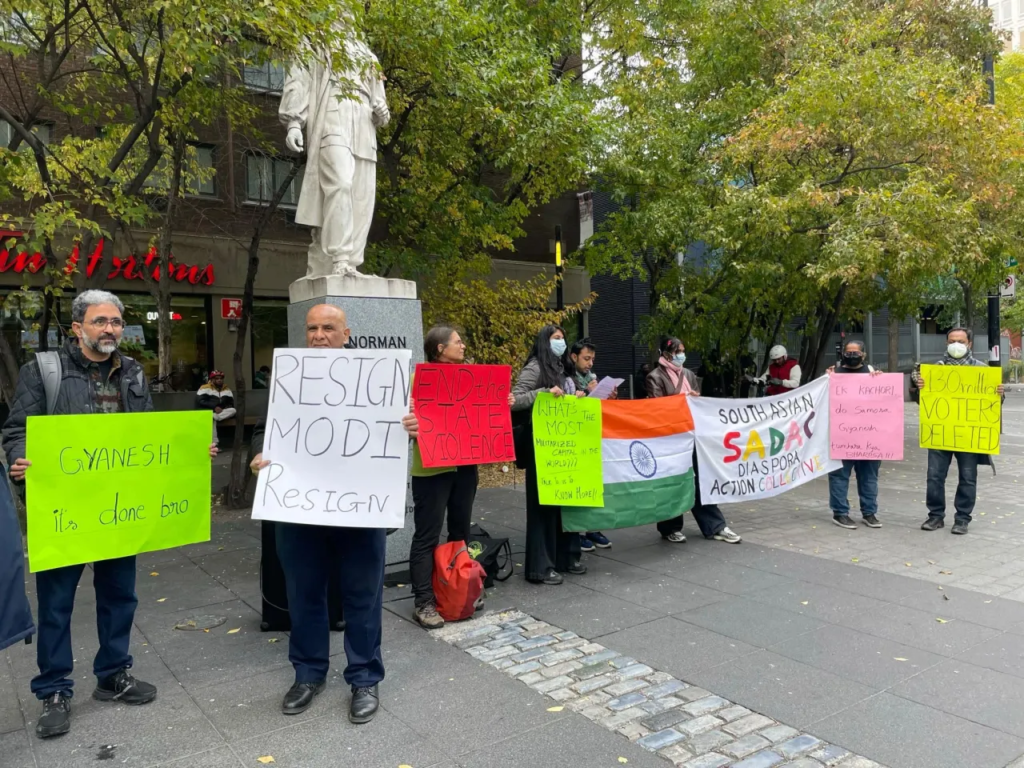
Repression in India persists
The opposition against SIR has involved various forces, including students, women, low-caste and tribal communities, trade unions, and political parties. Repressive force and measures have been used across this spectrum, including the detention of Rahul Gandhi, a leader of the Indian National Congress, the second largest political party in India.
The Supreme Court of India, ahead of the SIR protests, had ruled that essential services should not be shut down. Despite this, internet and metro services were shut down by authorities. This was Delhi’s second big wave of internet shut downs this year, with the previous wave happening during the NEET protests.
Repression of the SIR opposition replicates many of the measures that were taken against the NEET student protests which happened two months ago, including the deployment of armed personnel and paramilitary squads.
The leadership of the Cockroach Janata Party, a key movement in coordinating the NEET protests, have also been arrested after posting a video to social media pushing a plan for peaceful protests at Jantar Mantar.
Verification or disenfranchisement ?
The SIR verifies voters on 11 different documents, which requires government approved documentation of not only their identity and residence, but also their parents identity and voting history.
The process has proven to be a bureaucratic nightmare for many, disproportionately affecting disadvantaged communities in India like migrants and the poor. Wherein previous elections, a voter ID or aadhar card (identity card) would have sufficed, multiple documents that must now be produced are in locations inaccessible to them. Additionally, the SIR has confused both sides, with Form 6 (new voter registration) preventing many from completing the form because of its unclarity.
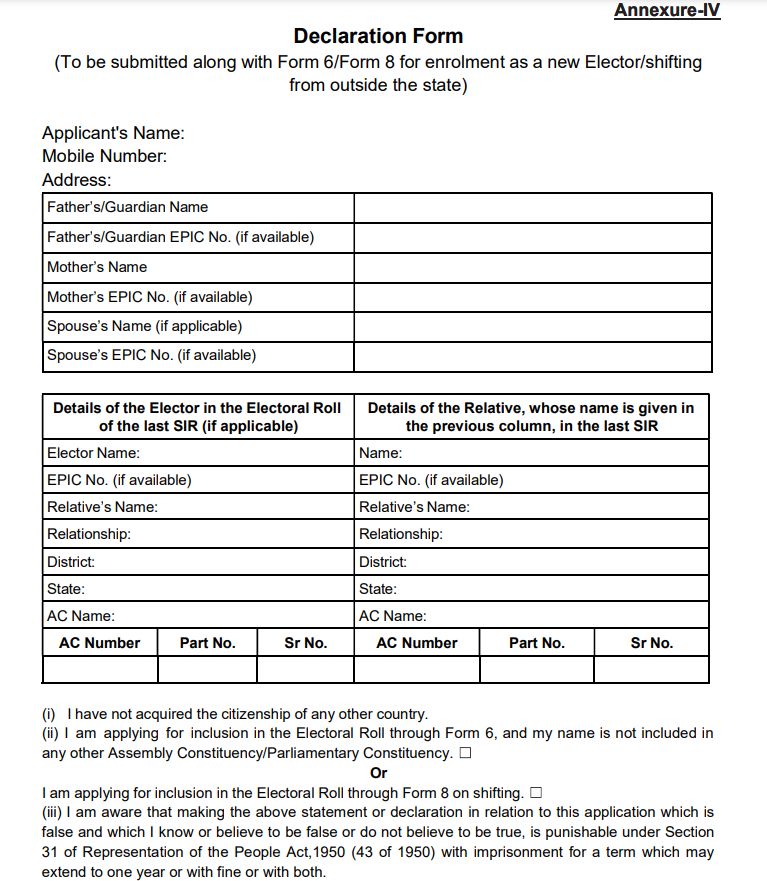
Although citizens can appeal their removal from the voting list, their participation in this upcoming election is not assured. Out of 3.8 million completed applications sent, only about 120 000 people have been added back to the voter roll, with over 3.6 million still pending.
“It’s bad, but there’s no changing it” said Prabh, a passerby at the rally in Vancouver. “That’s how it is in India. You just keep your head down and try to survive.”
An investigation done by the Indian Express exposed internal friction and illegal decisions in the Election Commission of India, carried through by Gyanesh Kumar. The report revealed 14 separate occasions where objections and disagreements to various SIR-related decisions were ignored and carried through anyway. Among these decisions were incorrect deletions and additions to the voting list, limiting the control of electoral voting officers, and giving the Chief Election Commissioner (Gyanesh Kumar) more power.
The Election Commission of India is a three person body, constructed of the Chief Election Commissioner and two other election commissioners. The body is supposed to act as a democratic, non-partisan impartial body which leads the country through its voting processes, where decisions must be followed through by a majority vote.
A play by the party in power ?
Protestors have called to question the characteristics given to this body, with decisions appearing to collude with the Bharatiya Janata Party (BJP) this election season. Although Gyanesh Kumar does not hold any formal membership or affiliation with the BJP, protesters have brought up his career’s relation to many BJP related projects, such as revoking the regional autonomy of Jammu and Kashmir.
An investigation by The Wire found higher rates of deletion among muslim voters in the Bihar, with deletion rates of 3.7% compared to 1.9% for non muslim voters.
“It’s a play by the BJP government and Gyanesh Kumar to win majority votes in states like Bihar,” said Shaan, a protestor at the Vancouver rally. The BJP has a history of Hindu supremacist policies, especially in regards to the muslim community in India. It’s the cas of its new education policy.
Be part of the conversation!
Only subscribers can comment. Subscribe to The North Star to join the conversation under our articles with our journalists and fellow community members. If you’re already subscribed, log in.