
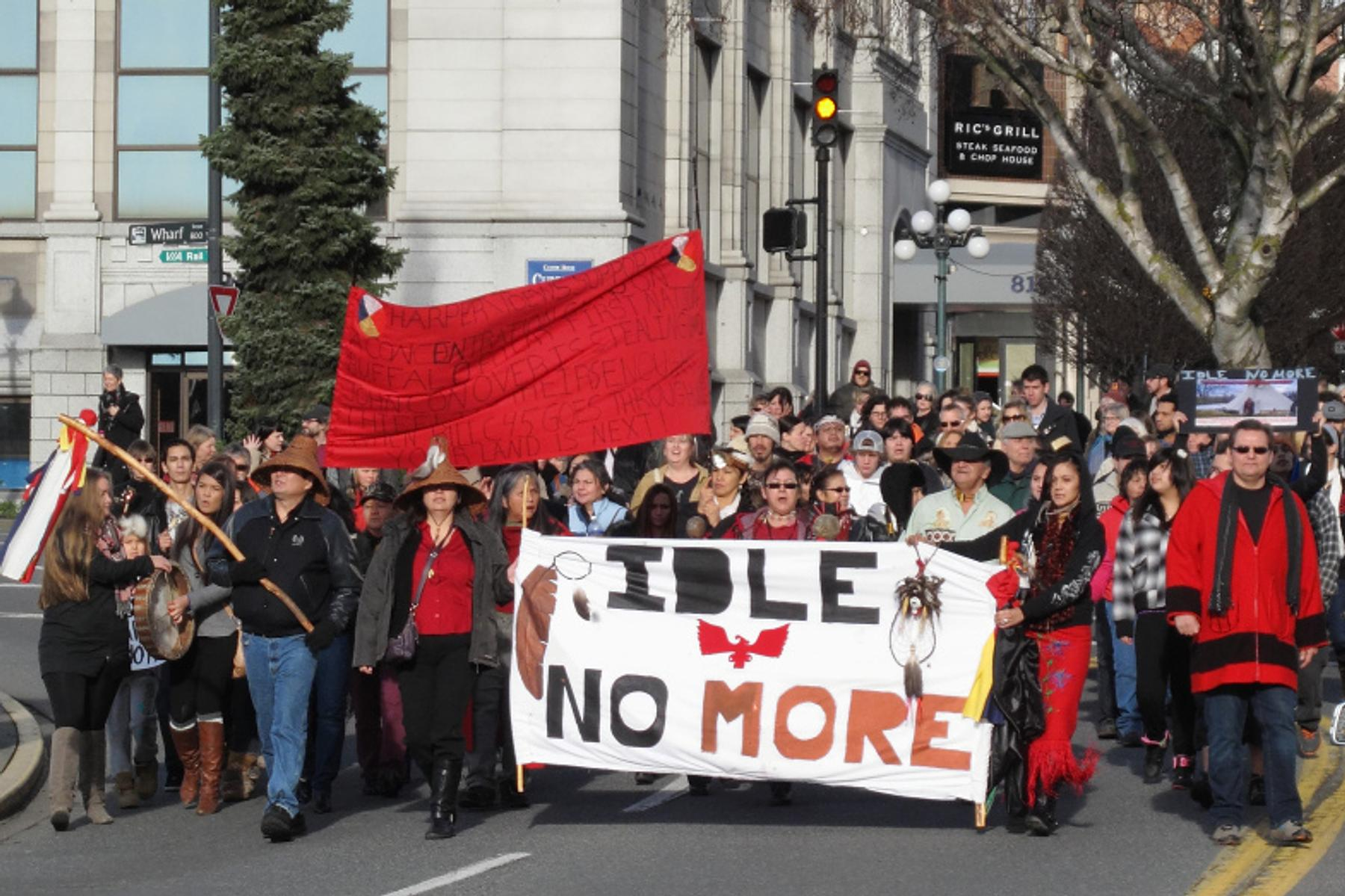
Mark Carney wants to reform or repeal the Indian Act. He announced on October 26 that he would instruct premiers and ministers to work with First Nations to achieve this. But the removal or reform of the Indian Act is a herculean task that would require the Canadian state to confront one of its defining contradictions, rooted in its history: the fact that it is a colonial entity from which certain elites in the country benefit, with two tiers of citizenship.
The 1876 Indian Act is almost as old as Canada itself, and has seen numerous changes over the last century-and-a-half. It is foundational to Canada as a country, and has long governed the Canadian state’s relationship with the First Nations. The Act defines who is a “status Indian” — an individual the state officially recognizes as being First Nations nationality — and the government of Canada sole authority over “Indians and lands reserved for Indians”.
In short, the Indian Act is the entire legal foundation for all laws governing First Nations peoples and their affairs in Canada, and the atrocities that would follow, such as the residential school system.
Through the Indian Act, Indigenous people found themselves deprived of legal, cultural and political rights as well as opportunity for economic development on their reserves. Traditional forms of governance, whether hereditary or democratic, were done away with by the Crown, which imposed the band-council system across all reservations.
Furthermore, until the 1960’s, the federal government stationed “Indian Agents” on reserves to act as direct enforcers of state interests. Other imperialist powers looked to Canada’s Indian Act as inspiration for their own laws on racial segregation, like South Africa which studied the Act to develop Apartheid and racial purity laws.
Small improvements to the law
Many draconian and discriminatory provisions of the act have since been abolished, now allowing for freedom of movement, freedom of marriage, and even some provisions for limited self-governance. However, the act now places the First Nations in a difficult spot.
On the one hand, it puts all lands under control of the Crown, and the Canadian government still determines who has “status”. This status as second-class citizens places Indigenous peoples in a situation of apartheid, according to the Assembly of First Nations, and the United Nations has repeatedly denounced it.
As such, a large number of people with this status find themselves victims of discrimination, police brutality, and poverty (even though this situation does not affect only registered Indigenous peoples). For example, Status Indians make roughly 40% less than non-indigenous Canadians, 40% of Indigenous children live below the poverty line, and Indigenous people in general are eight times more likely to be killed in a police confrontation.
On the other hand, the Indian Act is the only thing that recognizes Crown-Indigenous treaties and the respective rights that come with said treaties — that is, it provides a limited recognition of Indigenous sovereignty.
A colonial law for a colonial country
At the core of the Indian Act is a contradiction that Canada has never been able to reconcile: that of its colonial existence and the national self determination of Indigenous peoples. Today, Premier Kinew and PM Carney claims that Canada is a democratic society that leads the world in human rights, but at the same time, Canada’s economic foundation centres around expanding its capacity to extract natural resources from Indigenous lands to provide fuel and minerals to the markets of the world, funnelling the wealth from said economic endeavors into a tiny class of oligarchs.
According to the Ministry of Natural Resources, 42% of the world’s mining and exploration companies are based in Canada, and Canada is the world’s top potash provider. Mineral exports were valued at $153 billion in 2024, accounting for 21% of Canadian domestic exports. Saskatchewan, the province that produces the most potash in the country, is embroiled with a dispute with the Federation of Sovereign Indigenous Nations (FSIN) — a federation of representing 74 First Nations in Saskatchewan — which claimed that under numbered treaties with the Crown, the multiple First Nations did not give up mineral rights to the state or any private enterprise.
Further proof of this contradiction can be found in the Ontario government’s ventures into the “ring of fire” and the passing of Bill 5 to bypass First Nations and environmental consultation requirements. In British Columbia, Indigenous land is targeted by external real-estate developers, and energy cartels exploit pipeline development on Indigenous lands. In Quebec, logging companies that trespass to collect lumber are confronted by Indigenous defenders.
Even the very same Mark Carney, who announced intentions to move beyond the Indian Act, was advertising projects that have been historically opposed by Indigenous peoples for foreign investment. The timing of Carney’s announcement occurs in the midst of the trade war with the United States, at a time when Ottawa is looking to speed up major development projects — including pipeline and mining projects on Indigenous territories.
At its core, the Canadian Confederation is a colonial entity: its creation and the repatriation of its constitution are the result of talks at Westminster. The pillars of its economy are controlled by mining and energy monopolies, who will require more land and workers to extract more fuel and minerals for world markets.
A fair negotiation ?
Any change or abolition of the Indian Act would require the Crown and First Nations to renegotiate their entire social, political, and economic relationship to one another. The rights and ownership of land, ongoing court disputes — whether over land claims or charges for political activism, linguistic and cultural rights, consultation and control of development projects, and funds held in trust by the Crown are several examples of factors that must be taken into consideration. Such a framework has been proposed by the FSIN.
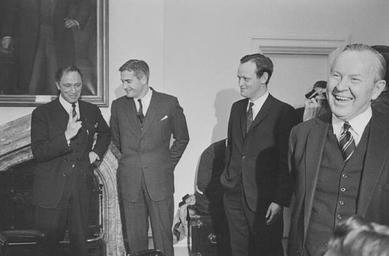
Idle No More activist and Lawyer Janice Makokis points out the last time an attempt was made to abolish the Act via the 1969 White Paper Act, it was met with widespread criticism by First Nations, who viewed it as an attempt to trample on their rights.
“We must scrutinize whether the language of modernization and economic partnership is being used to shift power away from our nations, while opening our territories to development,” explains Makokis in the foyer of the House of Commons, “Our rights existed before the Indian Act; they do not depend on the Indian Act. But abolishing it without a process directed by First Nations themselves risks another era of paternalism, of Canada deciding what our freedom should look like then writing the rules for us.”
Be part of the conversation!
Only subscribers can comment. Subscribe to The North Star to join the conversation under our articles with our journalists and fellow community members. If you’re already subscribed, log in.