
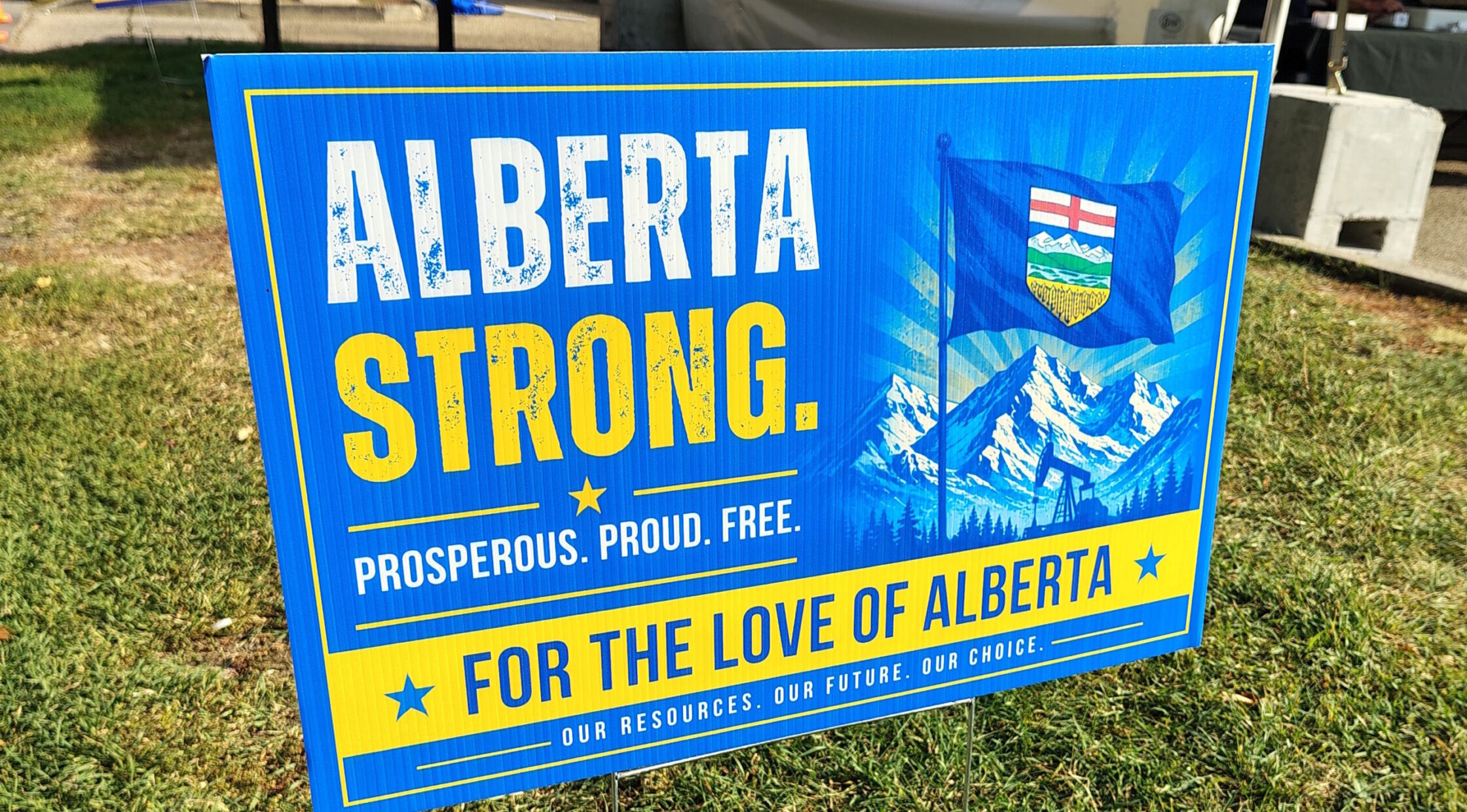
Seventy-five percent of voters in yesterday’s Alberta referendum opposed a process leading to the province’s independence. Yet they also mandated their government to reform the Canadian constitution. This is undoubtedly a questionable strategy, but one that could yield results given Alberta’s economic importance within a fractured Confederation.
The referendum results spoke for themselves yesterday: there is no doubt that, in Alberta, the option of secession lacked sufficient popular support to prevail. The separatists won by a narrow margin in only two ridings in the western part of the province: Central Peace–Notley and Rimbey–Rocky Mountain House–Sundre.
However, the referendum was not limited to asking Albertans if they wanted to leave Canada; nine other questions were also posed. Of these, only one, related to federal programs, was rejected—by 51% of voters.
Of the eight that were approved by referendum, five are rather reactionary and ride the wave of anti-immigration sentiment sweeping several countries, while two others aim to increase provincial autonomy. Obviously, the use of migrant workers as scapegoats for the system’s failures is troubling. But it is the very last proposal that draws particular attention: abolishing the Canadian Senate.
There is cause for celebration if the Alberta government makes a serious commitment to abolish an ancient eyesore like the Senate. This far-fetched institution is, at best, a way to pay former hockey players, strip club managers, and comedians to stay home, but at worst, serves the interests of the status quo.
But, when calls began circulating from so-called pro-worker groups urging people to vote in defence of the Senate, it raised some eyebrows. It is hard to imagine which working class these groups were speaking to that led them to conclude that people should oppose the abolition of an unelected legislative chamber.


The lack of courage among so-called “left-wing” parties in recent decades has been so severe that it has led to strange situations where a right-wing government might bring about certain changes that are more progressive than what the left has dared to demand while in opposition.
This is currently the case in Quebec with the new Parti Québécois government. It has decided to wage war on the symbols of the monarchy, while the “leftists” of Québec Solidaire have spent the last eighteen years swearing allegiance to the British crown.
Negotiating without leverage
The question remains, however, whether the Alberta government will even have any chance of securing constitutional changes. Chief Banker Mark Carney claimed to be open to the idea in a podcast a few days ago, but as is well known, the word of a Liberal elected official isn’t worth much.
There’s no doubt that Alberta’s Conservative government was hoping to have the threat of a referendum process up its sleeve before launching into a constitutional standoff with the federal government. Historically, that’s what shrewd ruling classes have done: demand privileges for their own clique, in exchange for which they pacify the pesky separatists.
Alberta’s leaders, however, now find themselves with their hand revealed to their opponent. The federal machine knows full well that Confederation is cracking at the seams, but it’s against its nature to increase provincial autonomy. No one can predict the future, but it would have been quite a surprise to see the Canadian government give in to Alberta’s premier and her referendum.
A historic impasse
René Lévesque’s Quebec government had found itself in the same position following the “no” vote in the 1980 independence referendum. At that time, approximately 60% of voters had chosen not to commit the provincial government to negotiations that could lead to Quebec’s sovereignty.
Quebec’s elites, represented first by the Parti Québécois and then by the Liberal Party, turned to the “noble risk” strategy, which involved striking a deal with the Canadian government to secure a more favourable position for the province within the confederation.
After a decade of foot-dragging and constitutional betrayals, the provinces ultimately failed to reach an agreement that would satisfy both the Quebec nation and the Anglo-Canadian nation. The only serious attempt by the federal government to address Quebec’s demands was the Charlottetown Accord, presented after the Quebec Liberal Party had bluffed about holding a referendum on Quebec’s independence.

Monopolies, a decisive factor?
Politically disarmed, Alberta’s provincial elite will therefore be unable to threaten the Carney administration. That works out well for him, since power in Canada truly lies not in the offices of members of Parliament, but in oil production.
Greater provincial autonomy for Alberta could certainly benefit the energy monopolies that are plundering its land to line their own pockets. These companies are generally opposed to secessionist movements, since they complicate their business dealings, but perhaps the idea of an Anglo-Canadian tax haven might appeal to them.
Perhaps, then, there will be a real showdown over the referendum proposals that won if the province’s wealthy elite see a financial interest in it. Being politically disarmed only means that economic power must play a greater role.
One might doubt, however, that the oil companies and their allies actually give a damn about the Senate and that all of the proposals will be picked up by the powers that be in Alberta.
Be part of the conversation!
Only subscribers can comment. Subscribe to The North Star to join the conversation under our articles with our journalists and fellow community members. If you’re already subscribed, log in.