
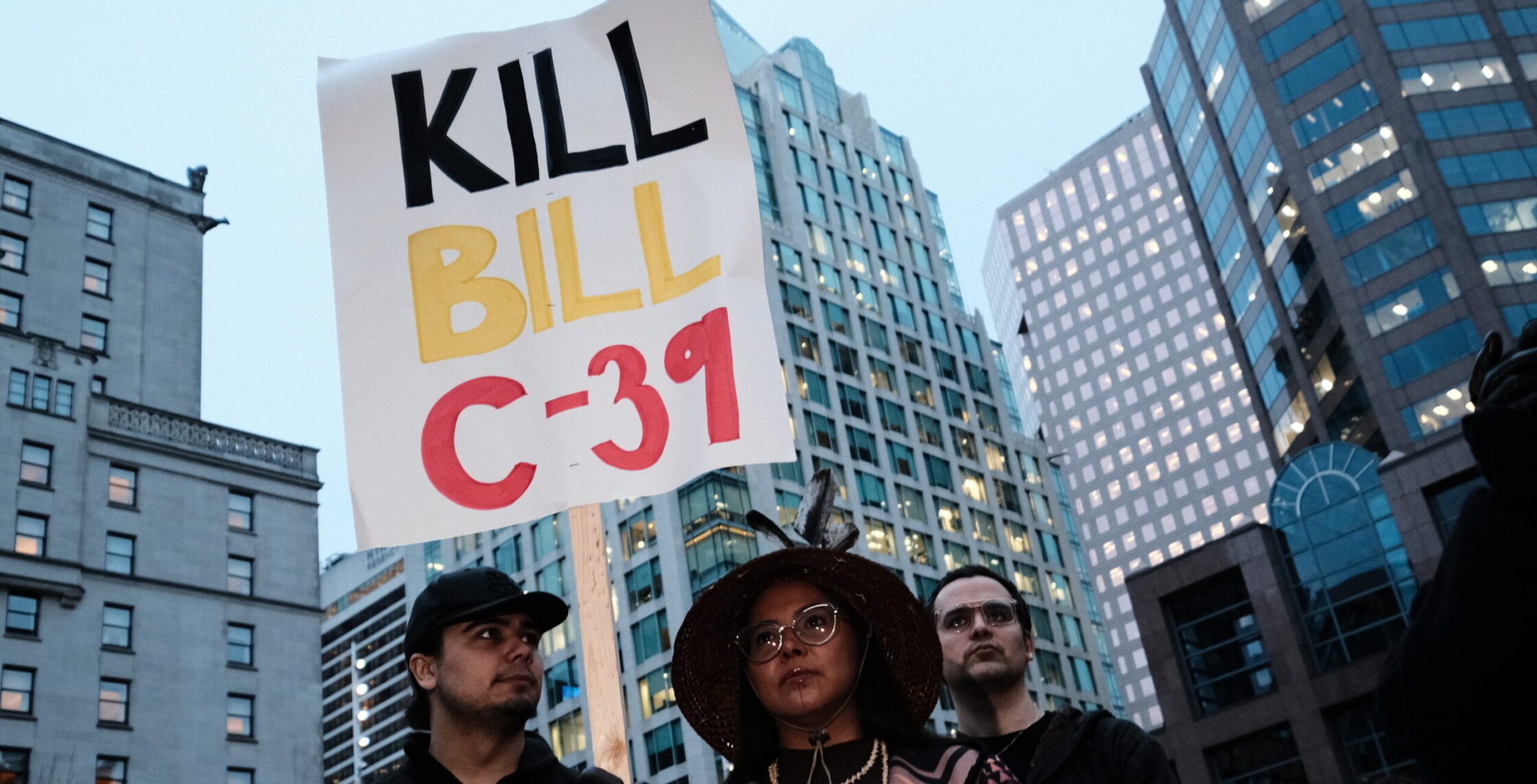
B.C. trade unionists, workers, and sympathizers rallied on Monday, November 23 in Vancouver to protest Bill C-39. The protesters described this Bill, which expands the government’s powers to end strikes, as yet another attack on their rights.
Bill C-39 amends a number of different laws in the name of hastening projects of “national interest”. Proposed revisions add more powers and legislation to Section 107 of the Canadian Labour Code, which already gives the government authority to overrule labour disputes and order striking workers back to work.
C-39 would let Labour Minister Patty Hajdu appoint a special mediator to “settle a dispute” and force parties to mediate for 21 days before a strike or lockout. Bargaining would also have to start 180 to 200 days before the contract expires, through the Federal Mediation and Conciliation Service, which has a history of stagnant dialogue with unions and workers. Even with these new steps, Hajdu would keep the final word and could end legal strikes and impose arbitration on unions.
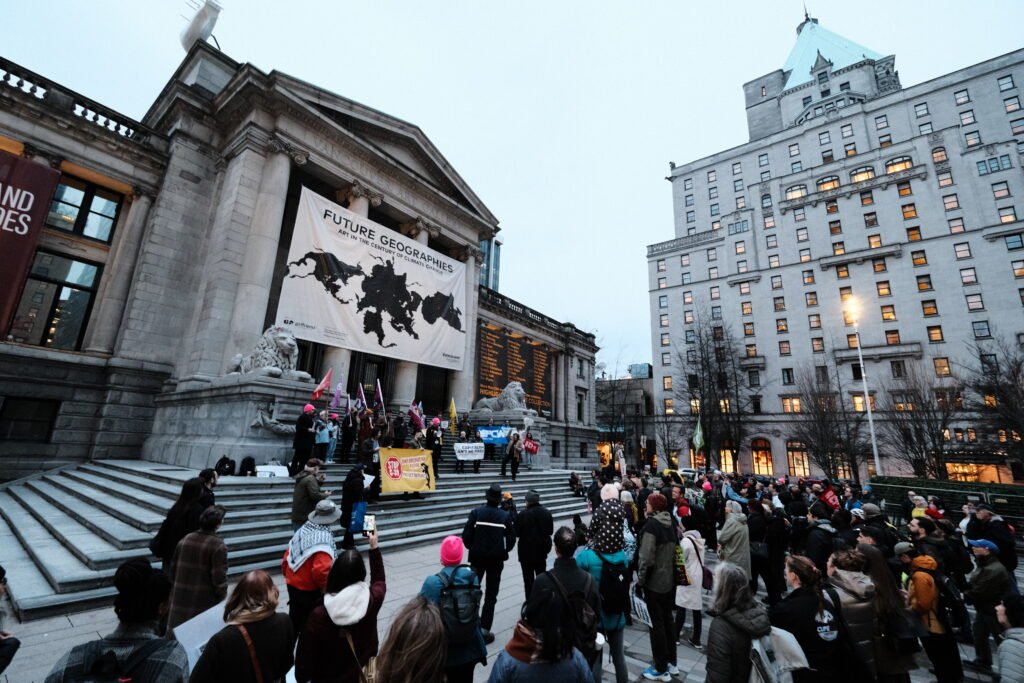
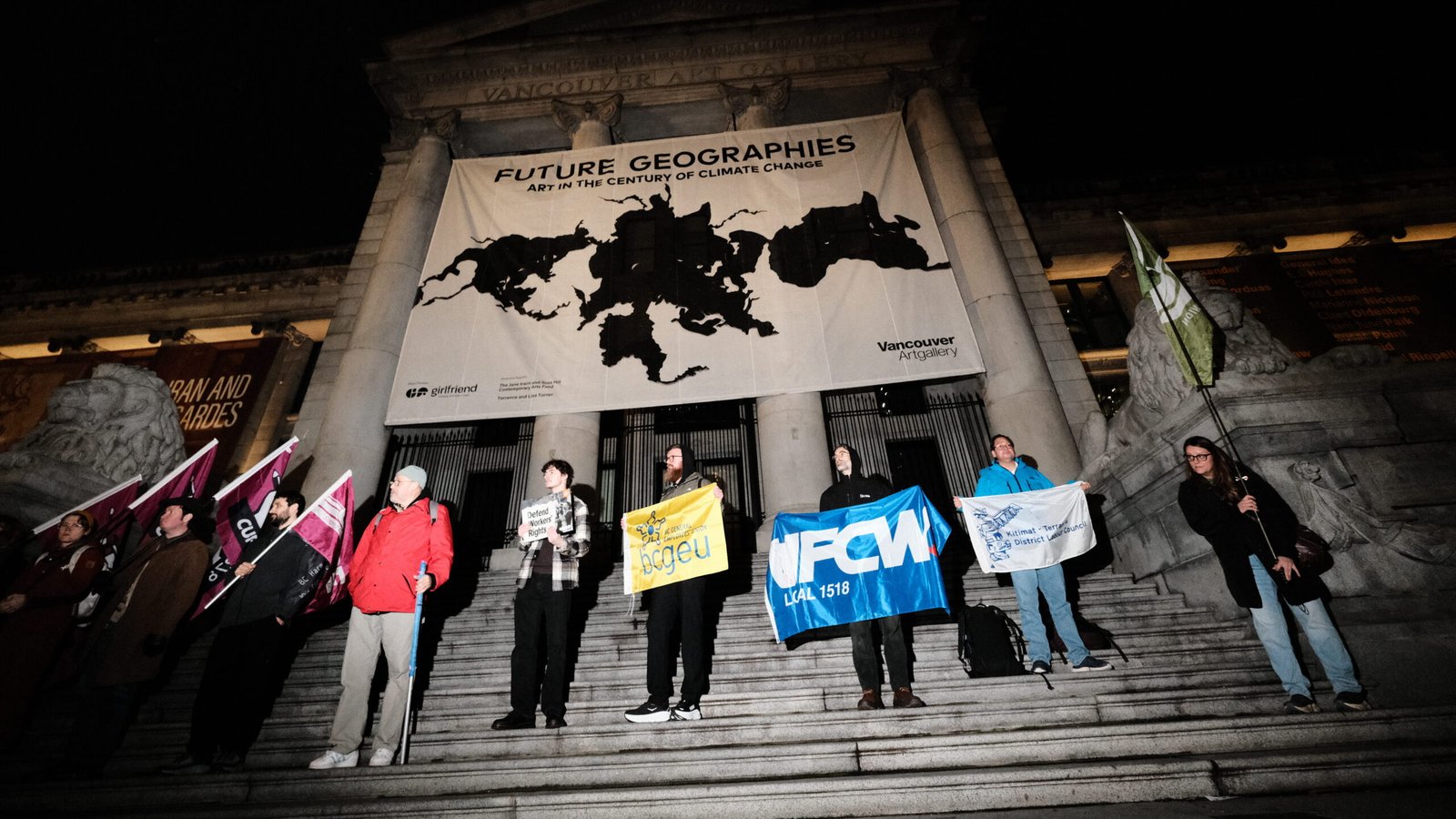
This is the second large mobilization in the Lower Mainland against the federal government’s proposed Bill C-39, following the first which was coordinated through a national day of action on November 12. Organizers and endorsers of the unity rally included Stand.earth, Vancouver District Labour Council, Union of BC Indian Chiefs, and unions.
“Bill C-39 threatens the rights of unions, First Nations, and our climate. We need to fight it together,” said the Vancouver District Labour Council in a social media post promoting the rally.
Speakers described the rally as a way to unite the working class across racial and cultural lines to oppose Bill C-39. Eddy Pedreira, a member of the Canadian Animation Guild, gave a speech about the bill’s benefits to big corporations and oil companies.
“Our power is in the streets” spoke Rob Ashton, former president of the International Longshore and Warehouse Union in Canada.
A bill attacking critical workers
“Bill C-39 is an assault on workers, and our ability to withdraw labour to get a fair contract” said Eric McNeely, the provincial president of the BC Ferry and Marine Workers Union. “Theres two big pieces for us in the Marine sector. The Section 107 piece, which threatens our right to strike, and the Canadian cabotage, which would reduce the access to Canadian ships and Canadian seafarers within Canadian waterways. This could have a negative impact on workers both on the west coast and all across Canada.”
Canadian cabotage rules restrict foreign carriers from transporting goods or passengers between two points in Canada.
Bill C-39 gives special importance to dealing with marine workers as a crucial component in upcoming “national interest” projects. McNeely says division 5 of the bill deals with the marine industry uniquely and isn’t necessary at all:
“Theres already a process in place. Labour units have five days to provide workers for projects. Something that seems faster, seems very very fast, and unnecessary.”
“As far as section 107 goes, we would like to see that piece taken out in its entirety,” adds the union president. “Not amended in a way that actually reduces workers rights.”
McNeely’s union has had their right to strike effectively removed for the past 23 years after a “binding arbitration with Vince Reddy who instituted the clause into the collective agreement that effectively removed our right to strike.”
Vince Reddy is a long time arbitrator who has reportedly mediated over 7000 labour disputes. He currently practices private mediation and arbitration with fellow arbitrator Amanda Rogers. Both were appointed as the mediators to pacify the more than 55,000 B.C. nurses on strike earlier this year for better working conditions and safety protections.
McNeely says Reddy’s clause has prevented them from carrying out job actions and resulted in below-inflation increases. The poor wages and conditions made many workers leave the job, and barely any join. He says the consequential actions of the clause has been seen in BC’s ferry system, with various sailings being cancelled because of the lack of crew.
CLC’s double L strategy
The rally took place on the opening day of the annual BC Federation of Labour Convention, a week-long event that gathers union delegates from across the province. The Labour Federation is a member of the Canadian Labour Congress, a cross Canadian labour organization.
Groups have called the CLC’s conciliatory attitude towards employers. In Vancouver, workers and unions have rallied against their national days of mourning, where both unions and employers come together to mourn workers who died on the job.
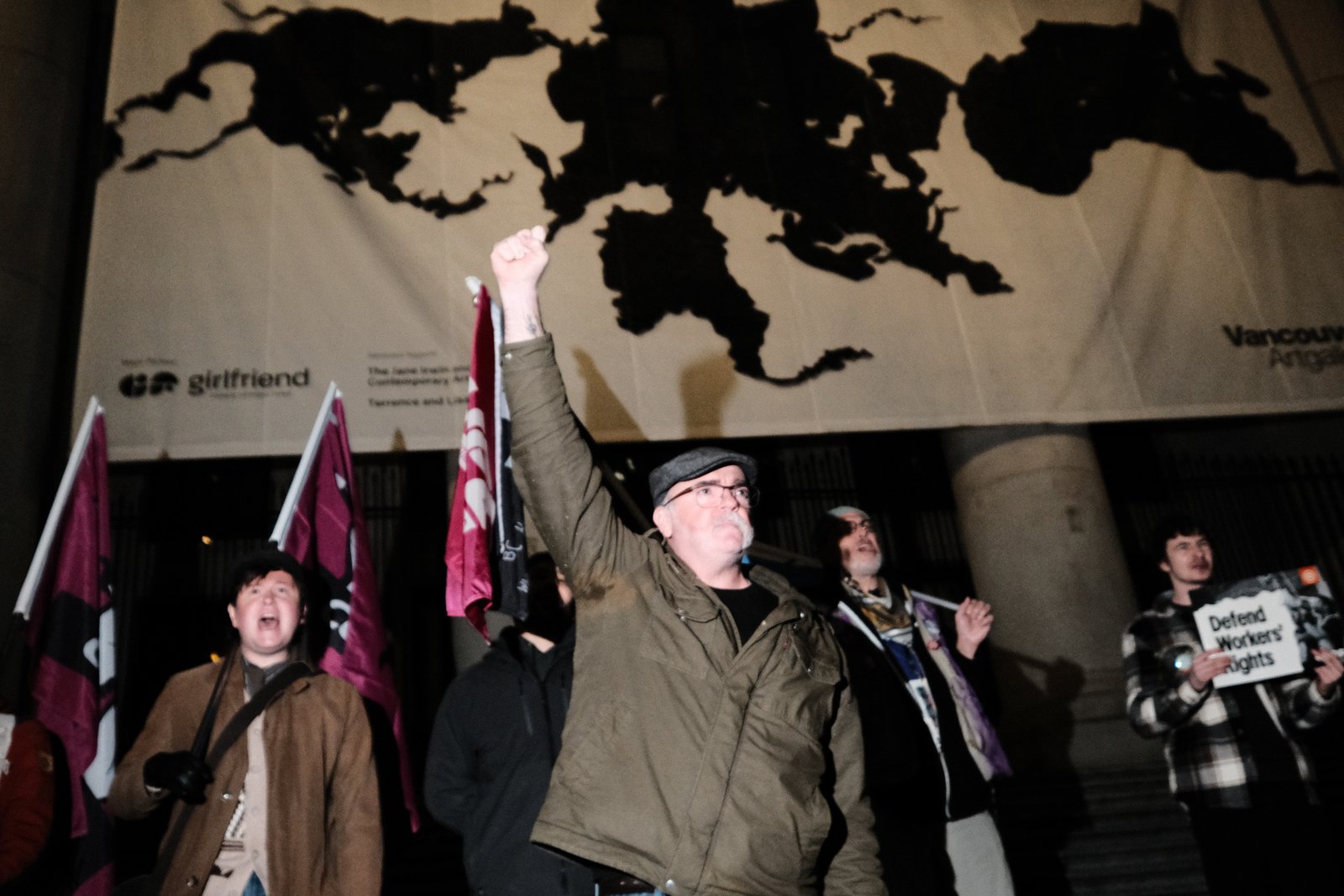
The North Star spoke with various delegates to the conference and members of the Federation at the rally about the strategy moving forward with Bill C-39. Several delegates and members echoed the Canadian Labour Council’s talking points on the bill, which center on lobbying and letter-writing MPs.
But these methods didn’t seem to be enough for the people at the rally. Ari, an apprentice welder at the rally, said he fears losing his right to strike. He said designating “projects of national interest”, such as the Pacific Link Pipeline, threatens workers in his sector, who do dangerous work and need leverage to negotiate safe working conditions.
“None of the money is circling back into Canada’s economy either… All of the money from these projects is going into big corporations and billionaires.” When asked about solutions to the Bill, Ari said the only viable solution would be to “scrap it.”
“Lobbying and letterwriting is one thing, but it’s not enough,” said Stephen Von Sychowski, a member of the Vancouver District Labour Council and United Steelworkers. “This government has a majority in parliament, and they will pass this bill with or without amendments. We need to ready ourselves for the fight that will come when they do.”
Be part of the conversation!
Only subscribers can comment. Subscribe to The North Star to join the conversation under our articles with our journalists and fellow community members. If you’re already subscribed, log in.