
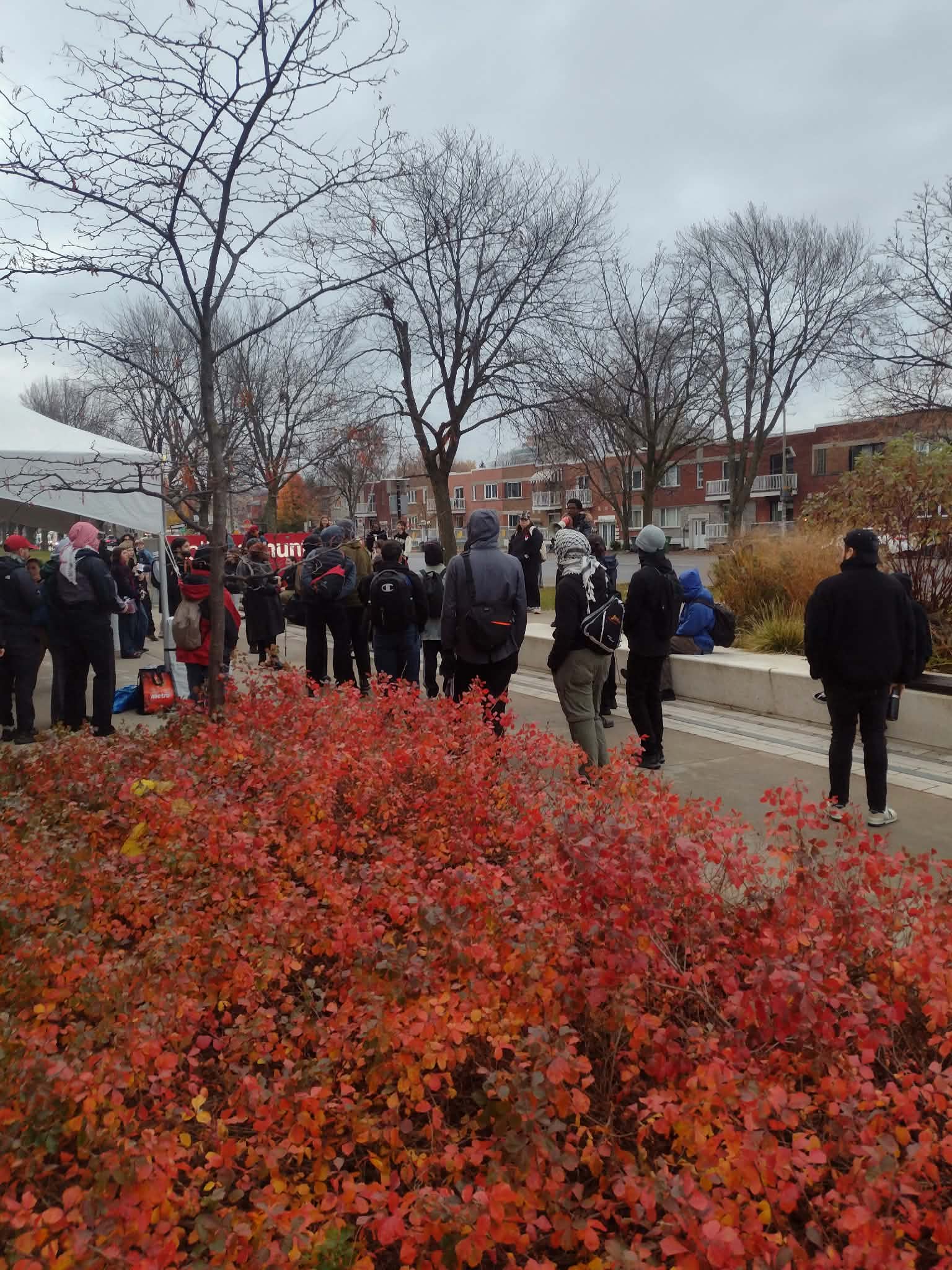
Thousands of students got up early this morning to set up picket lines and block access to their classes. The university and college student movement in Quebec aims to send a message of strength to the PQ government elected last month. The government had promised cuts to public services, while the students are calling for increased funding for education.
Today, November 9, just over 60,000 students are on strike in Quebec. Thirty-four student associations, mostly based in Montreal, will prevent classes from taking place to demand better learning conditions. Among them are several associations that have participated in most of the strikes in recent years—and even decades—such as the faculties of humanities and of arts at the Université du Québec à Montréal and the Cégep de Saint-Laurent.
However, the École de technologie supérieure, the neuroscience program at the University of Montreal, and other associations that rarely participate in student strikes will also be joining the action this week. Outside Montreal, the only participants are the Cégep de Drummondville, the Université du Québec à Rimouski, and three social sciences programs at Laval University. For once, the Cégep du Vieux-Montréal—known as a stronghold of the militant student movement—voted against the strike week.
The strike will culminate on Friday with a demonstration taking place in downtown Montreal at 2 p.m. According to Coalition de résistance pour l’unité syndicale étudiante (CRUES), which groups 13 associations, 63,358 students have a strike mandate for that day, but that number could rise since some student associations, such as the one at Cégep Montmorency in Laval, have not yet made a decision.
What are their demands?
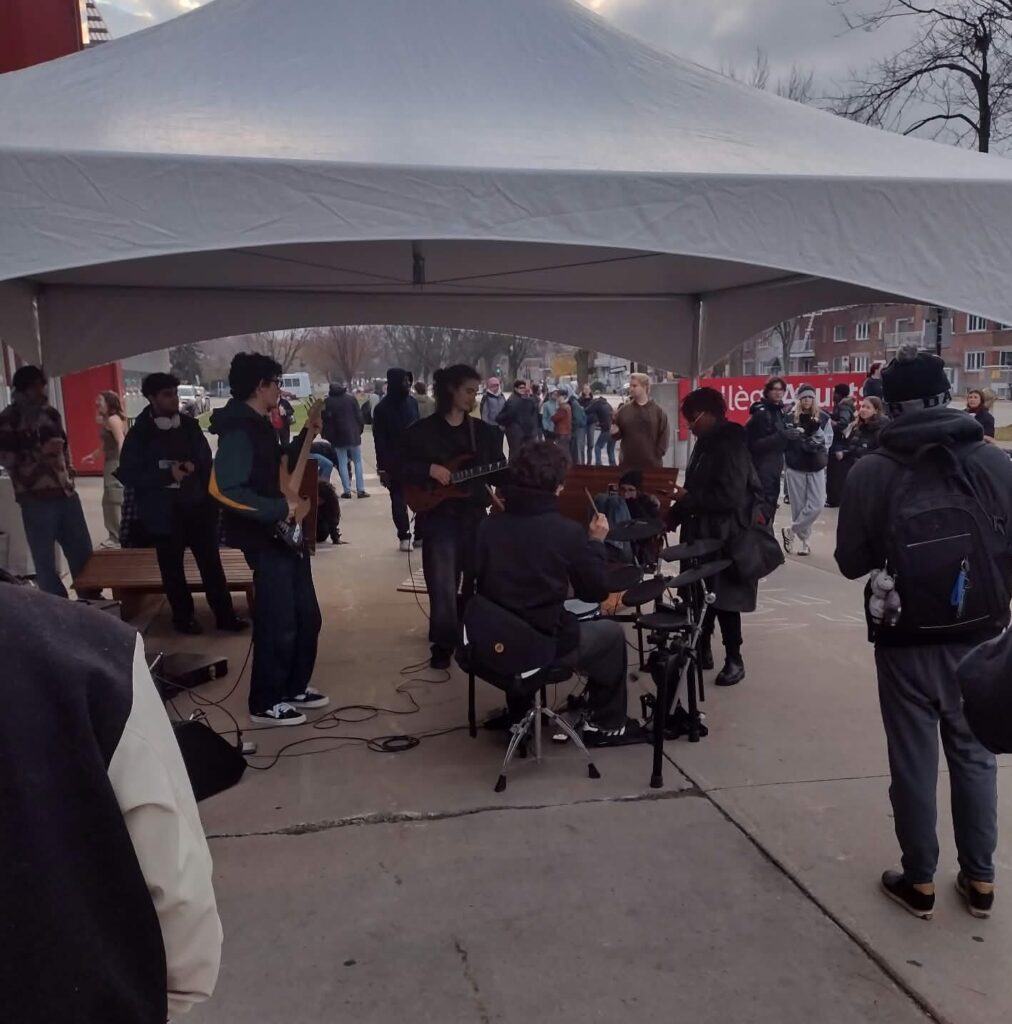
The atmosphere was festive this morning at Ahuntsic College, as a band jammed on the picket line. The North Star spoke with Gazon, who is in charge of external affairs at the student association of the college.
“The goal is to make a massive reinvestment in student financial aid and to ensure that the eligibility requirements are more lenient, because if you want to qualify for financial aid, you have to be broke, your parents have to be broke, you have to sue your parents, you have to get married, or you have to spend two years without attending CEGEP or two years at CEGEP living in an apartment. It makes no sense. In my case, my mom is a nurse, so I don’t qualify for student financial aid.”
Several striking student associations are also demanding paid internships. Gazon cites the example of the diagnostic radiology technology program, which requires 1,000 hours of unpaid internship, and the pre-hospital emergency care program, which requires 450 of these unpaid internship hours.
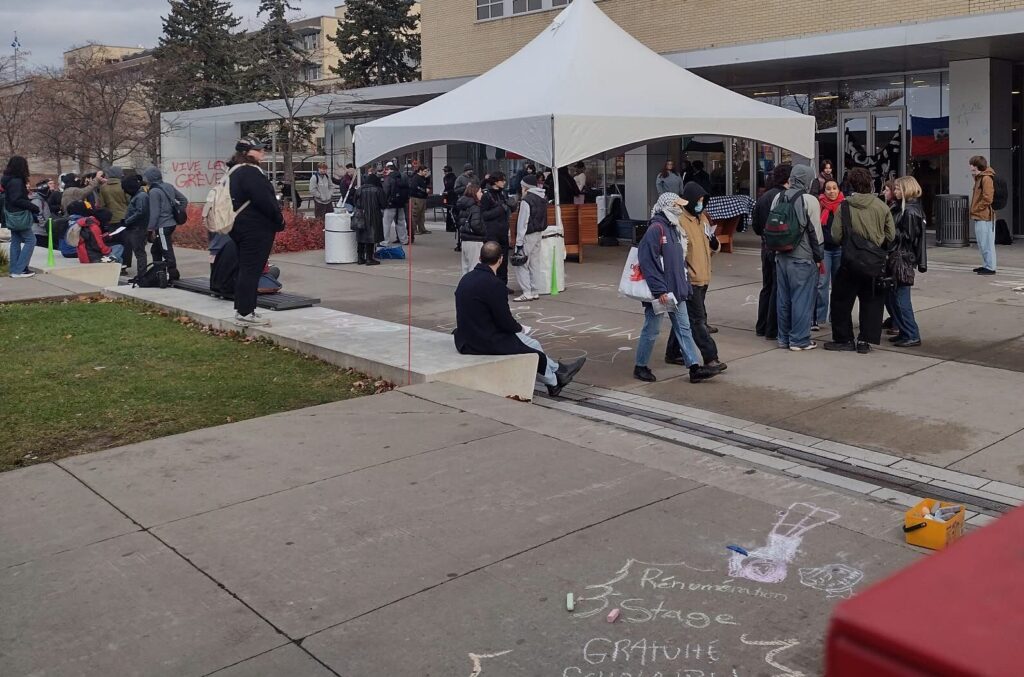
The striking student associations are also calling for reinvestment in infrastructure. This is the case, for example, at the Cégep de Saint-Laurent, where the buildings are in bad shape.
These demands run counter to the recently elected Parti Québécois’ (PQ) plans to cut public services. However, the students have no intention of letting the government start making these cuts without putting up a fight.
“We’ve been living with austerity for 40 years. Just because the government has changed doesn’t mean it’s going to stop. We’ve looked at the PQ’s action plan, and we’re not exactly thrilled with it—in the sense that there isn’t much in it for students, or at least not enough.
So we won’t give them an inch. The goal is to show that we’re already mobilized. We know austerity is coming, so let’s tell them we’re already ready to fight back.”
A rehearsal for an indefinite strike this winter
The current week of strikes holds particular significance for the student movement, as it serves as a barometer for a possible unlimited general strike in winter 2027. In winter 2026, the member associations of the CRUES voted in favor of a multi-phase plan leading up to the general strike.
The CRUES plans to hold a special convention on November 21 to prepare for this winter strike. It is inviting student associations participating in the movement to form a mobilization committee with weekly meetings and to plan a general strike assembly for early winter.
The last unlimited general student strike in Quebec took place in the spring of 2015 and ended after a few weeks without achieving any gains. At that time, the movement was calling for an end to austerity measures in public services.
Three years earlier the “Maple Spring” strike did, however, brought down the Liberal government of Jean Charest and led to a cancelling of the tuition hike of 1 625$ per session that started the movement.
Be part of the conversation!
Only subscribers can comment. Subscribe to The North Star to join the conversation under our articles with our journalists and fellow community members. If you’re already subscribed, log in.