
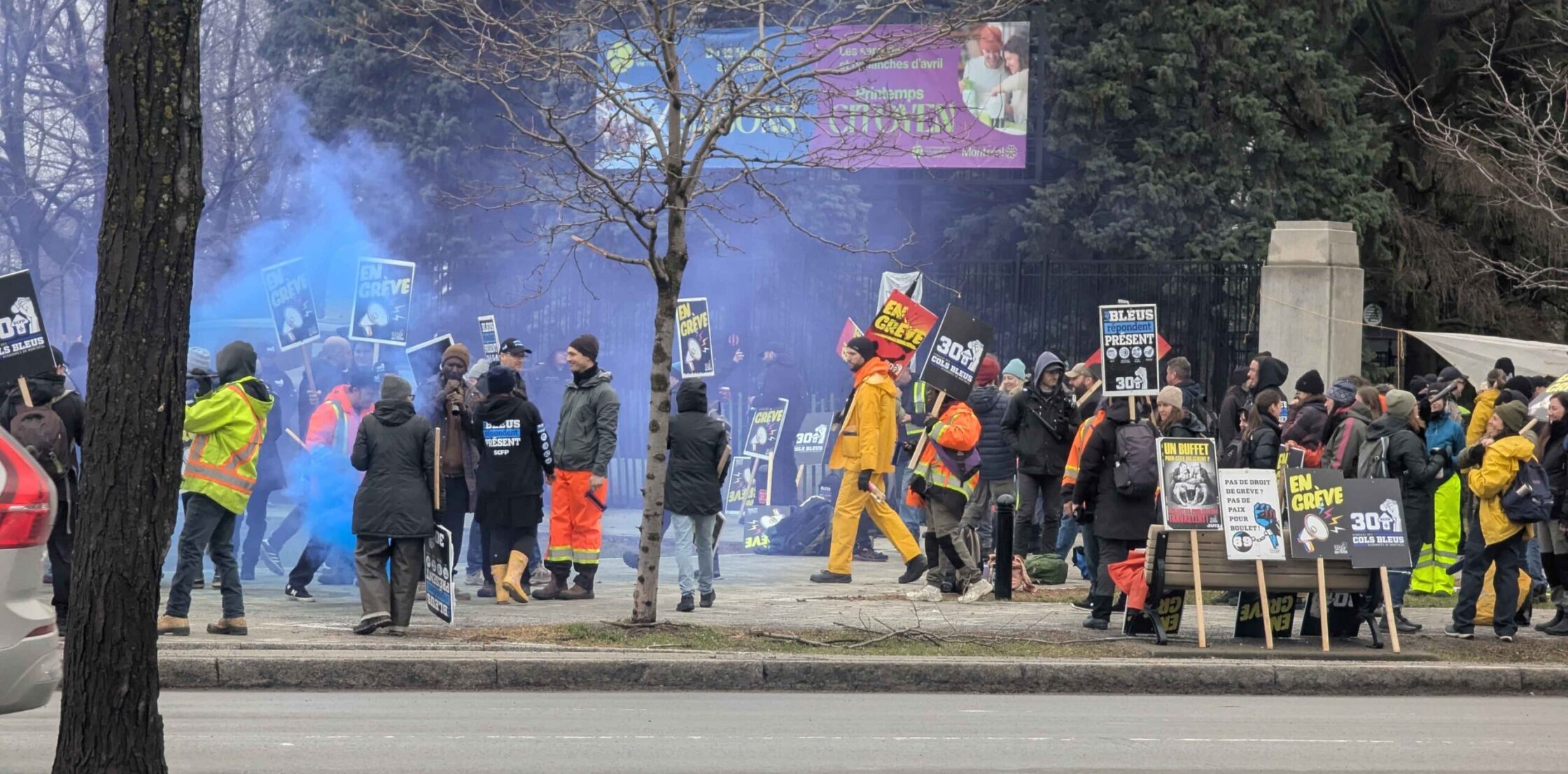
Subcontracting, overwork and wages falling behind the cost of living—these are among the issues that have brought Montreal‘s blue-collar city workers to strike for a second time this year.
The cols bleus of the City of Montreal hit the picket lines across the city bright and early this morning on the first day of a three-day strike. They have now been in negotiations with City administration for over a year, prompting their first strike since 2009 in February. The 6,000 or so workers, represented by CUPE local 301, have been without a contract since the end of 2024.
The blue-collar City workers handle a broad range of tasks, including garbage collection, maintenance of water and sewer systems, road repairs, snow removal, and maintenance of the city’s parks, green spaces, and ice rinks.
Marie*, a union member who spoke with The North Star explained that negotiations have been advancing “extremely slowly”. The City has repeatedly cancelled meetings and is offering a wage increase of only 11% over five years—far below the rate of inflation.
Montreal’s cols bleus are paid less than their counterparts in surrounding municipalities like Laval and Longueuil, despite the elevated cost of living in the city.
“Sure, there was COVID, and everyone was understanding about the financial side of things. But at some point, we have to make up for the rising cost of living, too,” says Marie.
Public funds wasted on subcontracts
Another issue weighing heavily on the workers—and on the City’s budgets—is the outsourcing of tasks that have been historically performed by unionized city workers. Because the City is required to award private contracts to the lowest bidder, corners are often cut. And in the end, the cost of fixing shoddy infrastructure falls back on the public and on City workers.
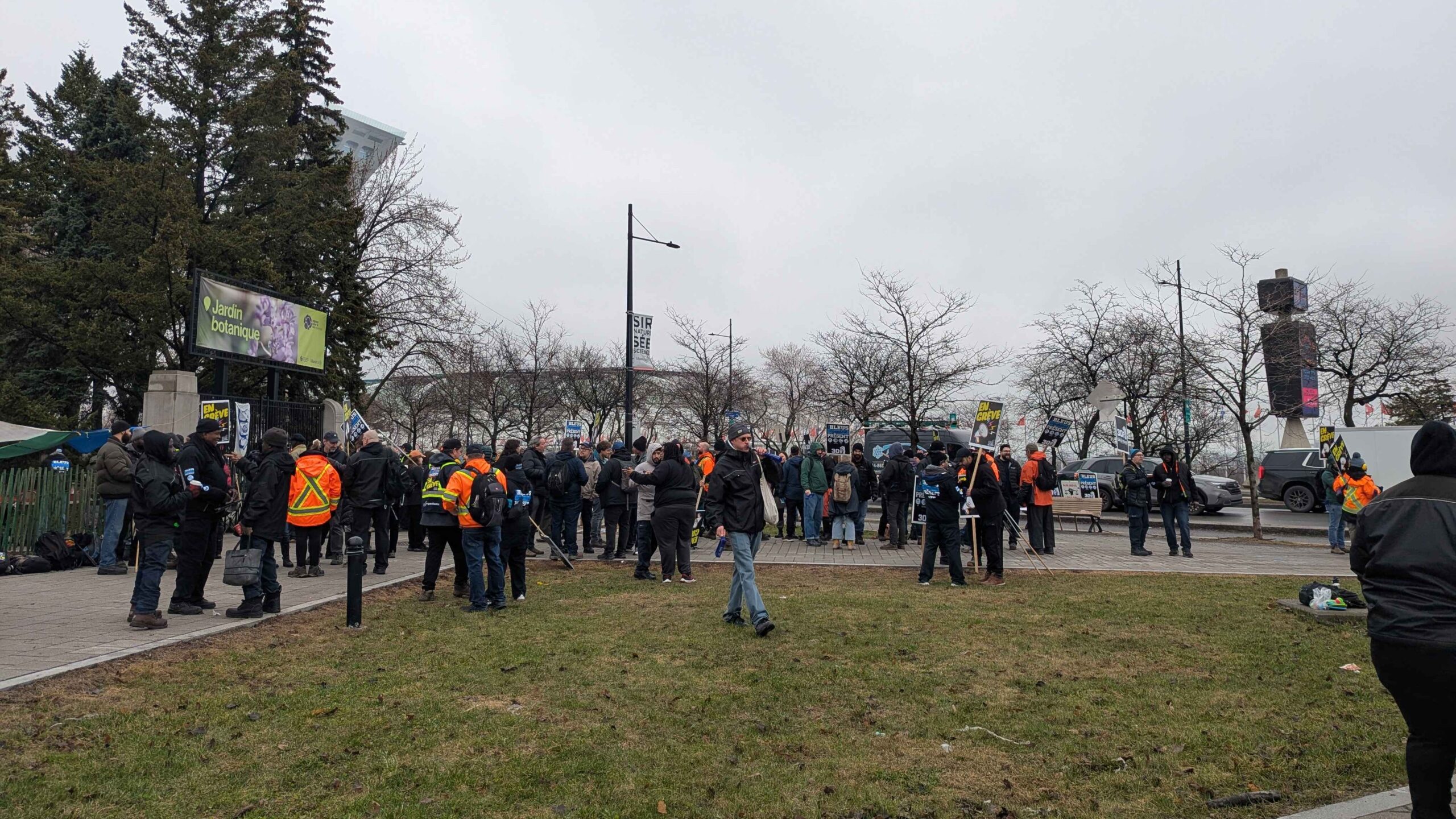
Marie recalls an incident where a private contractor was hired to replace paving stones in the city’s botanical garden—a task which City workers would be perfectly able to carry out themselves.
“The paving was done poorly, and now the park employees have to go in after the private contractor to redo the job. Outsourcing is a hassle. It takes work away from us, and on top of that, it adds to our workload.”
A number of City sites have also outsourced security services to private companies like GardaWorld. The high turnover of employees in private security services has significant impacts on the quality of services they are able to provide.
“Often, they don’t even know how to get to us because they’re unfamiliar with the premises,” says Marie. “So now, because of this outsourcing, we employees no longer feel safe, and neither do the visitors. We don’t even call Garda directly anymore if we need an ambulance. We dial 9-1-1 because we can’t trust [GardaWorld]—they don’t know where they are on the site.”
The poor quality of services rendered through private subcontracts has another consequence for City workers.
“The cols bleus have a bad reputation,” says Marie. She wants residents to understand “not only how essential our work is, but also how deeply we care about it.”
“People are quick to assume that we just stand around with a shovel, waiting for something to happen. Since I became a col bleu, my own view of them has changed. Now I know that if there are four of them standing around a shovel, it’s because they’re waiting for materials, because their foreman didn’t have them delivered on time, or because part of the job has to be done by a subcontractor, and the subcontractor isn’t on time.”
Be part of the conversation!
Only subscribers can comment. Subscribe to The North Star to join the conversation under our articles with our journalists and fellow community members. If you’re already subscribed, log in.