
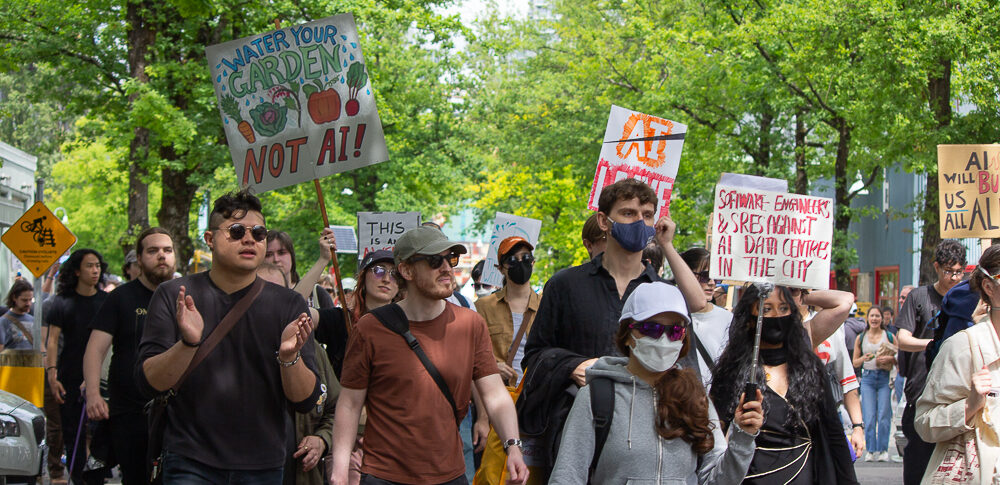
A federally endorsed Telus project to build two new artificial intelligence data centres in Vancouver is facing organized opposition from residents. On May 23, hundreds of protesters took to the streets of downtown Vancouver to oppose the project.
The proposed data centres will have a footprint of 500,000 square feet. One is slated to be built downtown, and the other in the residential neighbourhood of Mount Pleasant.
Telus released the details of this expansion project on May 11, claiming it would build “the world’s most sustainable sovereign data centres.” Still, there is no plan in place to regulate the corporation’s future use of resources.
The corporation said in a press release that it is working with the federal government in a major program called “The enabling large-scale sovereign AI data centre initiative” to expand and solidify Canada’s control over AI technology.
“It is an infrastructure that Canada needs to compete in the age of AI,” said AI Minister Evan Solomon in a press conference announcing the plan. He claimed the initiative aligns with Canadian values and the benefits of the Canadian community.

Water and energy usage among major concerns
The May demonstration was organized by a group called No AI Data Centres in Vancouver. The protest attracted strong support from young locals, who marched from Waterfront station to Granville Island to City Hall. Among the concerns that protesters mentioned to The North Star were job loss, expansion of surveillance, a decline in human creativity, and negative environmental impacts.
Indeed, AI’s heavy consumption of drinking water remains one of the most common concerns surrounding the technology. Recent information coming from the City of Vancouver has done little to reassure residents. The city says its water system is experiencing pressures caused by an upcoming dry summer and the shutdown of one of the two main water suppliers from the North Shore mountains.
“We are in stage two water restrictions [and] expected to be put in stage three by June,” remarked Torin LaRocque, one of the organizers of the protest. “I’m wondering why should the government be giving so much water to these giant corporations rather than its community and population?”
LaRocque said he became interested in the issues surrounding AI infrastructure when he learned about the negative impacts that data centres in the U.S. have brought into their surrounding community.
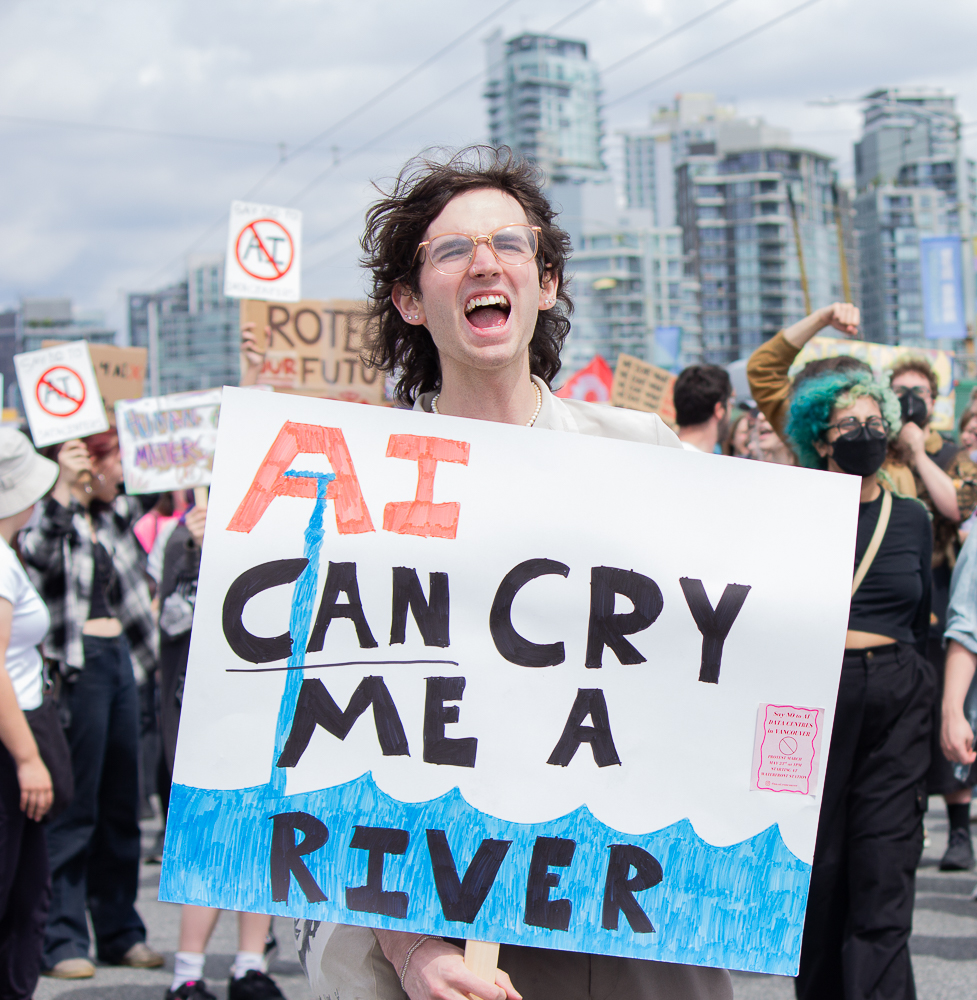
Estimations from a 2024 study show that global data centres consumed 560 billion litres of water and released 182 million tons of carbon dioxide into the atmosphere in 2023. Since then, researchers say the environmental impact of data centres has continued to worsen rapidly and significantly as AI adoption accelerates. Residents living near some facilities have also reported significant noise pollution.
“These AI data centres run 24/7, and they create constant noise,” explains James Choi, a protester. “It’s gonna be miserable for the people who live there,” he said of the proposed Mount Pleasant data centre.
Many companies are unwilling to disclose certain operational metrics, such as indirect water consumption to generate electricity. The lack of transparency and governmental regulations makes it difficult to pinpoint the true level of environmental impacts, researchers say.
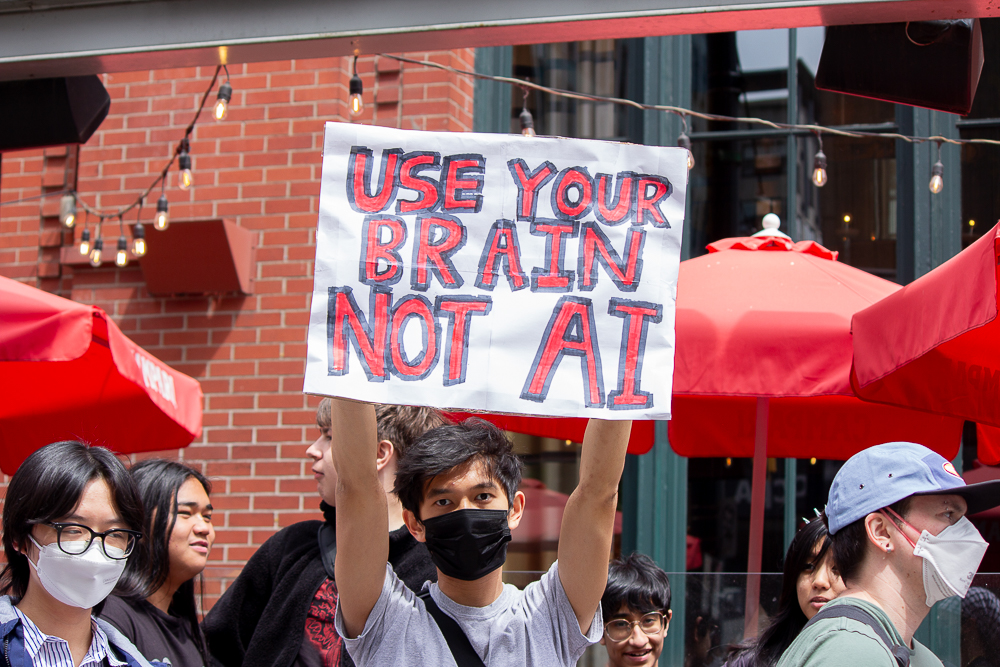
Young demonstrators concerned about potential job loss
James Choi, who recently graduated from college, was worried about the pressure with which the already-strained labour market would have to deal due to the expansion of AI data centres.
LaRocque shares these concerns, stressing that the expansion of AI is already having an impact on artists. “It is taking their jobs,” he told The North Star.
“Billionaires only want to progress profit rather than people,” Choi remarked. “It’s going to eliminate the entry-level positions and create greater wealth disparity.”
All this comes as Statistics Canada’s April labour report reveals the national unemployment rate has reached 6.9%, the highest since September 2025. Recent analysis by Statistics Canada indicates a stagnant job growth among workers who are younger and have a high school diploma or below.
Early this year, Telus offered voluntary severance packages to 700 workers as part of a multiple-year plan to cut back on its Canadian workforce.
Scholars, world leaders and even the heads of big tech companies have warned about significant entry-level job cuts due to the adoption of AI in the workplace. In a February report, Bank of Canada Governor Tiff Macklem said that AI integration at work may be decreasing Canadian youth’s early-career opportunity.
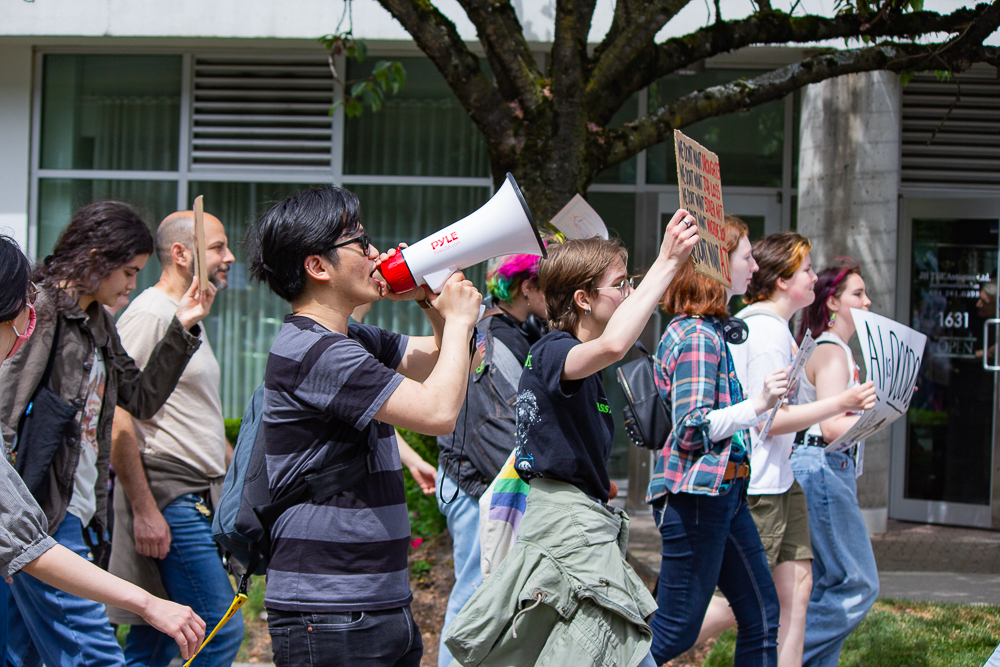
A pan-Canadian issue
Telus is one of several tech companies enjoying support from various levels of government across the country in the construction of AI infrastructure.
The proposed Vancouver data centres are not the only ones receiving significant pushback from local communities. Residents of Lorneville and Saint John, New Brunswick have been fighting against the proposals to establish data centres in the region since 2024. The community is opposing the potential destruction of its environment and resources wrecked by the operation of these factories.
As for Vancouver, LaRocque has announced the next step to action against the construction of AI data centres. The second protest will take place on June 27.
“We would like to see [the government] put more emphasis on the people and the environment in which [it] resides and which [it is] supposed to represent,” LaRocque said.
Be part of the conversation!
Only subscribers can comment. Subscribe to The North Star to join the conversation under our articles with our journalists and fellow community members. If you’re already subscribed, log in.