
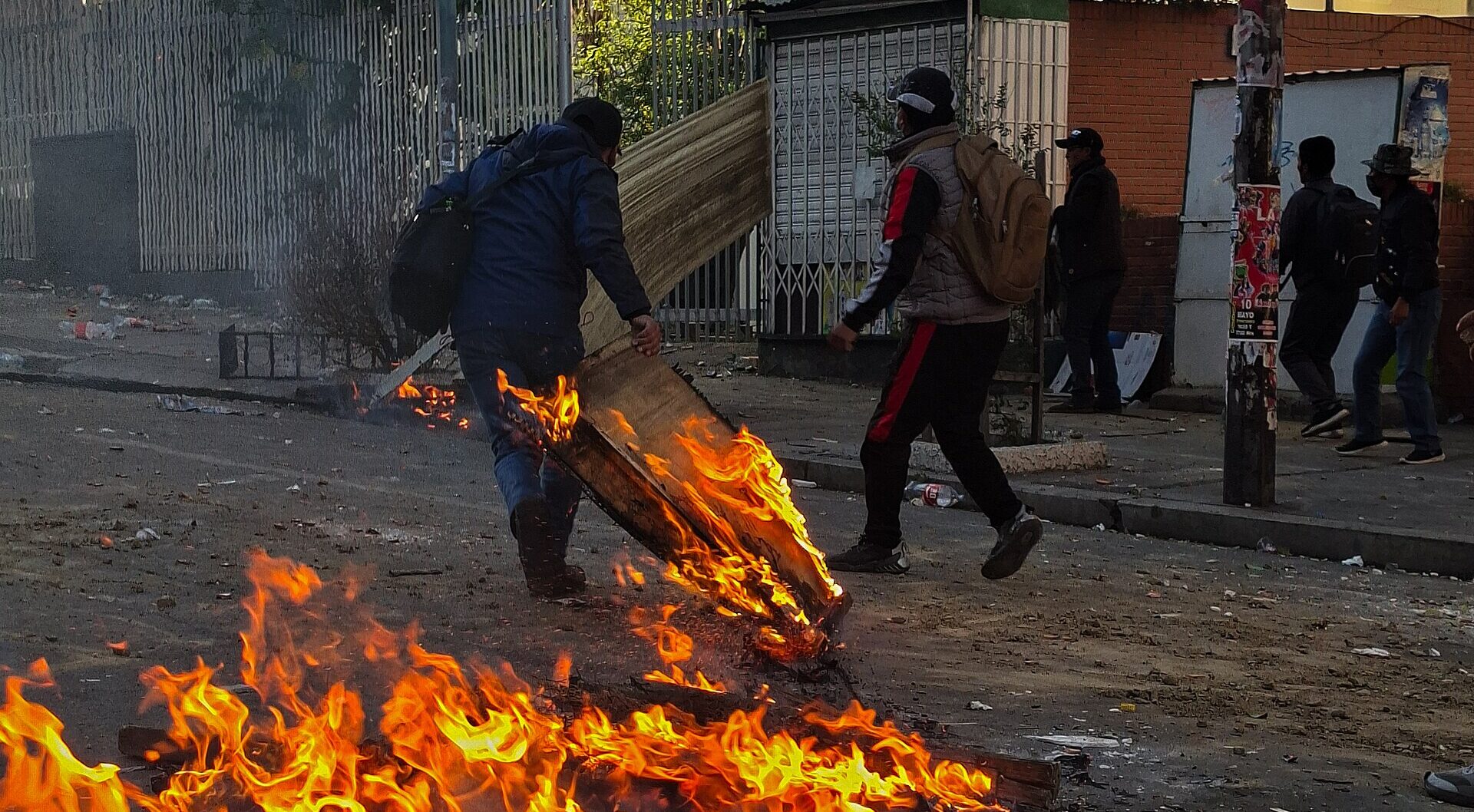
The neoliberal government in Bolivia has suspended civil liberties and deployed its military to try and save itself from collapse following a general strike against privatization and austerity measures that ground the economy to a standstill for more than fifty days.
Unionized workers and Indigenous People isolated the capital, La Paz, by blockading highways and organizing popular mass demonstrations amidst fierce repression from police and fascist paramilitary youth organizations. Bolivian President Rodrigo Paz has now declared a “state of exception” in an attempt to further crack down on dissent and clear the blockades that forced him into a corner.
On the morning of June 27, Rodrigo Paz deployed the military after his administration enacted the “state of exception” decree that temporarily suspends democratic rights and freedoms of citizens protesting austerity policies.
Although the government says the state of exception is only temporary, and will end after 90 days, there is no guarantee the Bolivian people will have their democratic rights restored anytime soon.
Similar measures enacted in El Salvador with a promise of “90 days” have been in place for four years and Ecuador’s government has repeatedly used this tool over the last few years spanning a total of 900 days since January 2024.
The decree, based on legislation passed on June 8, has enabled the military and police to use their sweeping powers and widened mandate to bulldoze many of the worker-built blockades surrounding the capital. It also enabled them to arrest an indigenous leader, Vicente Salazar, head of the Tupac Katari Peasants’ Federation, on Saturday.
Following a series of localized strikes by teachers, miners, and transport workers, the Central Obrero Boliviano (Bolivian Workers Confederation, or COB), held a mass meeting on May 1 where the decision to begin an indefinite countrywide general strike was made.
The COB coordinated actions and centralized protest demands up until the strike’s end. A slate of mining union reps, from the very powerful Syndical Federation of Bolivian Mineworkers (FSTMB), had been elected to the confederation’s leadership last October with a mandate to build “class independence” from the Movimiento al Socialismo (Movement for Socialism, or MAS) party that has seen a decline is popular support in recent years.
Indigenous Leadership, Land Privatization, and Austerity
The Paz government accused the former leader of MAS and ex-president Evo Morales of orchestrating the uprising. Morales is now taking refuge in Chapare, under the protection of the Red Ponchos, an Indigenous militia and movement originating from Aymara communities in the Andean high plains.
The Red Ponchos have been advocating for Indigenous rights and radical social reforms in Bolivia since the 2003 Gas War when they fought to push back the export of Bolivian natural gas reserves to foreign nations.
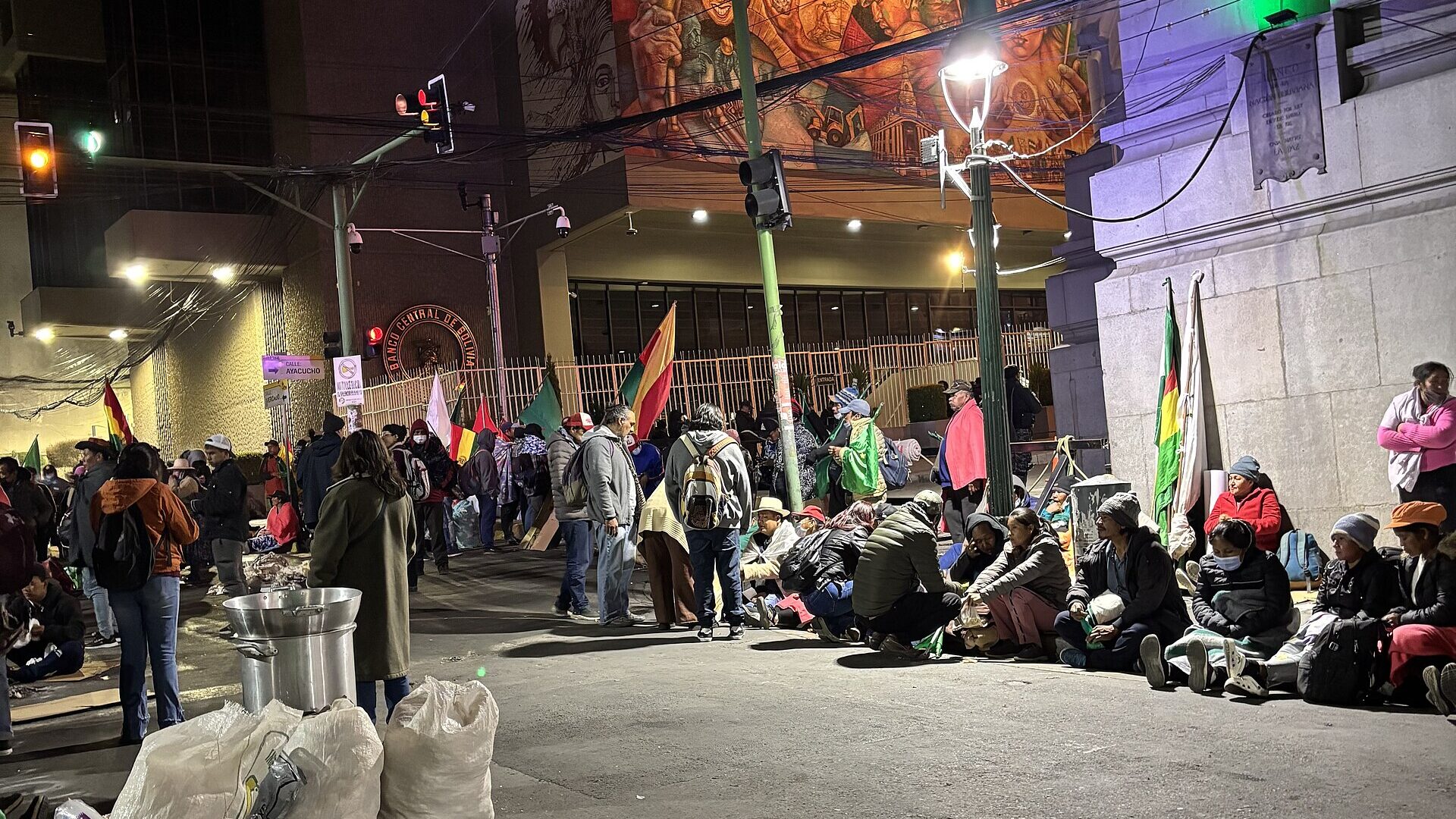
The organization emerged as one of the most prominent forces in the recent general strike and the protests in urban centers. Along with other Indigenous communities, they gathered around 300 protesters and set off a 1000km-long march across the country to the capital La Paz on April 8.
Their goals were to demand the resignation of Paz and the removal of Law 1720, an agricultural land reform that came into effect in April. Experts say this legislation enabled the privatization of “small-scale agricultural landholdings” and allowed “land-grabbing” from agricultural businesses.
To Indigenous communities, this land reform was a threat to Indigenous rights to collective lands ownership enshrined in Bolivian 2009 Constitution. After a month of marching and protesting, Indigenous protesters achieved initial success. The Paz government put a pause to Law 1720 on May 12 saying that it was drafting a new legislation.
Since his presidential victory, Paz has soon forgone the promise to secure a “capitalism for all” future for his Indigenous and working-class voters. Those voters redirected their support to the Paz presidential campaign due to the decline in Movimiento al Socialismo party (MAS)’s popularity.
In December 2025, Decree 5503 (Economic Emergency Measures) was passed and introduced significant changes to Bolivian economic and political structures including ending two-decade-old fuel subsidies, a move that triggered a multi-sector protest shortly after the decree was announced.
Mining under a microscope
Major mining multinationals have increasingly invested in Bolivia’s mining industry since Paz’s administration was elected in 2025 and made moves to open the highly nationalized sector to foreign investment. Canadian mining companies with assets in the country like Pan American Silver, Santacruz Silver and New Pacific Metals have seen their stock prices increase in the last year.
While tin and silver have been the main focus historically, Bolivia is host to one fifth of the world’s lithium reserves, the largest deposit of any single country. The vast potential of these critical mineral reserves in the intensifying rivalry between the U.S. and China has put Bolivia and its highly unionized, as well as nationalized, mining industry in the crosshairs of America’s state department.
Be part of the conversation!
Only subscribers can comment. Subscribe to The North Star to join the conversation under our articles with our journalists and fellow community members. If you’re already subscribed, log in.