
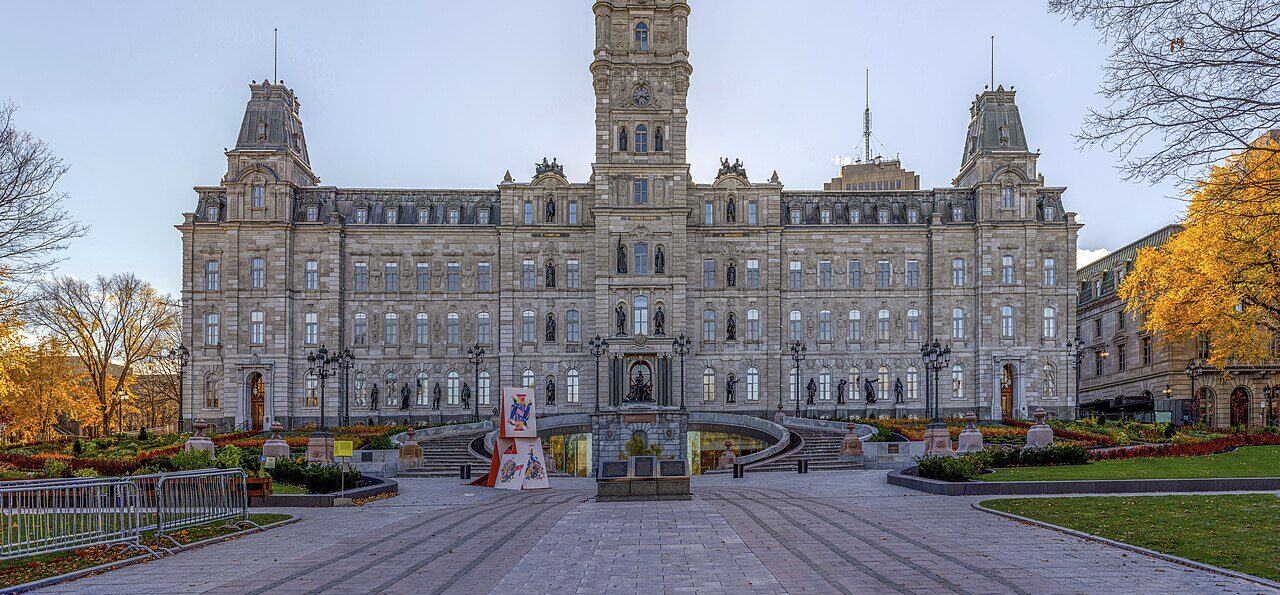
As Quebec’s provincial elections approach, it’s not just politicians who are campaigning. The province’s business owners are synthesizing and publishing their demands to political parties. Key demands include access to temporary foreign workers, deregulation, and tax cuts.
Labour and immigration
Access to cheap labour is a key issue for Quebec’s bosses this election. As the province co-administrates immigration programs within its borders, many industry associations have elaborated demands relating to the immigrant workforce. The Quebec Council of Employers and the Federation of Chambers of Commerce of Quebec are calling on political parties to align economic immigration with the needs of the labour market.
Several employer groups are calling for increased ability to employ Temporary Foreign Workers (TFWs). The Quebec Food Retailers’ Association has listed a number of demands to expand its access to the TFW program. For example, it wants food retail jobs to be designated as “essential” so that grocery and convenience stores are able to employ more TFWs.
Temporary Foreign Workers have extremely limited pathways to permanent residence and citizenship and little recourse to justice in the Canadian legal system. They are often subject to worse working conditions and wages than their Canadian counterparts. In 2023, the UN said that Canada’s TFW program “make[s] migrant workers vulnerable to contemporary forms of slavery, as they cannot denounce abuses suffered without fear of deportation.”
The Canadian Council for Refugees has noted that integration is “virtually impossible” for many TFWs. Their status bars them from accessing language classes, and their living conditions—frequently in workplace housing with other foreign workers—isolate them from broader Canadian society.
A number of employers’ and business owners’ associations are also calling for longer work permit periods and clearer paths to immigration for TFWs as a means of stabilizing their access to this workforce.
Construction
Construction is a massive industry in Quebec. It employs 7% of the workforce and represents about as much of the province’s GDP. Provincial policy relating to this sector is therefore enormously consequential.

The Quebec Construction Association (ACQ), which represents employers in the industry, is calling for the abolition of the role of Health and Safety Representative—this, in an industry responsible for 30% of all workplace fatalities in the province.
Under Quebec labour law, Health and Safety Representatives are appointed by workers or their union. Their role is to advocate and advise workers on workplace health and safety issues and to inspect working conditions at the workplace.
The ACQ says that the role is redundant with that of health and safety coordinator—a manager who reports to the general contractor. It suggests that the money spent on a health and safety representative would be better spent on new health and safety training programs administered by companies.
As for housing, the ACQ proposes for tax breaks for both construction companies and first-time buyers of new builds, which it says will stimulate the construction of new housing. It offers little explanation or analysis of how this modest incentive for the middle class will stand up against the skyrocketing cost of materials and the shortage of labour—both of which they decry elsewhere in its demands document.
The ACQ’s other demands include:
- the creation of a dedicated Ministry of Construction
- greater freedom for companies to substitute cheaper materials when bidding on public projects
- a review of the financial impact of updates to the Building Code, and
- shorter consultation period for new construction projects.
Deregulation
The Quebec Council of Employers is joined by Chamber of Commerce of Metropolitan Montreal (CCMM) and the Quebec Construction Association in demanding “a reduction in the regulatory and administrative burden”. The CCMM’s “white paper” of election demands asks for a 20% reduction in the number of regulations on the books. It also asks for a “two for one” rule which would require the elimination of two existing regulations whenever a new one is introduced.
These organizations have, as is typical of business owners, publicly framed deregulation as a question of reducing the administrative burden (i.e., “red tape”) on small businesses. The implications of a general deregulatory program are, however, much further-reaching.
In its call for deregulation, the Quebec Construction Association’s demands document cites a study which attributes per-project cost increases of $11,000 to $1.4 million as a result of new regulations between 2015 and 2025 . Regulations introduced in this period include anti-corruption and whistleblower protections for employees, numerous workplace safety measures, and mechanisms to facilitate worker participation in health and safety committees. Updates to the Building Code during that period include stricter fire safety protocols and improved radon gas mitigation.
Protections against child labour, environmental pollution, and monopoly concentration—hard-won progressive reforms of the early 20th century—have been increasingly targeted for elimination by big business and their allies in government since the 1970s. If the specifics of what regulations to eliminate are absent from the Chamber of Commerce’s 58-page document, it is perhaps because naming them would be unpopular.
Trade war protections?
The ongoing tariff war between Canada and the United States is providing new fuel for the owning class to push for pro-business policy. In a press release last month, the Quebec Council of Employers (CPQ) framed the entirety of its demands as necessary responses to the trade war.
The CPQ and the Federation of Chambers of Commerce of Quebec (FCCQ) are demanding tax breaks for small and medium businesses to boost the “competitiveness” of Quebec companies and to attract investment.
Also in the name of competitiveness, the FCCQ is asking parties to freeze electricity rates for businesses in the province and to accelerate the approval process for new energy projects. The CPQ also urges the next government to keep energy rates for businesses competitive.
Citing an increased importance of export capability and internal trade, the CPQ and various chambers of commerce across the province are calling for heavy investment in the transport and logistics sectors to facilitate the movement of labour and merchandise. Montreal’s chamber of commerce is pushing for the development of transport infrastructure in Montreal and surrounding municipalities like Laval, while those of small population centres are asking political parties to prioritize rural and suburban development.
The new tariffs do have significant impact on businesses and their interests, so this framing is to be expected. These election demands of the owning class, however—tax cuts, preferential energy rates, workforce development, infrastructure investment—are far from new or unique to the current political moment.
In particular, the push for deregulation on the part of business owners has existed ever since the government began regulating the market and labour. It has gained prominence with the rise of neoliberal conservatism in the 1970s and ‘80s. Since then, each decade has brought a new wave of deregulation and “free enterprise” measures.
According to several experts, financial deregulation has contributed to the current housing crisis by inflating housing prices and fuelling speculative investment. These measures appear to have also helped create large real estate conglomerates, which are generating unprecedented profits in the housing sector.
What is most striking is the gap between the demands of employers and those of the general population. A Synopsis poll from last week shows that Quebecers rank the health care system, the cost of living, and housing as their top concerns. The trade war comes in fourth place (30%), followed far behind by the economy and employment (19%).
A Léger-Le Journal-TVA poll from late August indicates that the public wants to ease the strain on their wallets and, unlike businesses, impose stricter oversight on the economic elite. A very large majority specifically wants to control rent prices, reduce the cost of public transit, provide assistance for first-time homebuyers, and considerably raise the minimum wage.
Be part of the conversation!
Only subscribers can comment. Subscribe to The North Star to join the conversation under our articles with our journalists and fellow community members. If you’re already subscribed, log in.