
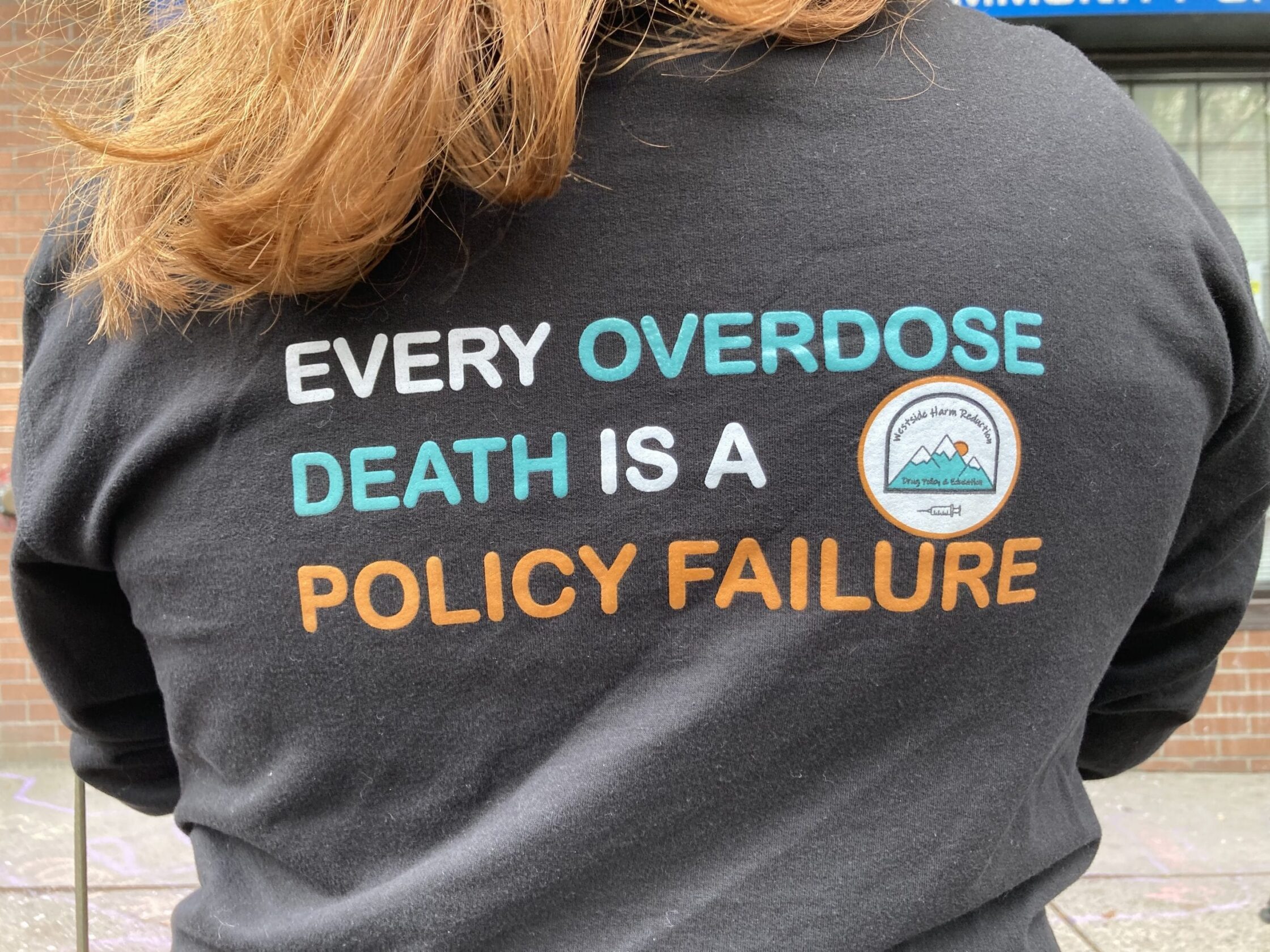
On September 29th, the B.C. Supreme Court ended a three-year long case concerning the “Drug User Liberation Front” (DULF) after finding that the charges laid against its founders were unconstitutional. The trial found evidence of a “paradoxical” situation with the country’s legislation around controlled substances and the provincial government pleas for safe supply as a solution to the toxic drug crisis. The judge has given a six-month window before Section 5(2) of the Controlled Drugs and Substances Act is considered invalid.
The case questioned the conviction of Drug User Liberation Front founders Jeremy Kalicum and Eris Nyx on the basis of drug trafficking through their project, where illicit substances were bought, tested, and sold as an attempt to solve B.C.’s toxic drug supply crisis. They were accused of having possessed illegal substances with the purpose of trafficking.
The Canadian government has acknowledged the issue of toxic drug supply as a key factor in its overdose crisis. The current toxic supply is characterized by illegal drug supplies being tainted with powerful opioids, such as fentanyl, and other drugs like benzodiazepines and xylazine.
Since April 14 2016, the province of B.C. has recognized that its toxic drug crisis is a public health emergency. The province actually has its own safe-supply program taking place in the State’s medical institutions and is run by health professionals.
The judge, Justice Catherine Murray, pointed out the hypocrisy of the province’s pleas for safe supplies to help control the toxic drug crisis against the absence of a legal framework to do so within the Controlled Drugs and Substances Act.
DULF: pushers or concerned community members?
The DULF project approached Health Canada on two separate occasions asking for an exemption from subsection 56 of the Controlled Drugs and Substances Act, which would allow them to legally buy and transfer tested substances for the compassion club.
The proposals were refused by the department because of its focus on a non-medicalized supply program, where drugs were sold without a prescription or authorized provider. DULF proceeded with the project anyway.
The initiative gained some support in the community and was allocated a storefront in the neighborhood by Vancouver Coastal Health. Despite acting in full transparency with federal authorities, the storefront was raided in October of 2023. Both Kalicum and Nyx were charged with drug trafficking.
DULF founders said that they are not drug traffickers, but operate what they call a “compassion club”, an organization that provides cleaner drugs for consumers. The initiative tackles the specific issue of overdoses happening because a narcotic was laced with stronger – more toxic – illegal substances.
Justice Murray commended the work of the two members of DULF, noting the project’s empathetic model and dedication to the welfare of the people. “You selflessly put yourselves to the side for this cause, and that’s something most people wouldn’t do. For that I applaud you. You should be very proud of yourselves,” Murray said to them.
A chance to reflect on drug policy
The recent ruling creates a unique situation for the relations between the State and safe-supply NGOs like DULF. If the province cannot successfully appeal to the decision of its Supreme Court, it will have to either integrate or tolerate those groups.
The two leading parties in the BC electoral race, the NDP and the Conservatives, were both critical of the court ruling, but are yet to provide an effective solution to both the toxic drug crisis, and the drug crisis overall. The province’s model and suggestions for safe supply have shown themselves as band-aid solutions for the toxic drug crisis, and ineffective for an end to the drug crisis in Canada.
The overdose crisis in British-Columbia has continued to worsen with the years. In the province, five people died daily because of toxic drugs in 2025.
Be part of the conversation!
Only subscribers can comment. Subscribe to The North Star to join the conversation under our articles with our journalists and fellow community members. If you’re already subscribed, log in.