
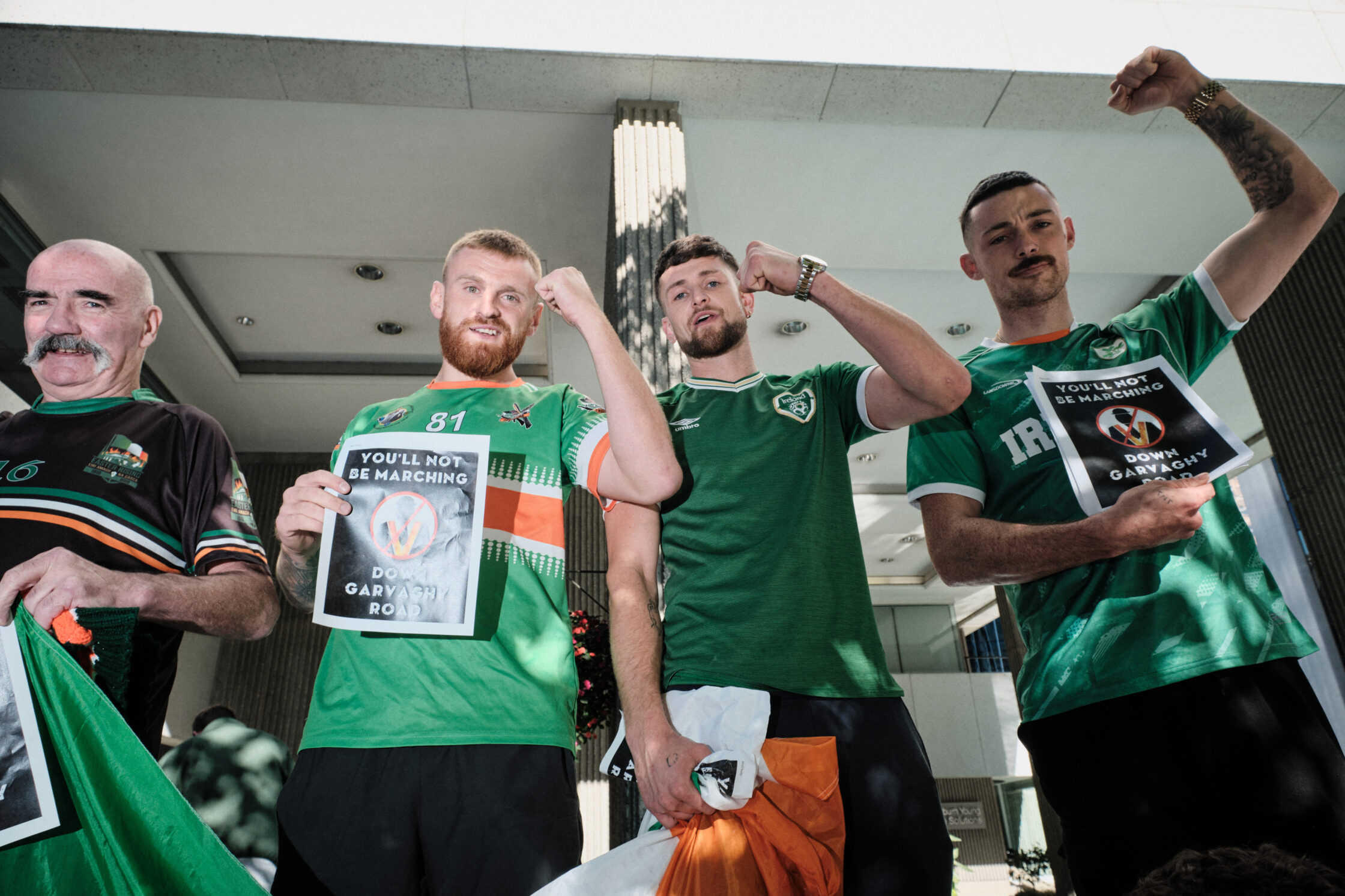
After two weeks of protests, the Irish community succeeded in preventing the Drumcree parade that was scheduled to pass through Catholic neighbourhoods in a small town in Northern Ireland. The Secretary of State cancelled the event, which was organized by the Orange Order, a pro-British organization open only to Protestants. The Irish diaspora had denounced the march as a deliberate attempt to undo thirty years of progress between the Catholic and Protestant communities.
For the past 28 years, the Orange Order’s march through Garvaghy Road has been halted, due to intense conflicts between the loyalist-protestants and the nationalist-catholics. After the death of three boys killed in an arson attack inspired a wave of protests, the march was banned and the Parades Commission for Northern Ireland was founded to review, help routes, and approve or ban marches and parades. Despite the history of the march, the commission gave the Orange Order a go-ahead for the march and its usual routing this year.
The march commemorates and celebrates the 1609 British victory over Ireland for the crown’s continued Protestant rule. Annually, the Orange Order gathers and marches through the North Irish town Portadown, and is routed through Garvaghy Road, an Irish-catholic neighbourhood in the town. The march concludes when reaching Drumcree church, a historic site of the Orange Order, earning the historic clash in the community the name the Drumcree Conflict.
The response by the Irish community to the proposed parade was quick, with thousands of supporters showing up against the march both in Garvaghy Road, across Ireland, and internationally.
“It’s our people back at home this is affecting,” said Rob, an organizer of a flash rally outside the British consulate in Vancouver. “If I was back at home, I would be on the Garavaghy Road to protest myself. There’s been one in New York and Australia… All around the world, people are showing solidarity with Garvaghy.”
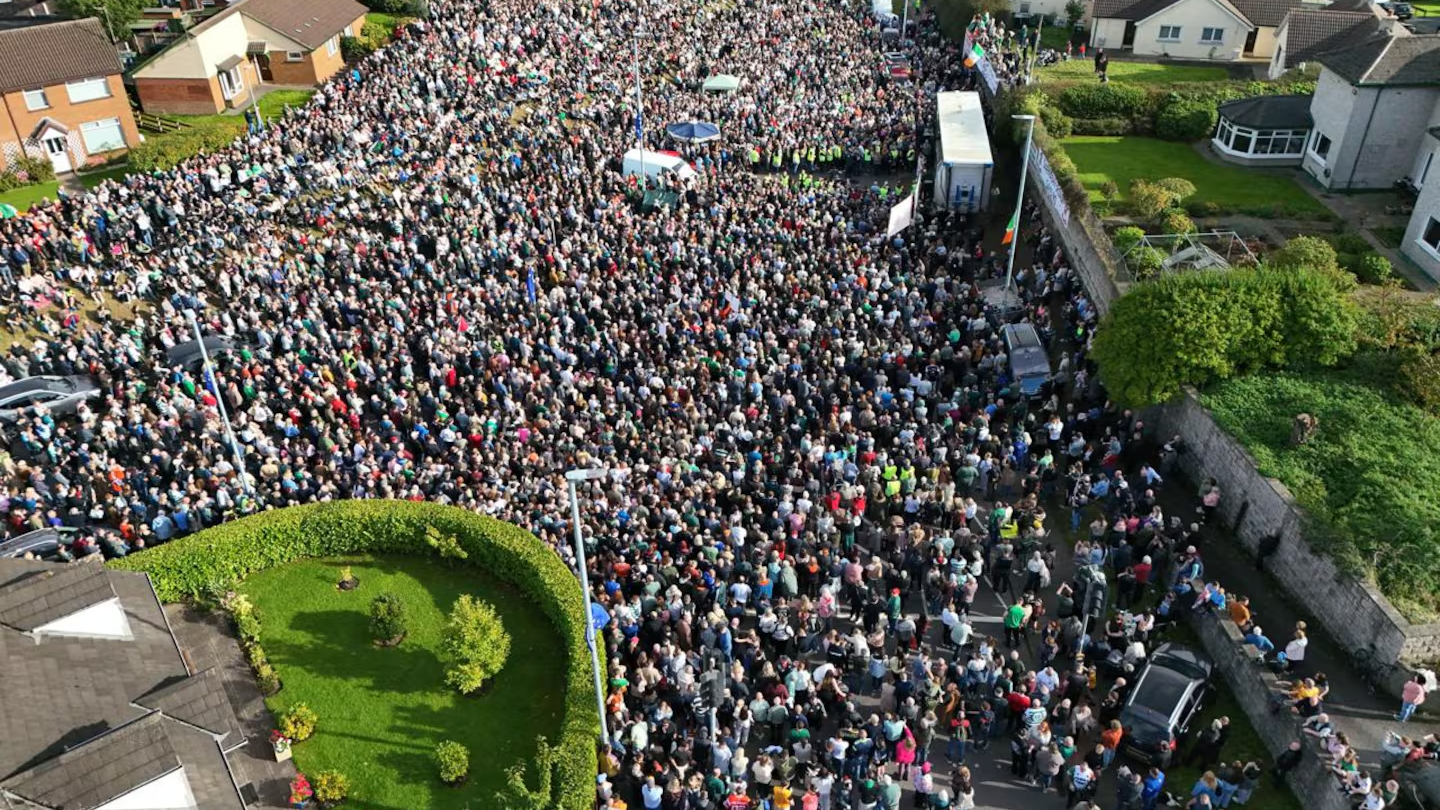
After the two-week standoff between the Orange Order and Garvaghy Road residents, the Northern Ireland Secretary of State called off the march to prevent serious injuries and a “wider contagion effect” across Northern Ireland.
Not a religious conflict
“It’s deeper than religion,” Rob said. “It’s politics… Ireland has been a country divided for hundreds of years by the British. They took the Irish people off of the land and planted Protestants who were loyalists, people loyal to the king and queen.”
“This is a predominantly working-class Irish community refusing to allow a supremacist religious march down their street. But this order, the Orange Order, is used as a way to separate working-class Protestant people and prevent uniting. It’s used like a culture war,” said Patrick, a member of Friends of Sinn Fein Canada who was also present at the rally. He went on to describe the system between British-Protestants and Irish-Catholics as an apartheid colonial-like system, similar to South Africa.
“The British introduced a system where everyone in Ireland was essentially a tenant farmer. The British landlords owned all the land and you rented it off of them. But then you also had the Ulster custom, where more rights were given to Protestant renters compared to Catholics, as a way to drive a wedge between the tenant farmers. The British economic order had instituted a divide and rule between these two communities which [continued to worsen] over time.”
Following a series of anti-colonial resistance and national liberation movements led by the Irish Republicans (a political movement that fought for Ireland’s independence from the Crown), Ireland was divided into north and south, with the north remaining part of the United Kingdom.
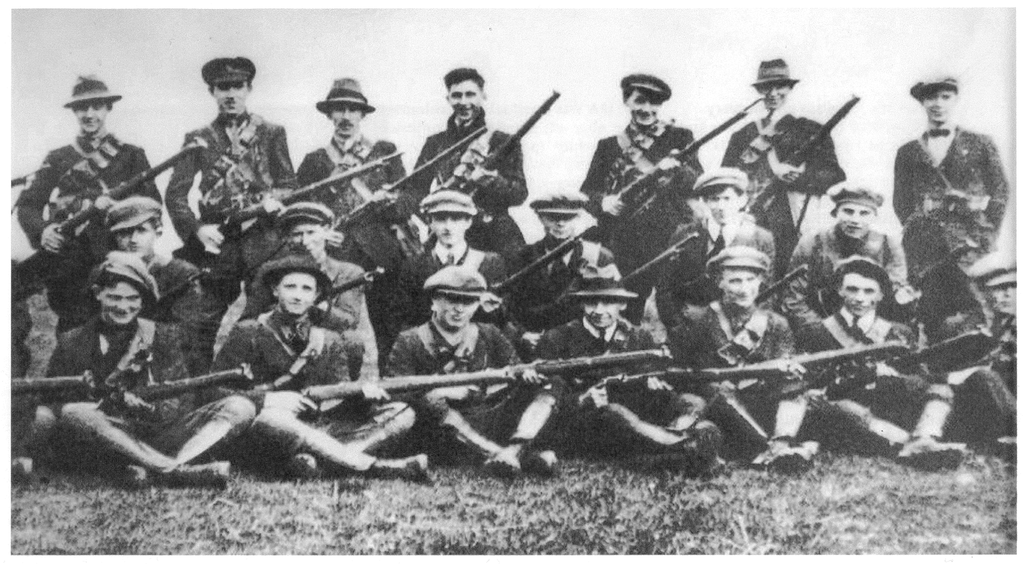
“When they divided Ireland, the 6 counties in the north the British kept contained 80% of all economic activity in Ireland, because they had all these cotton and flax mills,” Patrick brought up. “They said they were keeping it for religious and social regions, but the main reason was economic. They could ditch 80% of the country and lose 20% of the economic activity, but keep the other 80%.”
The Orange Order and the anglo ruling class were one and the same for much of the 19th century, with membership in the order being made up of the British Crown’s high-ranking officials and nobility. The orange orders sectarian policies towards non-protestants were shared and reflected closely by the anglo-protestant rule of the crown throughout its colonies.
The presence of the order and its ideology wasn’t just in Ireland and Britain, but extended to Canada too. From the mid 19th to the 20th century, the orange order held massive influence over Toronto in its public and private policies, earning the city the nickname “The Belfast of North America.”
One of its main targets was French-Canadian Catholics who were demanding equality with English speakers. Among its prominent members were John A. McDonald, the founder of Confederation, as well as several other prime ministers, such as John Abbott, Mackenzie Bowell, and John Diefenbaker.
A win or the bare minimum?
Despite the ban, residents of Garvaghy Road and Irish people across the world are upset that it took weeks to happen and it had to get to a level of international mobilization. The decision has also had many pro-Irish political parties question the sanctity of the laws in Northern Ireland, with a historically violent parade almost making its way through the neighbourhood this year.
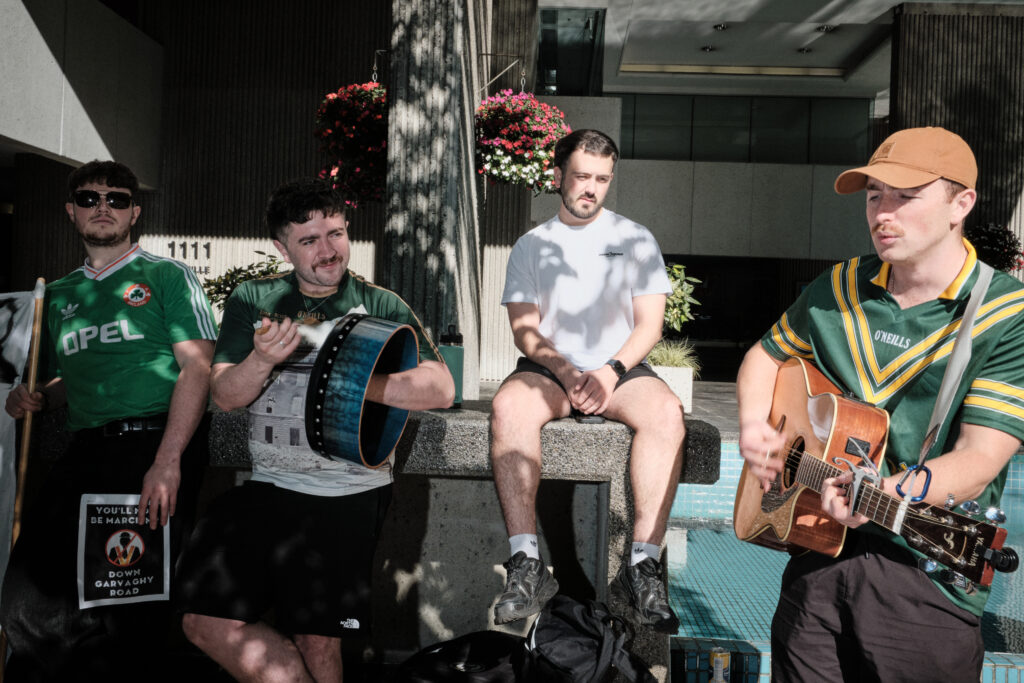
“We are happy and relieved that the march has now been banned from going down the road, but it should have never gotten to this stage,” said Rob on the recent ruling. “Although it may seem like a victory it’s not. It’s just relief for the residents of the area who can now live in peace without fear of this sectarian hate fest parading through and marching past while they’re barricaded in their homes.”
“It shows the strength Irish republicanism has when we unite under one cause,” Rob said on the unity of the Irish Diaspora. “Republicans don’t want to divide between 26 and 6 counties, they want Ireland to be one. But it isn’t, the north is still occupied by the British government.”
Be part of the conversation!
Only subscribers can comment. Subscribe to The North Star to join the conversation under our articles with our journalists and fellow community members. If you’re already subscribed, log in.