
November 11th was Remembrance Day in Canada and in the rest of the British Commonwealth. Many Canadians are wearing a red poppy as a symbol to commemorate soldiers who died in wars around the world. The red poppy, however, is not a symbol of mourning, but was popularized by men who encouraged senseless massacres between the nations of the world.
Mourning the conscripts of WW1 and those who volunteered to fight the Nazis is righteous, and the vast majority of those who wear the poppy are well-meaning, but the way that sympathies for the war dead can be twisted into fomenting further support for militarism has to be examined. If we want to prevent more working-class people from being thrown onto the pyre by oligarchs in the rivalries between major powers, and with the growing danger of a new world war on the horizon, the official spectacle of remembrance must be challenged.
Origins of the Poppy
The poppy doesn’t have to be a symbol of imperialism. However, it was cultivated as a popular symbol by advocates who supported World War 1 and Anglo-American imperialism long after millions of lives had been lost in the years since the conflict started in 1914.
Spurred by a reading of John McCrae’s In Flanders Fields, a New York teacher popularized the flower in 1918 as a symbol to remember the millions of dead allied soldiers. It gained traction quickly among those who had supported the war. It served as a way to ease their conscience during a time when many had questions about why their friends and family members had fought and died.
John McCrae’s famous poem, recited in schools across English Canada every year, is often portrayed today as a condemnation of war. However, an examination of the poem and its author betray its vengeful pro-war character. During the war — which led to the death of 67 000 Canadians — John McCrae criticized Pope Benedict for bringing peace proposals forward and ridiculed the Archbishop of Quebec for even talking about peace.
As testified to in John McCrae’s biography, McCrae was happy that his poem was being used to recruit more young men to the front lines, raise money for the war and to combat anti-war activists. In Flanders Fields was used on recruitment ads and billboards to convince more young men to join the bloodbath as McCrae called for more dead Germans rather than an end to the war.
In Britain the poppy was popularized in 1921 with the support of Douglas Haig, head of the newly formed British Legion. Haig had been the senior British military commander at the Somme, the largest battle of the war, where over 1 million men ended up killed or injured between the British, French, and German forces.
“Take up our quarrel with the foe”
In Flanders field
The true cause and horrors of World War 1
WW1 as a whole resulted in 20 million killed and 23 million wounded, mostly conscripts or coerced volunteers. What was the justification for this tremendous loss of life? Officially, the assassination of heir to the Austro-Hungarian Empire, Archduke Franz Ferdinand, kicked off a cascading series of declarations which drew in all the major powers into the war. However, it was the context of intensifying rivalry between imperialist powers that had made the brewing global conflict inevitable once the powder keg was sparked.
The arms buildup between Germany, Britain, France and Russia, notably, created massive domestic military industries that would go on to reap astronomical profits over the course of the war. Meanwhile, workers had to suffer the rationing of basic necessities, pay cuts, outstanding inflation, and the outlawing of strikes.
This major push by industrialists and politicians to shift away from basic necessities, towards production for war, across the global economy resulted in the price of those necessities skyrocketing. Canadian merchants made an astounding 40% margin of profit on butter, 50% on eggs and, for meat, it went over 100%. Production targets increased and safety standards fell, but even the mildest of labour protests was greeted with repression in the name of preserving the war machine.
Even more horrible, many labourers were forced to go fight on the battlefields to defend the interest of one imperialist gang. In Canada, the government forced around 50 000 citizens to depart to Europe, while scores of others had to attend a military barracks, leaving their farms or families unattended.
Unemployment dropped, due to industrial conscription and the loss of millions of working-class men to the military, but those wages were quickly worth less and less. Real wages fell sharply while rents and production rose.
World War 1 also played a key role in the United States’ becoming a superpower. The US Treasury handed out $10 billion in long-term loans to the allies which European taxpayers were paying off with interest well into the 1950s. Its military-industrial complex also ballooned to new heights. Smedley Butler, in his famous booklet War is a Racket, quotes estimates from economists saying that $16 billion in profits out of the $52 billion spent by the government on the war were placed into the pockets of 21,000 newly-minted billionaires and millionaires.
Who fought to stop the bloodshed ?
While the signing of an armistice which came into effect on the “eleventh hour of the eleventh day of the eleventh month” of 1918 marked the official end to the war, it was really the revolts of the working class in different countries that forced an end to the bloodshed.
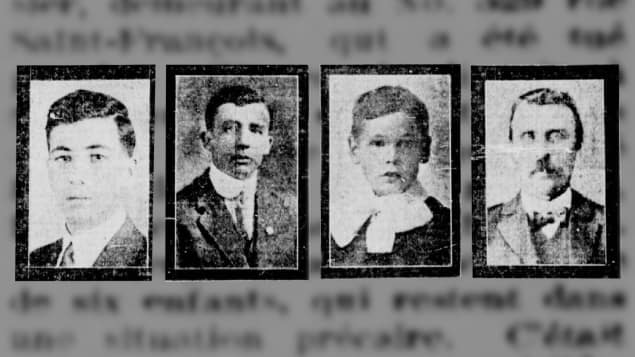
In Canada, the biggest federations of unions opposed the war. In some cities, especially in Québec, demonstrations against conscription exploded into clashes with armed forces and the police. On April 1st 1918, the Canadian military opened fire on protesters in the streets of Québec City, killing 1 student and 3 workers to try to stop the anti-war movement.
Many influential socialists like Jean Jaures, Karl Liebknecht, Rosa Luxembourg, and V.I. Lenin pushed for workers, soldiers, and peasants to rise up against their respective tyrannical regimes instead of killing other workers and dying at their behest. In the trenches, soldiers of different imperialist rivals propagated illegal newspapers that asked for the soldiers to revolt and turn their weapons against the oligarchs sending them to war.
In Ireland, a group of volunteers came to see that they were being used as cannon fodder by the British and joined Socialist Republican James Connolly’s Irish Citizen Army in launching a rebellion against British rule on Easter 1916. Dubbed the “Easter Rising”, the rebels declared Ireland an independent republic, seizing a General Post Office in Dublin, before the uprising was crushed by the occupying British Army.
Anti-Conscription protests and a general strike in 1918, spurred by heightened anti-British sentiment following the execution of the Easter Rising’s leaders, ended conscription in Ireland for the remainder of the war.
Ireland and the Poppy
For the Irish people, these events still shape how the poppy is perceived by the population. The British government has, just like Canada, painted its soldiers as “peacekeepers” when they’re sent to occupy another nation’s territory. In Ireland’s case, this occupation has been ongoing for over 8 centuries.
Rob, an Irishman living in Vancouver who helps organize the Irish diaspora around issues back home, gave The North Star his opinion on the poppy and why he refuses to wear one. “I don’t support the wearing of the poppy as it commemorates ‘all British soldiers in all wars’, some of whom served in Ireland and committed terrible atrocities against our people,” explained Rob.
He gave the example of the “Black and Tans” who fought against Ireland’s independence and burned Irish rebel towns in the years following WWI.
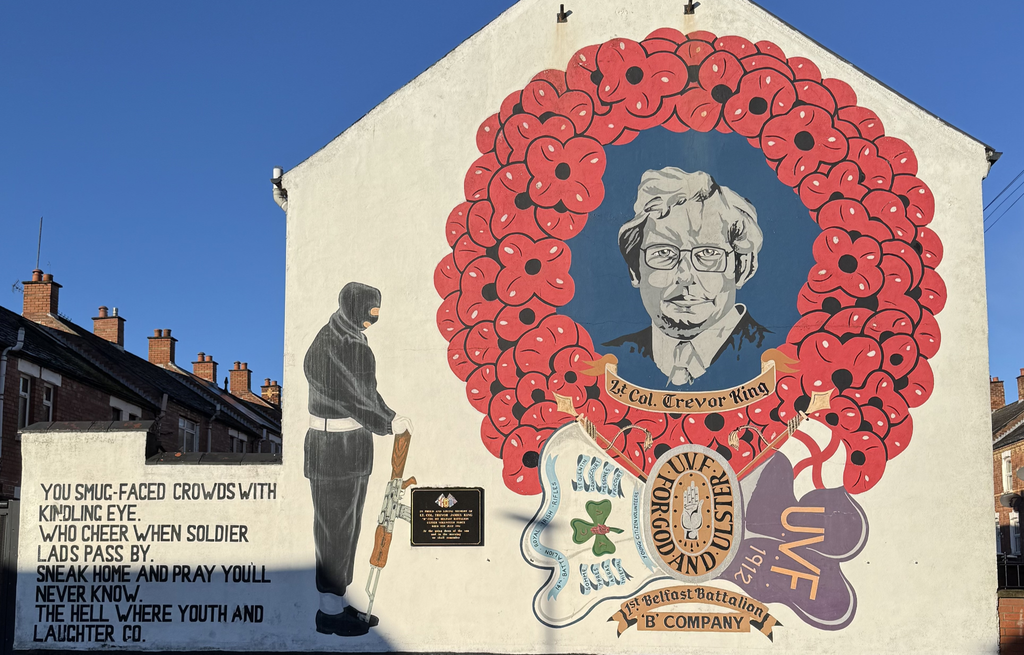
The poppy appears plentifully in unionist neighbourhoods in murals commemorating martyrs from fascist paramilitary gangs like the Ulster Volunteer Force (UVF) which murdered hundreds of Irish Catholics with the active collusion of British Intelligence. The UVF waged terror campaigns against the Catholic communities and retaliated against civilians when occupying soldiers or one of their own was killed by a republican.
Be part of the conversation!
Only subscribers can comment. Subscribe to The North Star to join the conversation under our articles with our journalists and fellow community members. If you’re already subscribed, log in.