
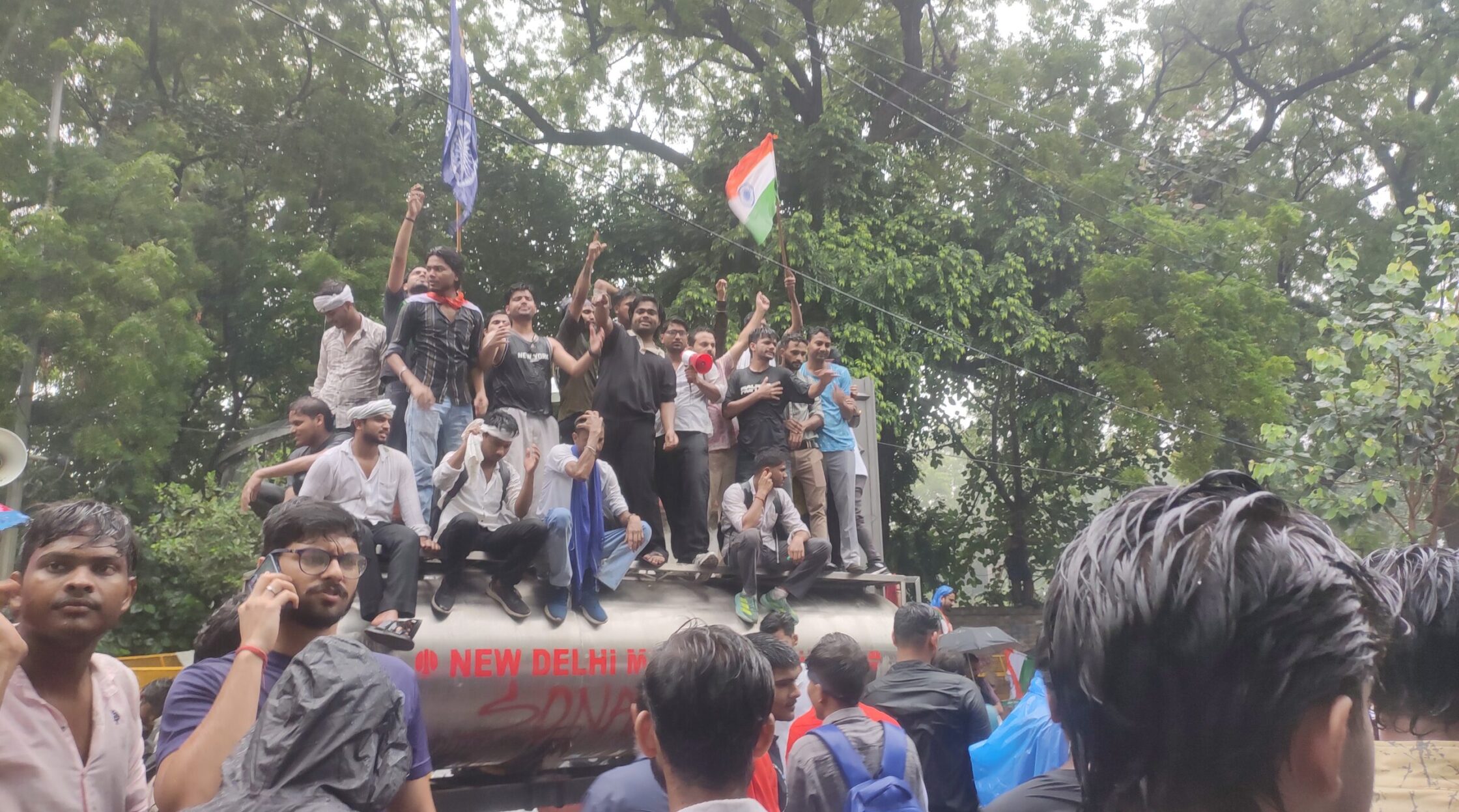
The Education Minister of India resigned following mass protests last month, in which hundreds of thousands of students and youth opposed the cancellation of the nationwide NEET exam results, an action that led 20 students to suicide. Indian police are continuing to wage a repression campaign against student activists, even as the protests have ended. The North Star spoke to activists in India.
Following a leak of the Indian National Eligibility cum Entrance Exam (NEET), the National Testing Agency of India cancelled the recent results of the highly competitive examination and rescheduled it for a later month against student wishes. The exam is held only once a year and is taken by millions of students competing for only a few hundred thousand seats in undergraduate medicine programs.
The exam requires large amounts of preparation, stress, and study, driving students recently and historically to massive rates of suicide. Upset with the mismanagement of the NEET within the broader privatized structure of public education in India, student movements and organizations called for nationwide protests asking the Education Minister Dharmendra Pradhan to resign.
The Cockroach Janata Party (CJP), an online student movement satirizing the current ruling nationalist Bharatiya Janata Party (BJP), were a major force behind the protest. They were the first to send out calls for students to demonstrate peacefully at Jantar Mantar, a designated official protest zone in New Delhi. The CJP demanded the immediate resignation of Education Minister Dharmendra Pradhan and compensation for the 20 families affected by the NEET student suicides.
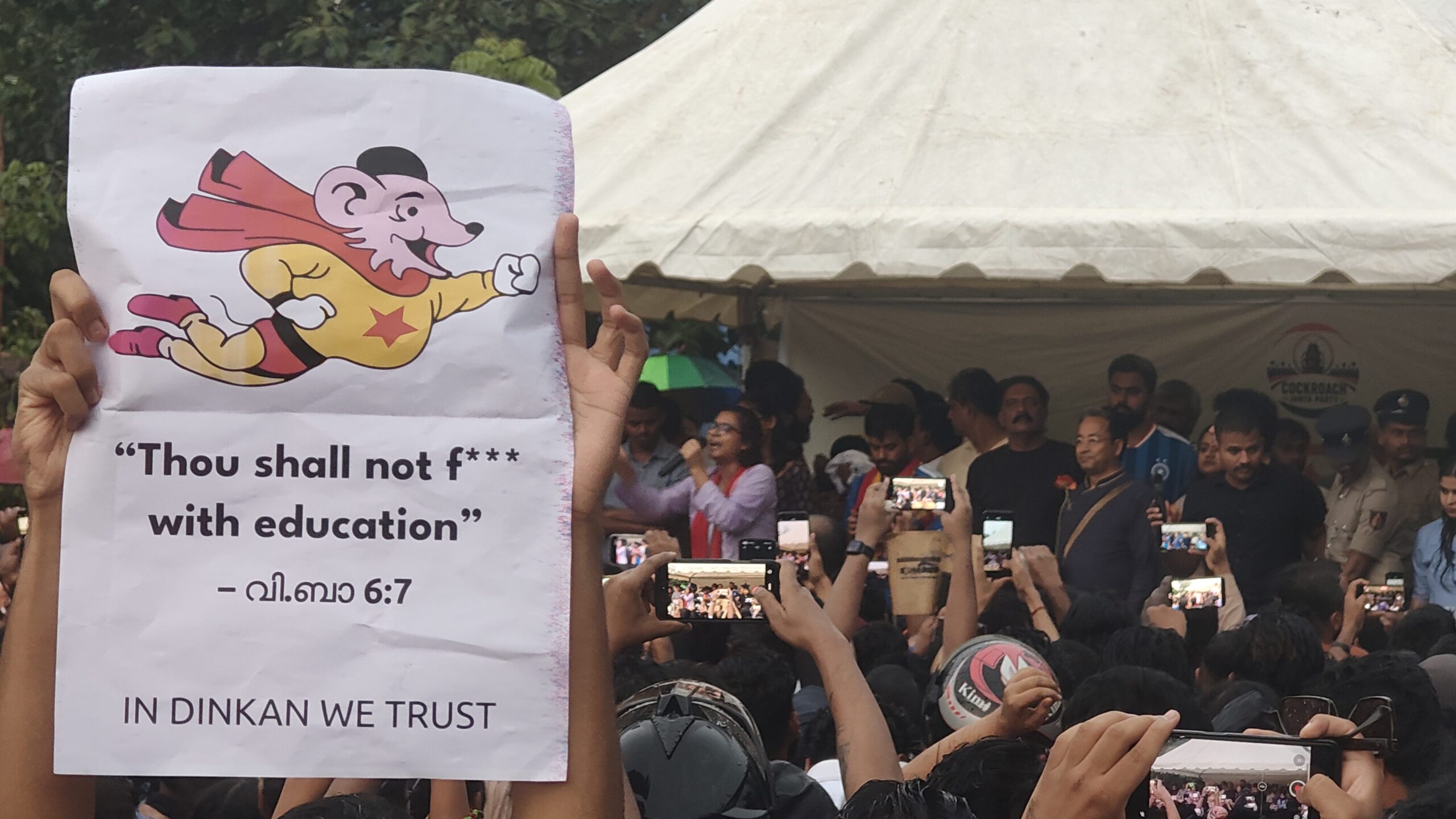
On July 20, the CJP declared their Sansad Chalo march (Walk Towards Parliament), where thousands of youths gathered at Jantar Mantar to walk towards the parliament of India. In response to the march, the Indian government deployed specialized armed police units and riot control alongside Delhi police to try to stop the protest.
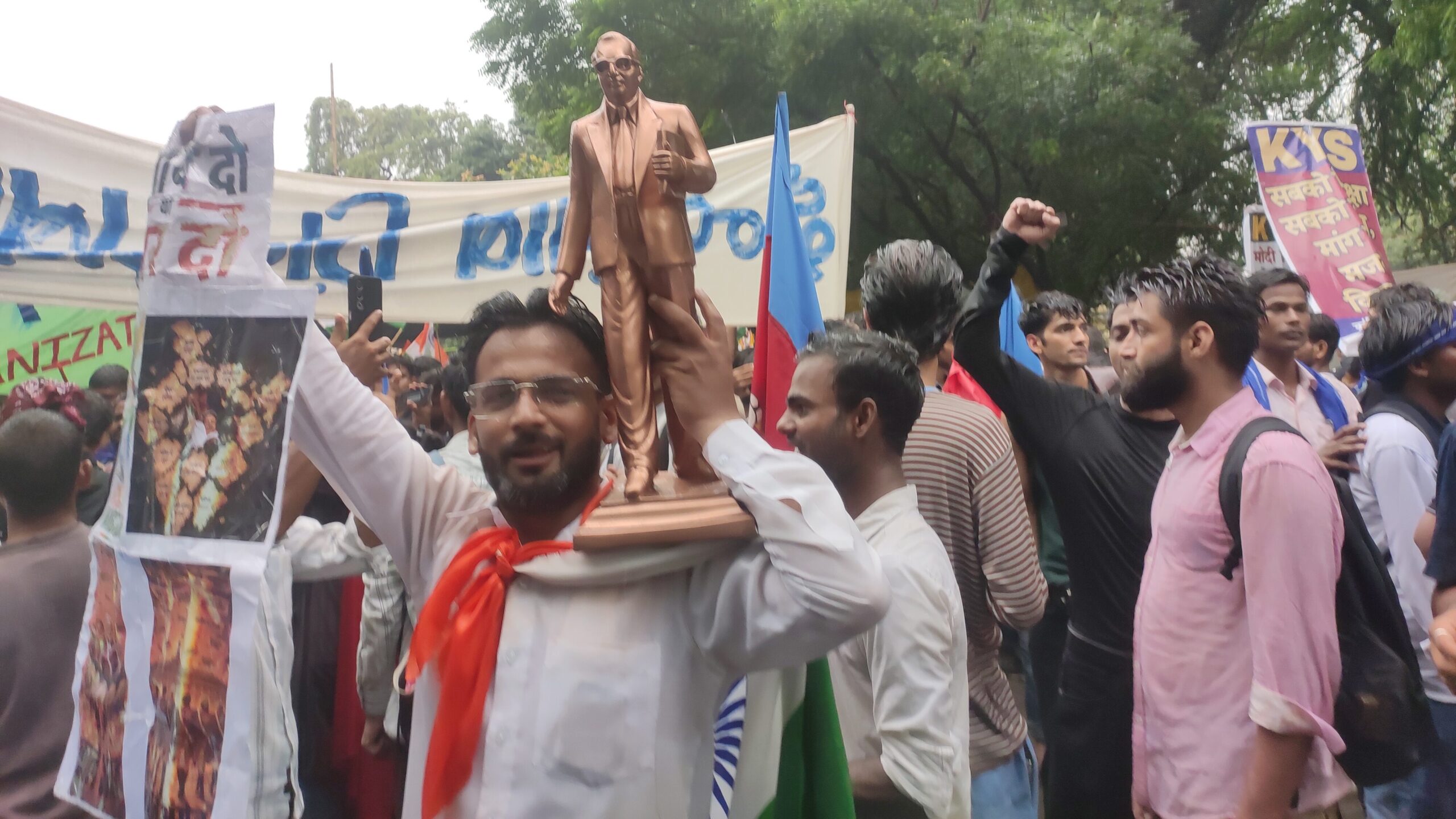
Students successfully forced Dharmendra Pradhan to resign on July 25, five days after the march began, but were met with tear gas, water cannons, and hundreds of police reports in the process. Following the scale of student repression faced on July 20, the CJP added an additional demand to revoke all police reports against students active in the protests.
A “witch hunt” of student activists
Harsh, a student activist with Disha, an independent democratic student organization in India, told The North Star about his experience on the ground during the student protests. “[The police] used pellet guns, baton strikes, tear gas, water cannons… They would gang up on students, one student to five policemen, beating them, aiming especially for their heads… They tore people’s clothes, women’s clothes, slapped students, everything they could to repress all students that were present.” Harsh says the severe crowd control measures were enacted before and after the resignation of Dharmendra Pradhan.
Harsh is part of Disha’s chapter in Patna, a city over 1,000 kilometres away from New Delhi, the centre of the student protests. Even though they were far from the central hub of the movement, protests in cities like Patna still drew out crowds of thousands across India.
Harsh recalls being tear gassed, and seeing fellow classmates chased down by the police. Instead of using batons to disperse crowds and scare off students, Harsh said they would “circle them and then beat them until they wouldn’t move.”
Harsh mentions another city, Siwan, where eye witness reports mentioned police officers with rifles and bullet wounds in students. The internet was shut down in the district following the protest crowds.
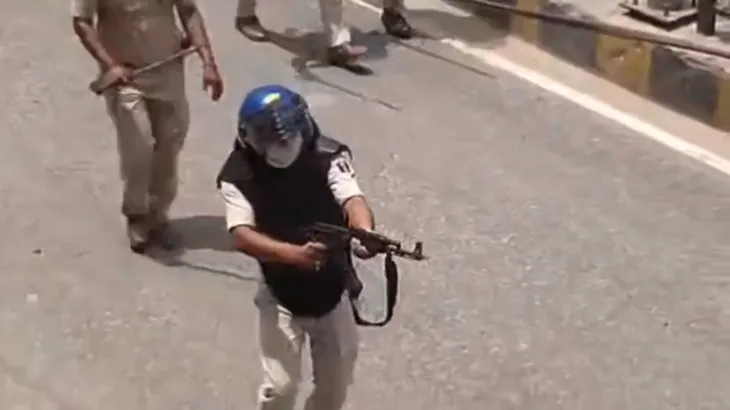
Laws concerning crowd control measures are included in the Bharatiya Nagarik Suraksha Sanhita, a new repeal of the old Criminal Code of India, introduced by the BJP, which came into act on July 31, 2024. The new law gives police the right to forcefully disperse crowds after a call to disperse has been exhausted. The bill suggests police forces use as little force and damage as possible when dispersing crowds, but gives discretion to government administrative positions to call in armed forces.
Hundreds of students have been picked up without notice and arrested at their hostels, universities, and workplaces, in what Harsh describes as a “witch hunt against all activists.” Regarding the student protests, over 90 police reports have been filed across India, with 64 just in the state of Bihar, where Patna is located.
Harsh recalls the anxiety of the days following the protests trying to find classmates that were picked up for their involvement. “A member of our organization, Ashish, was detained and arrested on the 23rd. We drove around trying to find him for over 24 hours. We went to over 20 police stations but we couldn’t find him.”
Ashish was found a few days later. He was detained and set to be released in the following days. Before this could happen, he was filed into a false report by the police for a conspiracy to commit murder, an accusation which can land him around 10 years in prison.
“They’re doing this with hundreds of students in Patna, Bihar, Delhi, Bengal, Assam, and Uttar Pradesh… Picking them up from their houses, beating them, arresting them, detaining them, and then filing false charges,” explains Harsh.
“I think it’s very clear this is an attempt by the BJP government to scare all students and protesters of their dissent against them” Harsh suspects. “That if they [the people] ever do this again, this is what will happen to them. They’ll be disappeared, arrested, and put in prison for false charges.”
The NEET necessity
The NEET is the mandatory entrance exam for undergraduate medical courses in India. It is a national exam which has replaced previous school and state entrance exams. It is one of the many competitive examinations in India, where success in the exam decides if you will be able to take an opening (called seats) at a post-secondary for the undergraduate program you desire.
While over 20 million students apply for the NEET each year, seats on undergraduate courses are limited to a select number. For example, the seats for the Bachelor of Medicine/Bachelor of Surgery are limited to 136 939. In this number itself, seats are divided between private medical colleges at 73 643, and government medical colleges at 63 296.
Harsh talks about the issue of this system. Students, even if they succeed on the NEET, are forced to pay higher tuition fees because only private medical college seats are open or are forced to go abroad to study and pay tuition costs three times higher than that of a domestic student, among other fees.
The National Testing Association in India is the central agency in charge of competitive examinations like the NEET since 2017. Harsh points out the contradiction, that although it conducts exams nationally for the Department of Higher Education under the Ministry of Education, it is an autonomous body which contracts out the implementation of exams to private entities.
“Paper leaks like these have been happening in India forever, but it’s been happening with much more intensity in the last 12 years since the Modi-Shah government came into power, and especially even more after the establishment of the National Testing Agency,” Harsh says.
Disha Students Organization’s main slogan is “Education and Employment—Our Birthright.” Harsh claims that, “there’s a systemic failure of the system to get education to enough of the population.”
“We need the National Testing Agency dismantled or removed and replaced with a transparent, efficient, and accountable organization that’s actually funded well by the government and conducts examinations itself.”
While over 90% of children start primary school education in India, the retention rate drops sharply to a low 50% by the time of secondary school. Of this, only 30% of students will attend post-secondary education.
Harsh also mentions historical revisions in government curriculums following the New Education Policy introduced and passed by the BJP government in mid 2020. “They fast-tracked the bill through COVID. It opened the doors for privatization in education as well as [sectarian politicization] of education in India… They have adopted the historiography of Hindu Muslim rule, where the Muslims are seen as invaders in India, and the Hindus were a past glorious age of India where everyone was happy and everything was great, which is completely fantastic and imaginary.”
“The entire education system fails in India to give the majority of the population an education, let alone a good one.” Harsh says. “We need to push for the right to a free and equal education.”
2 Commentaires
[…] Police repression persists following end of student protests in India […]
[…] The Supreme Court of India, ahead of the SIR protests, had ruled that essential services should not be shut down. Despite this, internet and metro services were shut down by authorities. This was Delhi’s second big wave of internet shut downs this year, with the previous wave happening during the NEET protests. […]
Be part of the conversation!
Only subscribers can comment. Subscribe to The North Star to join the conversation under our articles with our journalists and fellow community members. If you’re already subscribed, log in.