
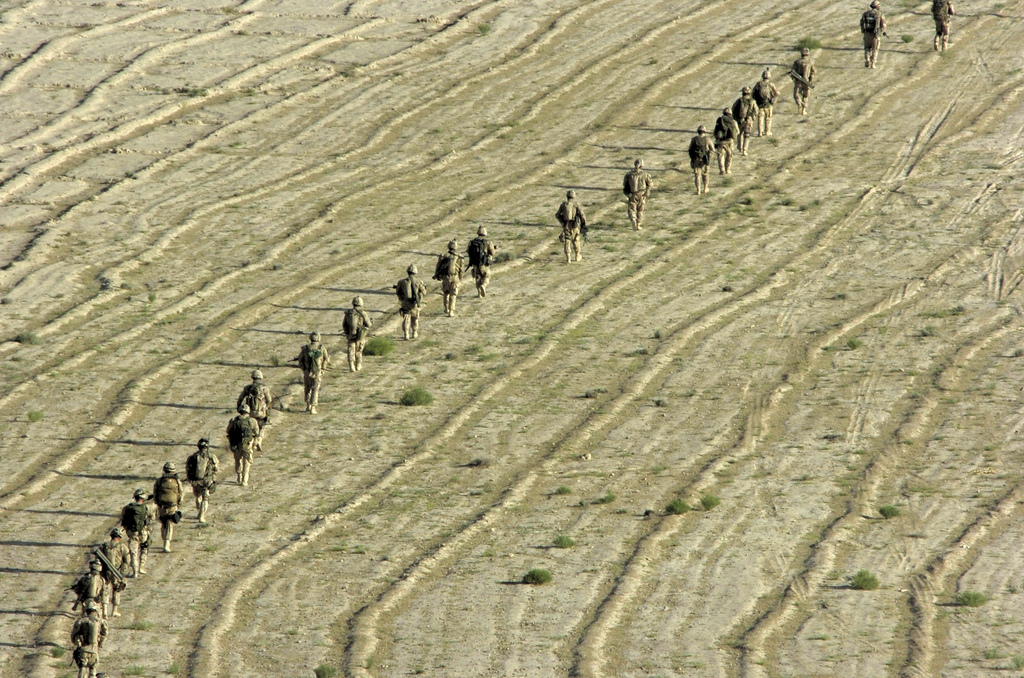
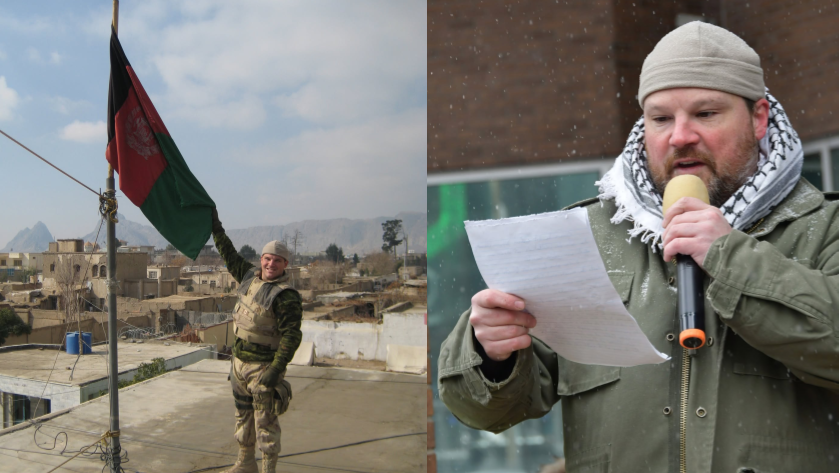
For former soldier Martin Forgues, September 11, 2001, marked a turning point in Canadian military policy. Having been deployed to Bosnia and then to Afghanistan, he has been a firsthand witness to the renewed militarism of the past 25 years. In October, he will begin a tour of anti-militarist film screenings and talks across Quebec.
Martin Forgues left the military in 2010 and, since then, has produced numerous articles, books, and films critical of Canadian military policy. His most recent documentary, Le monde d’après (The World After), explores the impact of the Canadian intervention in Afghanistan on the lives of former Canadian military personnel and Afghan civilians.
The attacks carried out by Al-Qaeda against the World Trade Center towers—the 25th anniversary of which will soon be marked—served at the time as the ideological justification for a NATO invasion of that Asian country.
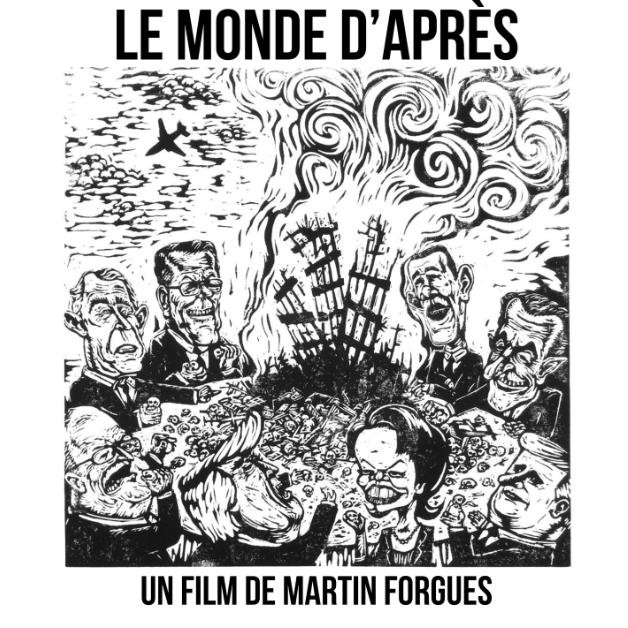
In an interview with The North Star, Forgues explains the intent behind the film, which he will present during a series of film screenings and talks at various locations across Quebec. “That’s the point of my film: that date [September 11, 2001] changed the course of millions of lives.”
This was true of his own journey, as he himself was deployed there from 2007 to 2008. At the time, he was part of a team tasked with protecting civilians and military personnel who had come to oversee reconstruction in Kandahar Province. “Their job was to award reconstruction contracts and, to some extent, manage the pacification of Kandahar Province.”
A paradigm shift in 2001
When he enlisted in the Armed Forces in 1999, however, Forgues did not feel he would be part of an occupying force. At the time, the Canadian military was portrayed as an agent of peace among nations.
“The Canadian military made its name through United Nations missions. We had a somewhat whitewashed image of the mission in the Balkans.” He recalls that, despite the official narrative, during that mission in the former Yugoslavia, “peacekeepers fought […] It was kept under wraps because [Canada’s] image had to be maintained.”
Despite the tainted history of these military interventions, the fact remains that the military recruited by presenting an “idyllic” image, in Forgues’s words. At the time, military personnel jokingly referred to Canadian peacekeepers as “puppies without borders.”
However, the terrorist attacks of September 11, 2001, and the way the United States exploited them to launch invasions in Iraq and Afghanistan transformed the attitude of Canadian military authorities. “Looking back, I can see it: something had changed.”
At the time, Forgues was preparing for Bosnia, and rumors were swirling. People began saying that his regiment, the 22nd, would instead be deployed to the Middle East. Reservists then declared they would not go—out of fear rather than conviction. Ultimately, it was another group of soldiers who went first to support the invasion of Afghanistan.
From that point on, Canada would steadily increase its involvement in propping up a pro-American regime there. “It was the Liberals who sent us to Afghanistan—they’d started increasing the budgets and all that—but Harper really pushed the pedal to the metal. ‘All right, let’s go!’” Forgues recounts.
He points out that this new, more bellicose policy then influenced not only deployment decisions but also media and government rhetoric. “[E]ven in the media, it was risky to criticize the mission in Afghanistan because ‘You know, you’re picking on our boys from the 22nd!’, but we realize that, in the end, we weren’t even going to Afghanistan to win. ”
The official narrative on Afghanistan: “nonsense”
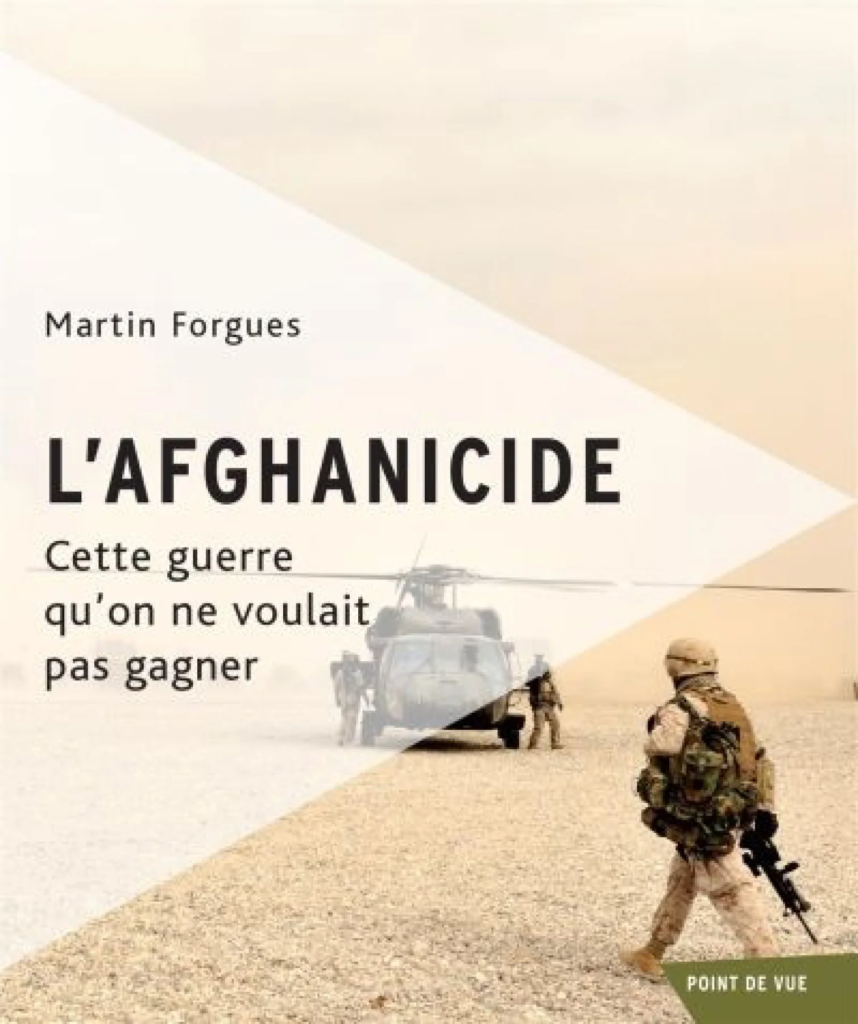
According to the former soldier, the narrative surrounding the war in Afghanistan was misleading. Since 2014, he has published numerous works in which one fact keeps coming up: Canada did not intervene there to free the population from the Taliban, but to maintain a military credibility that its elites believed they had lost.
“The idea that we were going to get there and the burqas would come off, that little girls would go to school and all that… was all nonsense. It was the sales pitch for that war.” Forgues, who has visited more remote regions of the country, explains that “even without the Taliban, parents would sometimes say, ‘No, my children won’t go to school, let alone the girls.’” Overthrowing the government by force was certainly not going to resolve this situation.
As further proof of the hypocrisy of this marketing strategy, Forgues points out that the United States long fought against the government that emerged from the 1979 Saur Revolution, which had, in fact, improved the status of Afghan women and girls. “When the Russians went in to support that revolution, they were doing the same thing [as the American invasion]. But it was considered wrong when the Soviets did it.”
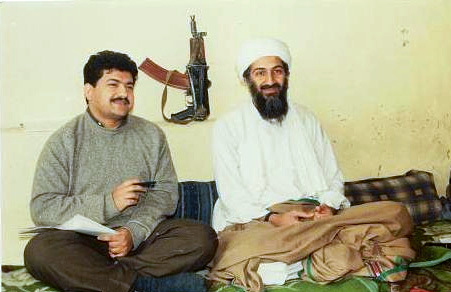
At the time, the CIA had armed and trained rebel groups, including a certain Osama bin Laden, the heir to a wealthy Saudi family who had established an infrastructure to attack Soviet imperialist forces from Pakistan. A decade later, this mujahideen would declare a holy war against the United States and form al-Qaeda, the organization behind the September 11 attacks.
Relentless militarization
If Martin Forgues wishes to revisit this war—which claimed the lives of more than 40,000 civilians, mostly Afghans, as well as 159 Canadian soldiers—it is largely because the Canadian military policy adopted at the turn of the millennium remains the policy of the Carney administration. Only the targets have changed.
“Right now, just try to criticize the war in Ukraine without being called a pro-Russian puppet.” Forgues also points to the Liberal government’s stance on the Venezuela issue. Canada is a member of the “Lima Group,” which aims to bring about regime change in that oil-rich country. Similarly, the Trudeau government had supported the pro-U.S. politician Juan Guaido, who proclaimed himself president of the country in 2019.
The lecture tour thus bridges the gap between what has upended the world of Martin Forgues and so many others—the militaristic resurgence justified by the 2001 attacks—and the current warmongering stance of the United States and its steadfast ally, Canada. The first event is scheduled for October 10 at Bâtiment 7 in Montreal.
Be part of the conversation!
Only subscribers can comment. Subscribe to The North Star to join the conversation under our articles with our journalists and fellow community members. If you’re already subscribed, log in.