
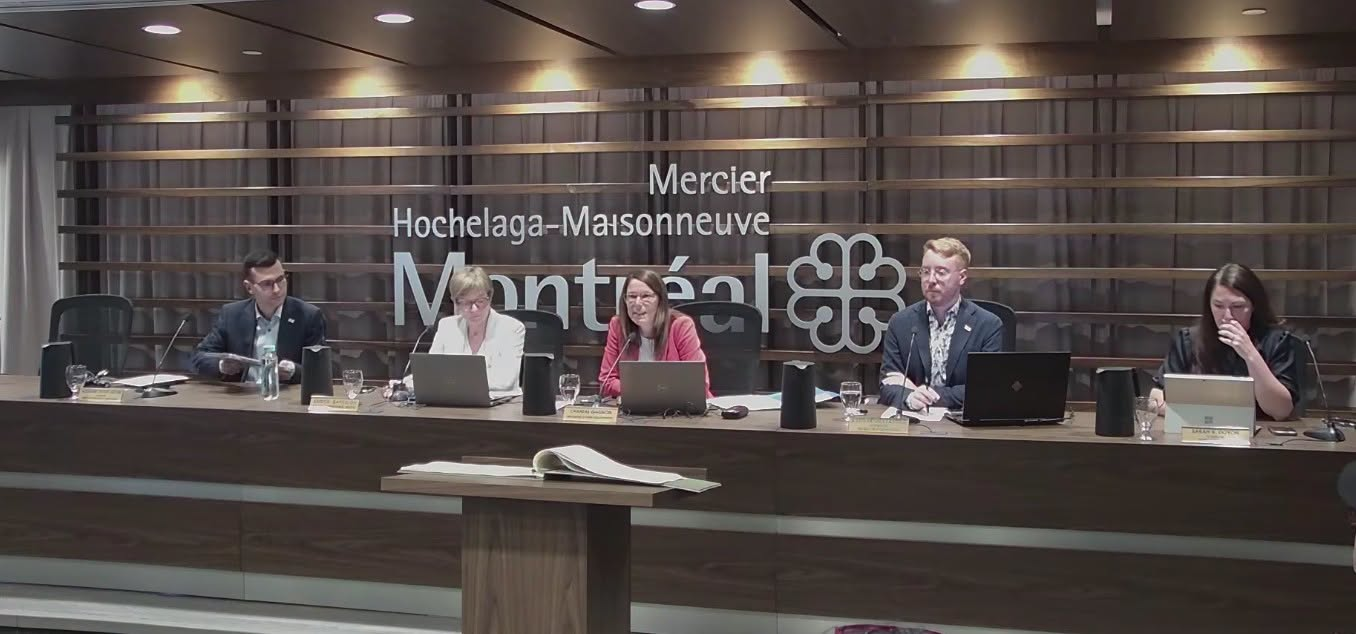
One year after the election of Soraya Martinez Ferrada and her party, Ensemble Montréal, is the city doing better? Not really, according to a citizens’ group interviewed by L’Étoile du Nord. According to its members, some progress has been made in terms of listening to citizens, but democracy remains largely absent from municipal affairs.
→ Read Part 1 and Part 2 of this interview.
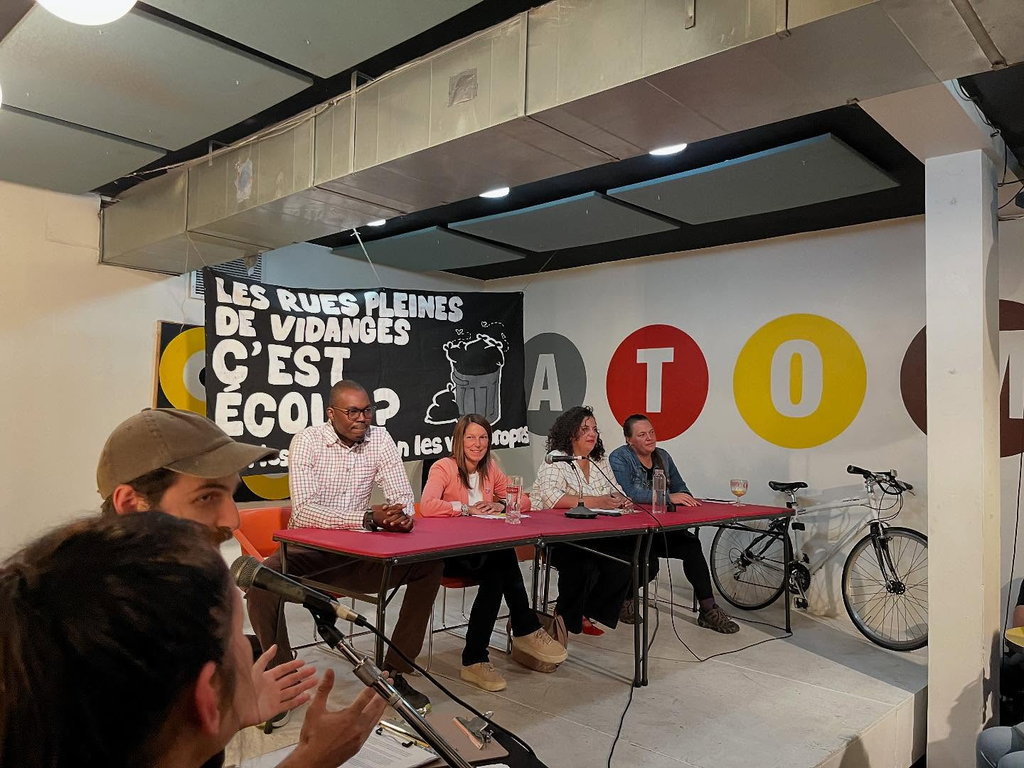
Ligue 33 is a citizen organization in the Mercier–Hochelaga-Maisonneuve borough of Montreal. It gathers citizens’ concerns during discussions and community events, then mobilizes them to “apply pressure on certain issues that concern [them].”
For the past five years, members of the organization have regularly attended borough council meetings and public consultations in their area. In this way, they hope to bring residents’ ideas to the attention of elected officials.
Are elected officials listening?
Members of Ligue 33, like many other citizens, criticized Projet Montréal, the former ruling party, for failing to listen to the city’s residents. Opportunities for the public to speak out were limited and often left no room for democratic expression. Has the change in leadership made a difference in this regard?
According to Carolyne Chagnon, secretary of Ligue 33, this has been somewhat the case in Mercier-Hochelaga-Maisonneuve. “There have been a few small, concrete changes.
“I’d say that the atmosphere, for example, at the [borough] council—that has changed. I think that’s a positive thing.” She adds that there is “less confrontation.”
Members of the Ligue also note that it’s easier to talk to their local elected officials than it used to be. They wonder, however, whether this is a gesture of good faith or a strategy to avoid alienating these activists.
This shift toward a slightly more democratic atmosphere hasn’t extended to the entire city. At Saint-Laurent borough council meetings, the atmosphere was often tense in early 2026. Residents of the Chameran neighbourhood caused a commotion when the borough mayor offered what they considered to be dismissive answers to their questions.
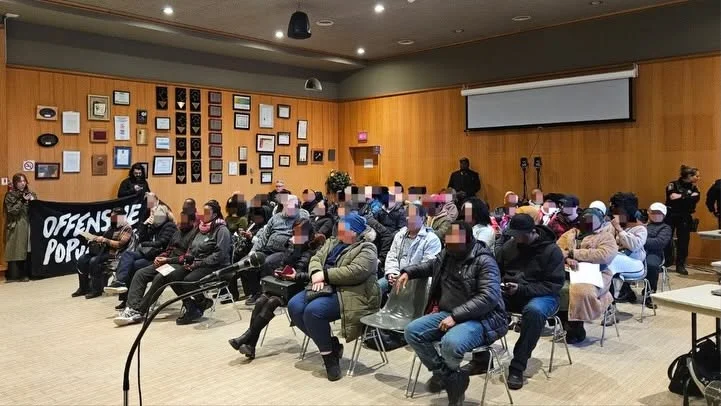
At the city council, debates over city workers’ negotiations and the question of Palestine, for their part, created an explosive atmosphere. Protests have taken place in front of City Hall almost monthly since the election of Ensemble Montréal. City council meetings have even been suspended at times due to activist actions.
Pointless public consultations
When it comes to public consultations, change does not seem to be on the horizon. Carolyne cites the example of the public consultations conducted by Ensemble Montréal to decide what would become of the bike path on Hochelaga, which was under construction at the beginning of the year.
Instead of an open consultation, the new team in Mercier–Hochelaga-Maisonneuve proposed a series of four presentations, all taking place on the afternoon or evening of April 2, with limited seating. Those who joined the online session were only treated to a presentation lasting about 30 minutes. There was no open forum for citizens to voice their opinions to elected officials.
Citizens were able to vote online between two proposed routes for the bike path. The North Star tested the consultation process and found that people living outside the borough could easily cast their votes.
Jonathan Haiun, who is in charge of political activities for Ligue 33, explains that “people were really outraged after this consultation because it was just, ‘Do you want your bike path on this street, or on that street?’, and there wasn’t really an option [that said] ‘no bike path.’” He adds that “for that particular consultation, we weren’t surprised, but we were disappointed.”
The new administration ultimately decided not to take the consultation results into account and instead chose the bike path’s route itself. According to Carolyne, this didn’t satisfy anyone. “The consultations were a sham.”
In its nine-point platform, Ligue 33 calls for genuine consultations with Montreal citizens, as well as a right to a referendum that would allow for the overturning of unpopular measures. During an election debate held by the organization during the 2025 election campaign, none of the candidates present spoke out in favour of this democratic measure.
Few concrete changes, but few major disappointments
All in all, the positive changes brought about by the new administration are rather minimal. According to Carolyne and Jonathan, politically engaged citizens are patient and are still waiting to see if the new administration will fulfill its promises.
Under Projet Montréal’s leadership, frustration had reached its peak, they say. For Jonathan, this works to the advantage of the Martinez Ferrada administration. “I think the fact that Projet Montréal was so terrible makes it clear that Ensemble Montréal is in a good position. They can just say that everything is going to take so much time. ‘You won’t see the results right away, the effects right away, so give us some time.’”
Carolyne adds that it’s hard to take stock after just one year of municipal government. “If you want to know if there’s a big difference, it’s hard to say after such a short time in office. But we’re still keeping the pressure on.”
Be part of the conversation!
Only subscribers can comment. Subscribe to The North Star to join the conversation under our articles with our journalists and fellow community members. If you’re already subscribed, log in.