
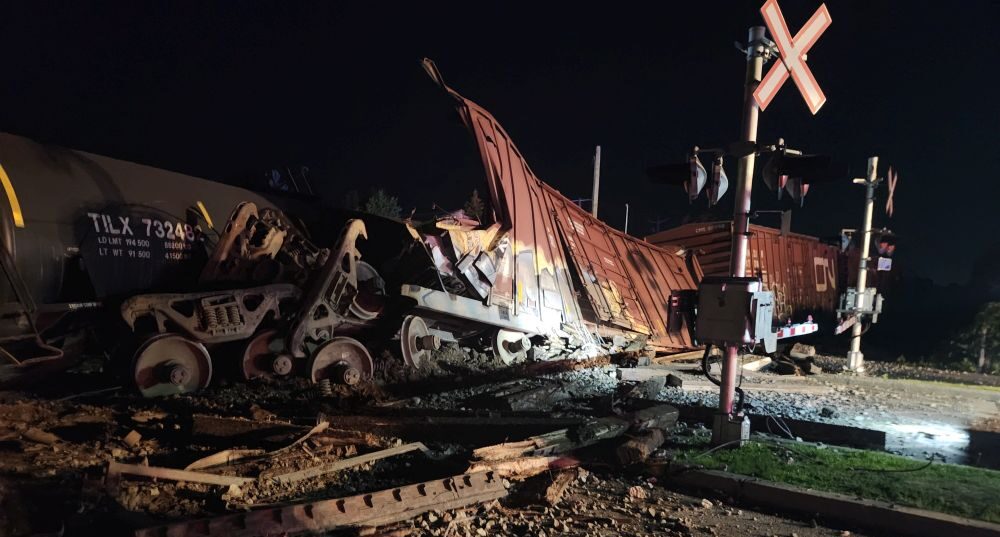
On July 5, a Canadian National (CN) train derailed in a residential neighbourhood north of Montréal. Since then, a report has revealed that CN allowed the track to remain in poor condition, despite warnings from residents. Félix Vincent Ardea, a train conductor and president of Teamsters Rail division 89, was relieved that no one died. “Given the scale of the incident, it could easily have ended the same way as the Lac-Mégantic disaster.”
He was not surprised to learn that the rail ties were in poor shape and that rail fasteners were missing. Budget cuts, a lack of inspections, and inadequate maintenance are leading to more and more safety problems, he explains.
Ardea says these cost-cutting measures are a major issue at Canada’s railway monopolies, CN and CPKC. He points to the shrinking number of rail traffic controllers: “They’re understaffed, so they have to cover larger and larger regions and handle more and more trains at the same time. That increases the risk of error.”
The dangers of fatigue
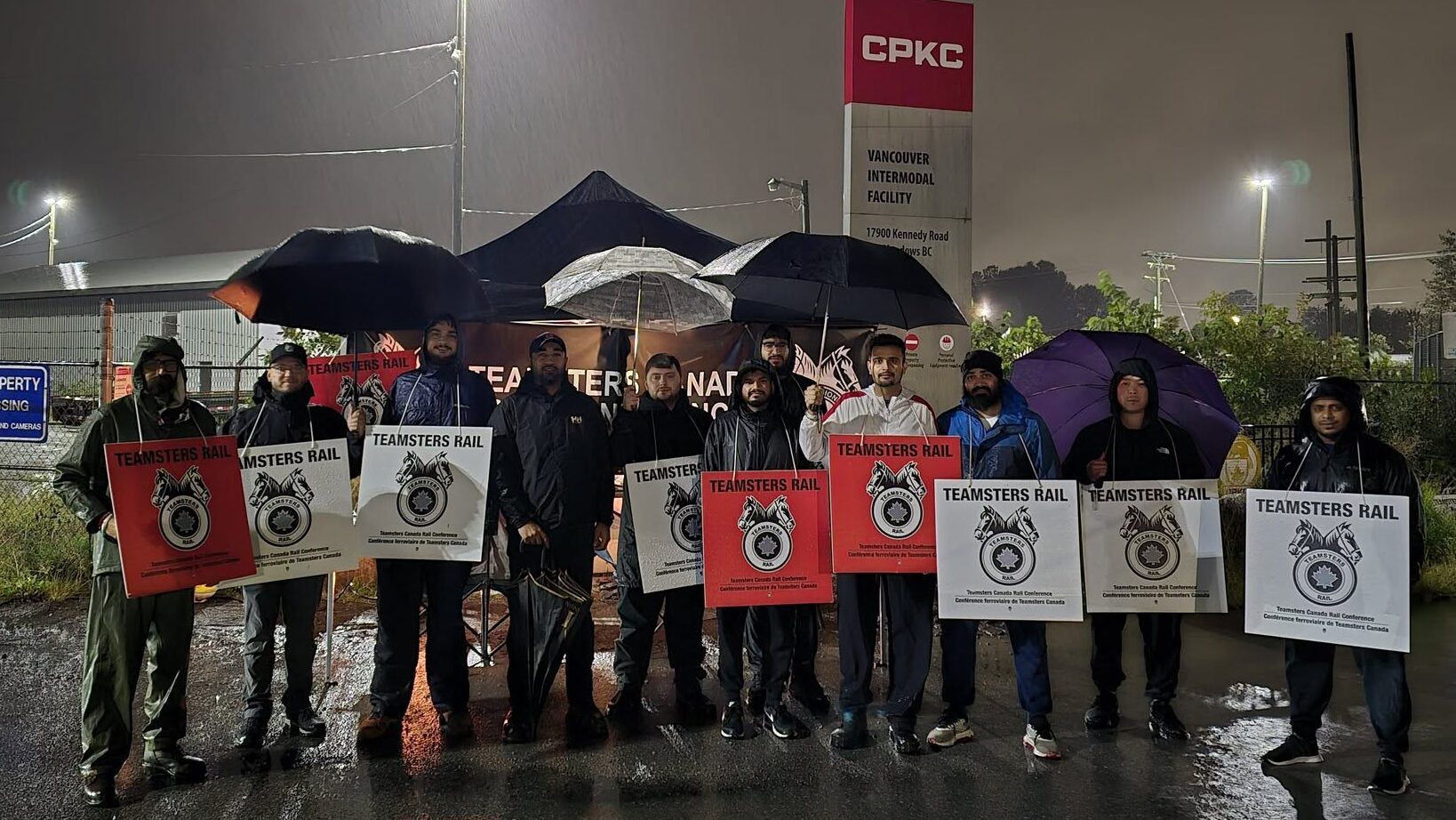
The media talks a lot about public safety when it comes to rail issues, but train workers are also at high risk. “We’re the ones travelling on those tracks. So, yes, safety is always a concern for workers.”
One of the most serious safety issues for engineers and conductors is fatigue, which can lead to serious errors “due to a lack of vigilance.”
In theory, they have “mandatory rest periods recently imposed by Transport Canada.” They are prohibited from working more than 12 hours. Their collective agreement also allows them—again, in theory—to request a replacement after 10 hours if they feel too tired to stay alert and do their jobs properly.
But “the company systematically ignores requests for time off.” It sometimes accommodates workers, but “when they’re short-staffed, or when they don’t want to call in another crew, they’ll tell you to keep working under the threat of an investigation or disciplinary action.”
Transport Canada should also, in theory, protect workers who feel they are too tired to operate a train safely. But “once someone reaches a certain number of absences, whether for [fatigue-related leave] or sick leave, [CN] will send you an ‘administrative’ letter telling you to ‘rectify the situation.’”
During the last round of bargaining, the major rail monopolies even tried to remove any protections that went beyond the legal minimum. “In fact, they tried to gut the entire agreement.” Among other things, they reportedly wanted to eliminate workers’ ability to request a 24-hour rest period after a stretch of intense work, often mixing day and night shifts.

“We think, on the contrary, that we should have more time off.” He gives the example of on-call workers, who are only entitled to 48 hours off for a weekend, compared to 64 hours for the average worker. “And when you work on call, you’re more tired than someone who works regular hours!”
“We also want to have families, to have friends… And if you want to make an appointment at the garage or anything like that, you have to use one of your ten days off for the year,” he points out.
Constant staff cuts
Ardea also raises the issue of crew sizes, which are sometimes too small. A train crew consists of two to three workers.
But “the more people on the crew, the safer it is for us and for the public”—even if that clashes with the profit targets of the major rail monopolies.
Since one worker has to stay in the locomotive, the other is sometimes overloaded with shunting duties. “He has to hang onto the back of the cars to couple them, switch the points, and so on.”
And hanging onto the train is very dangerous. In Montreal, two train conductors have died since 2014 after being struck or crushed while hanging onto a train. A third was crushed to death in 2024 during training, while his supervisor was performing several maneuvers at the same time.
Ardea notes that newcomers are often “less aware of the danger posed by the railcars around them.” He believes that “if there had been one more crew member, that would have been one more person looking out for his safety.”
Excessive power
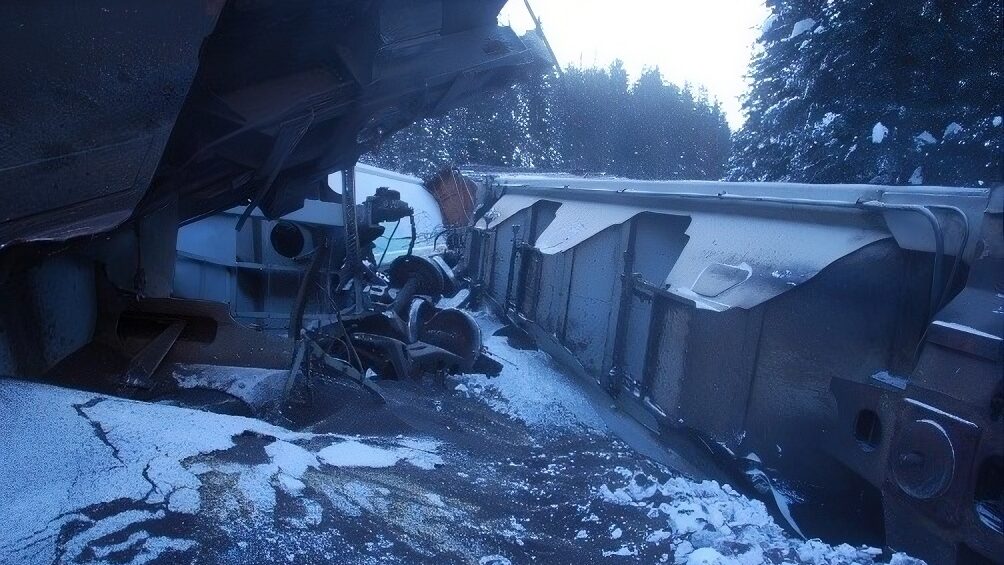
Ardea also says he was not surprised to learn that residents had tried to report the problem to CN and were ignored. He believes that Canadian rail monopolies hold excessive power. He points to the derailment of a CP train in Field, B.C., which killed three workers. Two investigations were launched: one by CP’s private police force, and the other by the Transportation Safety Board, an administrative body with no judicial authority.
CP’s police force closed the case without further action and never turned its investigation toward the practices of the company that employs it. The story put CP in an awkward position when a whistleblower spoke to CBC/Radio-Canada.
Mark Tataryn, one of the investigators assigned to the case, publicly alleged that his bosses had told him to stop investigating. They also reportedly prevented him from accessing important documents, such as inspection, maintenance, and safety reports.
For his part, the Transportation Safety Board’s chief investigator, Don Crawford, went so far as to state that there was “sufficient evidence to suspect negligence in this case,” suggesting that the RCMP should take over the investigation. Crawford was subsequently fired by the Board, which had been threatened with legal action by CP.
A battle to be fought
Félix Vincent Ardea knows full well that this runaway power has to be confronted head-on to improve safety on the country’s railroads. He seems ready to fight alongside his colleagues, both for their sake and for the public’s.
The next step in this battle: the collective agreement for locomotive engineers, conductors, yard coordinators, and track maintenance workers expires on December 31, 2026. The year 2027 could therefore bring the first standoffs between rail workers and the sector’s major monopolies since the 2024 strike/lockout. Issues like fatigue, maintenance, and crew sizes will inevitably come up again, and the outcome of these negotiations could well have an impact that reaches far beyond the working conditions of CN workers.
Be part of the conversation!
Only subscribers can comment. Subscribe to The North Star to join the conversation under our articles with our journalists and fellow community members. If you’re already subscribed, log in.