

On September 8, 350 Dynacare laboratory workers went on strike. On September 9, the Manitoba NDP, which last year signed a five-year contract awarding Dynacare over $42 million annually, forced striking Dynacare workers back to the job. Workers and organizers insist the fight is not over.
Dynacare, owned by the multi-billion dollar American health care giant Labcorp, established a monopoly in private outpatient lab services across Winnipeg in 2018.
Bo, a lab tech at Dynacare who recently retired after 26 years of service, told The North Star that their pay and benefits have eroded over time. Today, Dynacare technicians are paid up to 50 percent less than their colleagues employed at the province-owned Shared Health laboratories.
Ligaya*, another worker, explains that the cost of living crisis is forcing workers to take a stand, but adds that the problem goes deeper: “It is also the amount and quality of work that we do.” Several other workers interviewed said they feel burnt out by the pace of work at Dynacare.
Angela*, who has been with the company for 16 years, described one occasion where she and another coworker were the only people in her lab, and management refused to bring in anybody to support. “It was to the point I had to scream. We need help!”
Despite chronic understaffing, workers say that management tracks productivity and uses this data to pressure employees into working harder, creating intense stress and anxiety for workers.
Bo sees the pressures placed on workers as evidence that Dynacare operates against the public interest, as it affects the quality of the services they provide. “You rush through your day. You are not a caregiver. You are a robot.”
Two weeks before her retirement, Bo’s superiors reprimanded her for reporting that “samples are being compromised because technicians are too overworked to follow important procedures.” It’s important to her “because we view patients as human beings.”
Angela says she feels her colleagues deserve more respect. “Dynacare is very lucky to have us as technicians, because we have empathy and love helping patients, and that’s why we are here.”
“Even though we are hurting and injured, having problems with our hips and shoulders and wrists, we try to meet their needs and to provide comfort as much as we can. We are the ones who look after the patients.”
And these patients still face extremely long wait times, despite massive subsidies and Dynacare’s stated mission to put an end to them. Citing the laboratories’ small waiting rooms, which lead to long lines that stretch around city blocks—even in winter—Bo believes the company’s true mission has been “to monopolize the market.” In Manitoba, half of all blood tests are now performed by Dynacare.
Angela says that when patients with immune issues come into Dynacare facilities, “We have to take them right away because it is not safe to wait here.” She says that this often causes conflicts with patients.
“We’re not supposed to tell them to go to the hospital, even if we can’t help them here. We can get in trouble for saying it because it would be pushing the patients away from Dynacare, no matter how urgent the situation is,” she reports.
Workers fight back
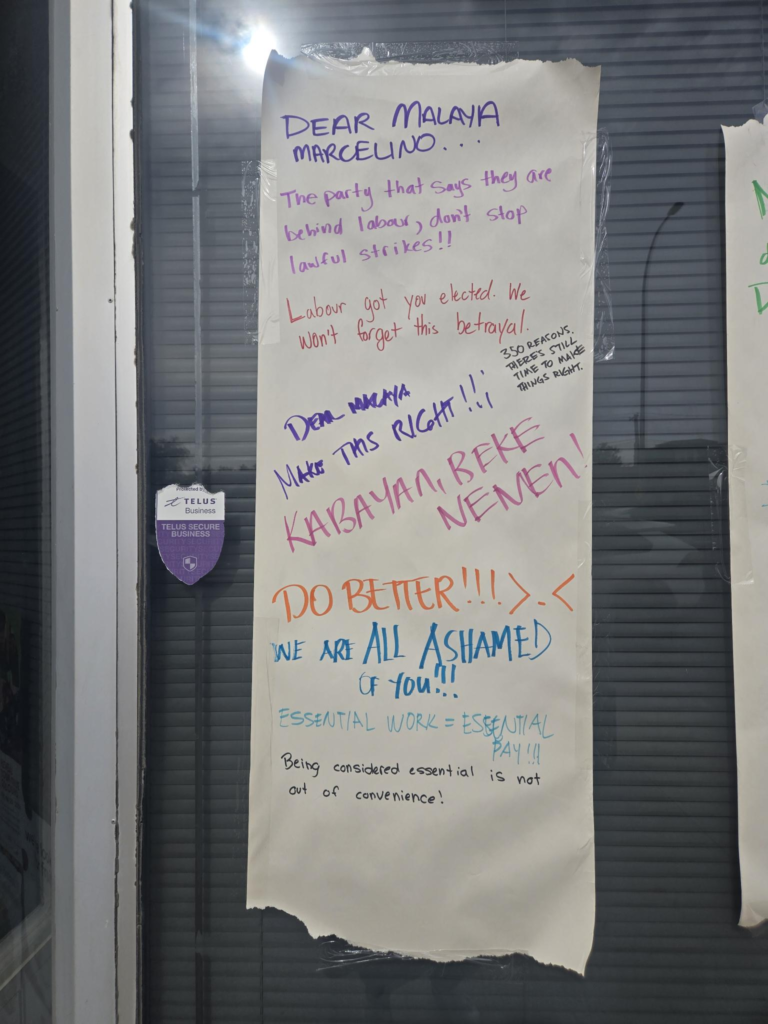
On September 1, the provincial NDP, a party that presents itself as pro-worker and was elected on a promise to reform the health care system, forced Dynacare workers to return to work.
To do so, the Kinew government challenged the “non-essential” status of the lab workers, allowing the Manitoba Labour Board to suspend the strike on September 9—a provision hidden in an anti-scab law passed two years ago.
Faced with a strong public backlash, the Manitoba NDP appeared to equivocate, with Kinew declaring “Dynacare sucks” before accusing the workers of “trying to use the public’s health care as a bargaining chip.”
Yet, “the patients have been trying so hard not to complain,” says Angela. “They are so understanding. They say they’re worried about us and that they support us. They’ve brought us donuts and coffee, and we thank them because that’s what we need. These people appreciate us. But what about the company?”
On October 1, the Labour Board will make a final determination as to the workers’ essential status. If the board sides with the NDP, it is possible that the right to strike will be stripped from Dynacare workers indefinitely.
It was in this context that the Manitoba chapter of Workers’ Alliance held a rally which saw upwards of 50 Dynacare workers and community members gather outside of the Labour Minister’s office on September 20 to voice their dissatisfaction.
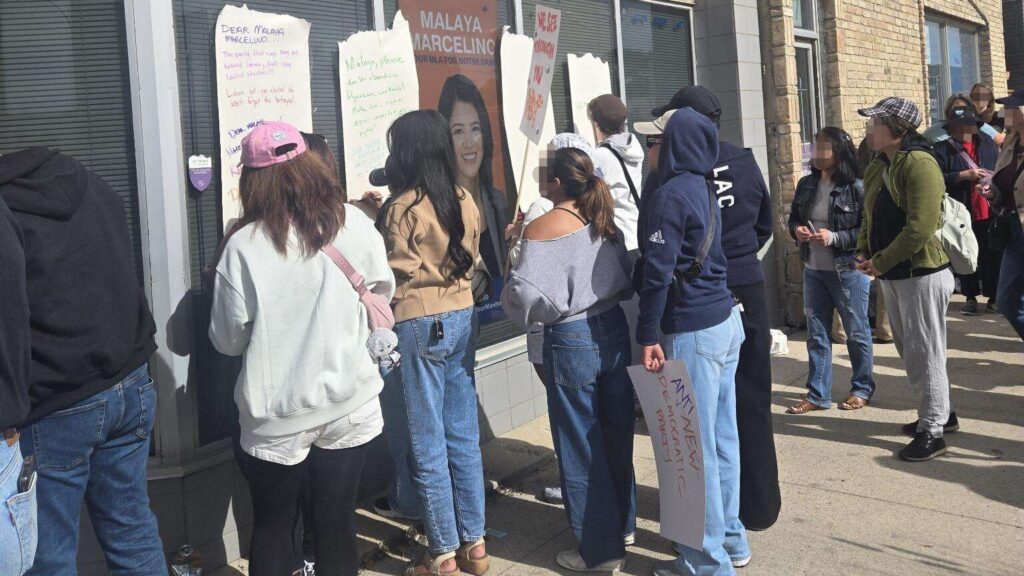
Speaking with The North Star, Simon Pensato, a representative of Workers’ Alliance Winnipeg, argues that workers should keep their heads held high. “It’s wrong to think of this as a defeat,” he says.
“A back-to-work order is a sign that the workers are strong when they strike, that the government is afraid if workers stay on strike that they will win.”
According to Pensato, the root of the problem is the union movement’s dependence on the NDP, rather than on worker militancy, for creating social change. He explains that the NDP’s anti-scab law was presented as the most progressive labour legislation in Canada. “But this legislation is now being used to repress workers and to attack their right to strike. If we want to build power as working people, we need to build it from the shop floor up.”
An effort by Dynacare workers to refuse overtime until negotiations are over provides a clear example of what this can look like. Despite what workers have described as an effort by the company to “demoralize” workers by offering up to triple-time rates for weekend work, a grassroots effort to refuse holds out.
For Ligaya, the decision not to accept these offers is a matter of principle. “I am part of a group of workers who believe management should give us what we want.” For her, taking this principled stand means making a big sacrifice, and she understands that not all of her coworkers can do the same.
But Ligaya remembers the union battle which saw her and her coworkers first unionized with the Manitoba Association of Healthcare Professionals back in 2000, over eight years before Dynacare took over. Through this struggle, she and her coworkers won their pension plan. She says that it taught her to look at the current struggle the same way.
Angela told us that she has been inspired by this message. ”It is because our senior technicians fought that we have our pension system, and thank god that they fought. Those are our elders, and now it is our time!”
She continues, “If Dynacare can do this, they can get away with more in the future, and that is why we are fighting. We are trying to stand strong, and we are trying to get our colleagues to understand. You can’t let them push you around. You have to start fighting now because if they get away with this, then what next?”
*Pseudonyms have been used for workers currently employed by Dynacare to protect them from retaliation.
Be part of the conversation!
Only subscribers can comment. Subscribe to The North Star to join the conversation under our articles with our journalists and fellow community members. If you’re already subscribed, log in.