
One year after the election of Soraya Martinez Ferrada and her party, Ensemble Montréal, is the city doing better? The ruinous state of the roads, the emergence of shantytowns, and phony consultations suggest otherwise. The North Star spoke with a citizen group to get their take on the issue. This first article in a three-part series addresses the issues of homelessness and housing.
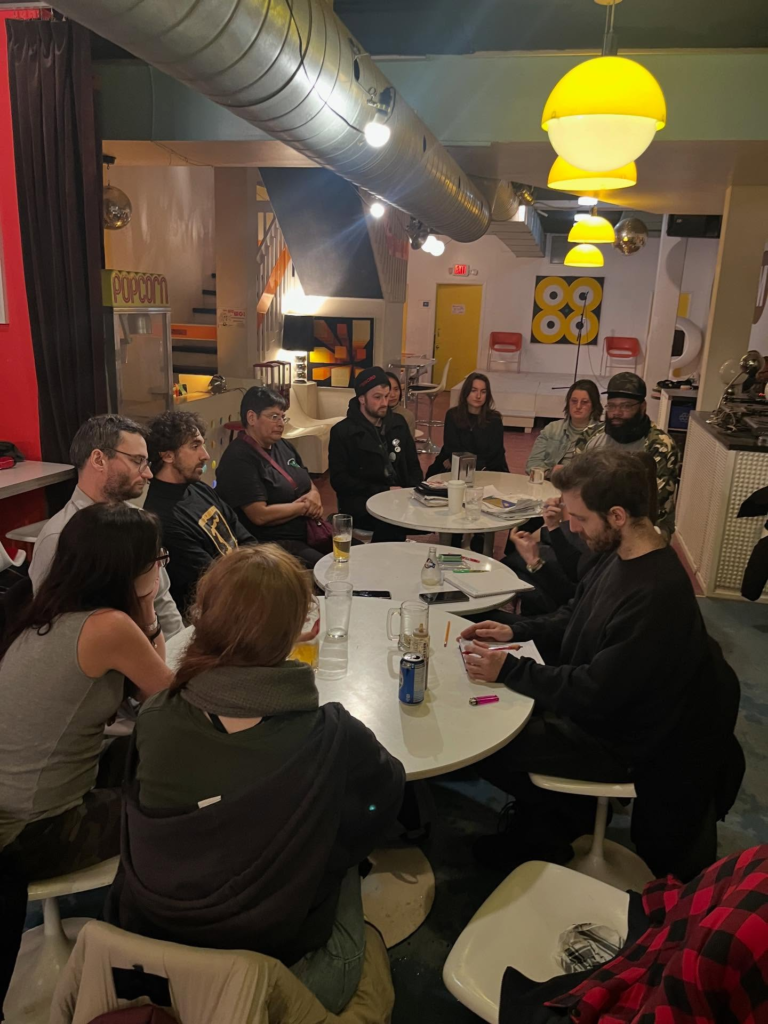
Ligue 33 is a citizens’ organization that has been active for five years in the Mercier–Hochelaga-Maisonneuve borough of Montreal. They became known for campaigning against the biweekly garbage collection that Projet Montréal, the previous leading party, had imposed on their neighbourhood.
According to Jonathan Haiun, the group’s political activities coordinator, “[Ligue 33] advocates on certain issues that concern residents. This is based on the discussions we have with them during community events, such as barbecues. We also go door-to-door throughout the borough.”
Since November 13, 2025, the organization has been dealing with a municipal administration led by the Ensemble Montréal party. Its overall assessment: a generally better atmosphere, but no major changes in how the city is run.
Is there a plan for homelessness?
Since the COVID crisis, homelessness has been a central issue in municipal affairs. Carolyne Chagnon, secretary of Ligue 33, believes the situation has not improved with the change in administration—quite the opposite. As proof: encampments for the homeless are becoming increasingly permanent.
“I can’t believe Montreal is going to have shantytowns. I just can’t believe it. It’s human misery.” More and more encampments across the city now feature wooden structures, sometimes consisting of several rooms. She even recounts meeting a man in Hochelaga who was building himself a makeshift shelter out of bricks.
Over the past year, Carolyne and other members of her group have made several visits to talk with people in the encampments and around shelters. These conversations have allowed her to develop an informed opinion about the Encampment Management Protocol, a document produced by the new administration to promote coexistence between residents and homeless people.
The verdict: it’s practically useless. “The protocol is very vague. When you read it and analyze it, there’s no framework—there’s nothing.”
This lack of clarity reportedly characterizes Ensemble Montréal’s entire strategy for combating homelessness. According to Jonathan, “There isn’t really a solution being put forward.” The only notable change so far appears to be the increase in funding allocated to homelessness services.
Carolyne is critical of this approach. “It’s all well and good that they’ll keep telling us over and over again that they’re putting money in, putting money in, putting money in… But that doesn’t mean the solutions will be there at the end of the day.”
The two Ligue 33 members wonder whether the Martinez Ferrada administration intends to propose a change of course on the issue. “Do they really plan to take action and make a difference, or are we just going to be asked to wait forever while these problems become permanent?” asks Jonathan.
Transitional housing
During the election campaign, Ensemble Montréal promised to develop “at least 2,000 units of transitional and permanent housing with psychosocial support during its first term,” with the specific goal of getting people off the streets. So far, The North Star has only been able to identify 45 units that will be renovated by the city and are intended for people who would otherwise be living on the streets.
The city administration has, however, granted permission to nonprofit organizations to build such housing on vacant land it owns. Carolyne thinks the party may be waiting for funding promised by the recently elected provincial government before announcing other projects.
In the first few weeks of her term, the mayor had opened the door to partnering with real estate developers to build transitional housing. In October, the companies Mach, Devimco, and Cogir announced that they wanted to build a 20-story tower to house the homeless. If the project was completed on schedule, it would account for just under a quarter of the housing units promised for the duration of Ensemble Montréal’s term.
The “housing mayor”
Soraya Martinez Ferrada pledged to be “the housing mayor” during the election campaign. She is, in fact, quite familiar with the subject, since she herself is a rental landlord who sometimes circumvents Quebec laws.
The main focus of her campaign promises was to facilitate housing construction by private companies, including nonprofit organizations. “I get the impression that Ensemble Montréal’s main concern is to build as quickly as possible by relaxing standards,” explains Carolyne. She doesn’t view an increase in market supply negatively, though she isn’t sure whether it will actually have a positive outcome.
As for the conditions of existing housing on the island, residents don’t seem to see any change under Ensemble Montréal’s leadership. Through Ligue 33, Jonathan is working with two resident committees in Mercier-Ouest who are calling for a better quality of life.
“I met with [borough mayor] Chantal Gagnon along with a tenants‘ committee. She was really there just to listen,” says Jonathan. “We left feeling a bit disappointed, because the tenants I was with truly believed she was going to come and save them. That wasn’t the case.”
With another citizens’ committee, the one from Cité des âges, he is waiting to hear back from a borough councillor who was also elected under the Ensemble Montréal banner. The committee members “are optimistic about what the city can do for them.” The councillor has, in fact, promised to help the tenants. However, Alba Zúñiga Ramos has not responded to emails from Jonathan.
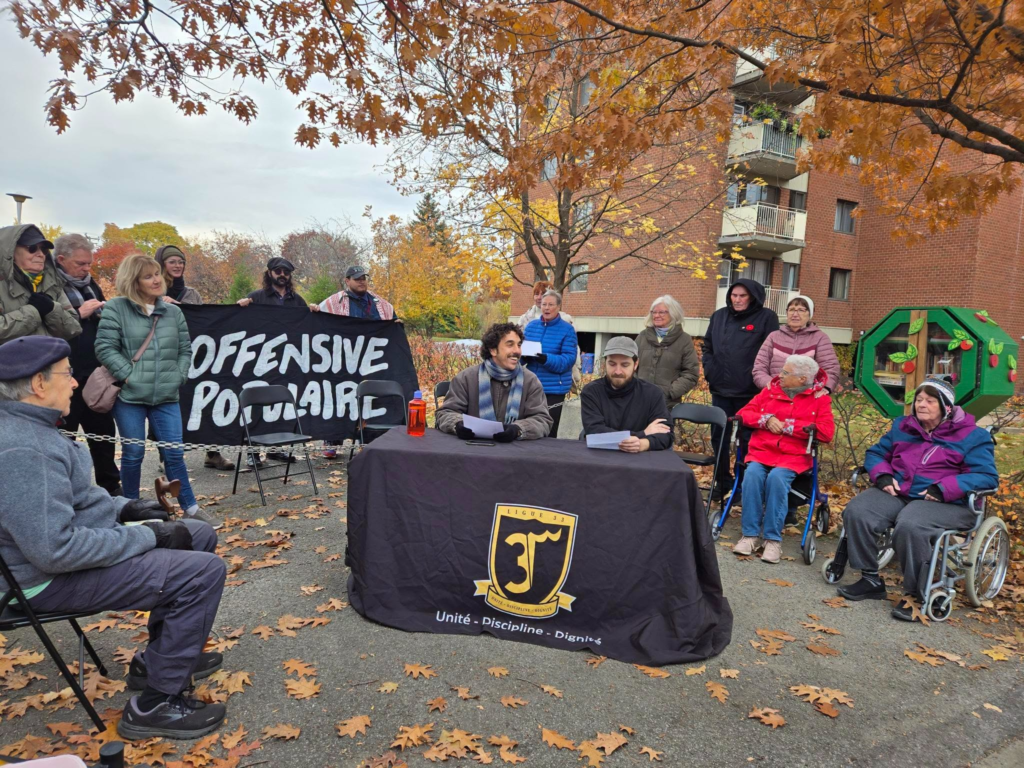
Jonathan is also a member of the group Off the Defensive, which brings together various social movements in Montreal. In the Saint-Laurent borough, where all the council members belong to Ensemble Montréal, Off the Defensive is currently being sued by local big landlords. There, too, there has been no help from elected officials.
The borough mayor of Saint-Laurent, Alan DeSousa, has been approached on several occasions by local tenants, but he has never taken any steps to help them enforce their violated rights.
Instead, he has systematically referred them to the Administrative Housing Tribunal, or sometimes to the Saint-Laurent Housing Committee. Yet DeSousa and his team cut $31,933 from this committee’s funding in early 2026.
In short, Ensemble Montréal might succeed in increasing the number of housing units in Montreal, particularly through private developers. It is concerning, however, that, for now, the only real housing being built for the homeless is makeshift shelters. Similarly, the new apartments may well fail to benefit their future tenants if those in power do not work to ensure that tenants’ rights are upheld in their dealings with landlords.
Be part of the conversation!
Only subscribers can comment. Subscribe to The North Star to join the conversation under our articles with our journalists and fellow community members. If you’re already subscribed, log in.