
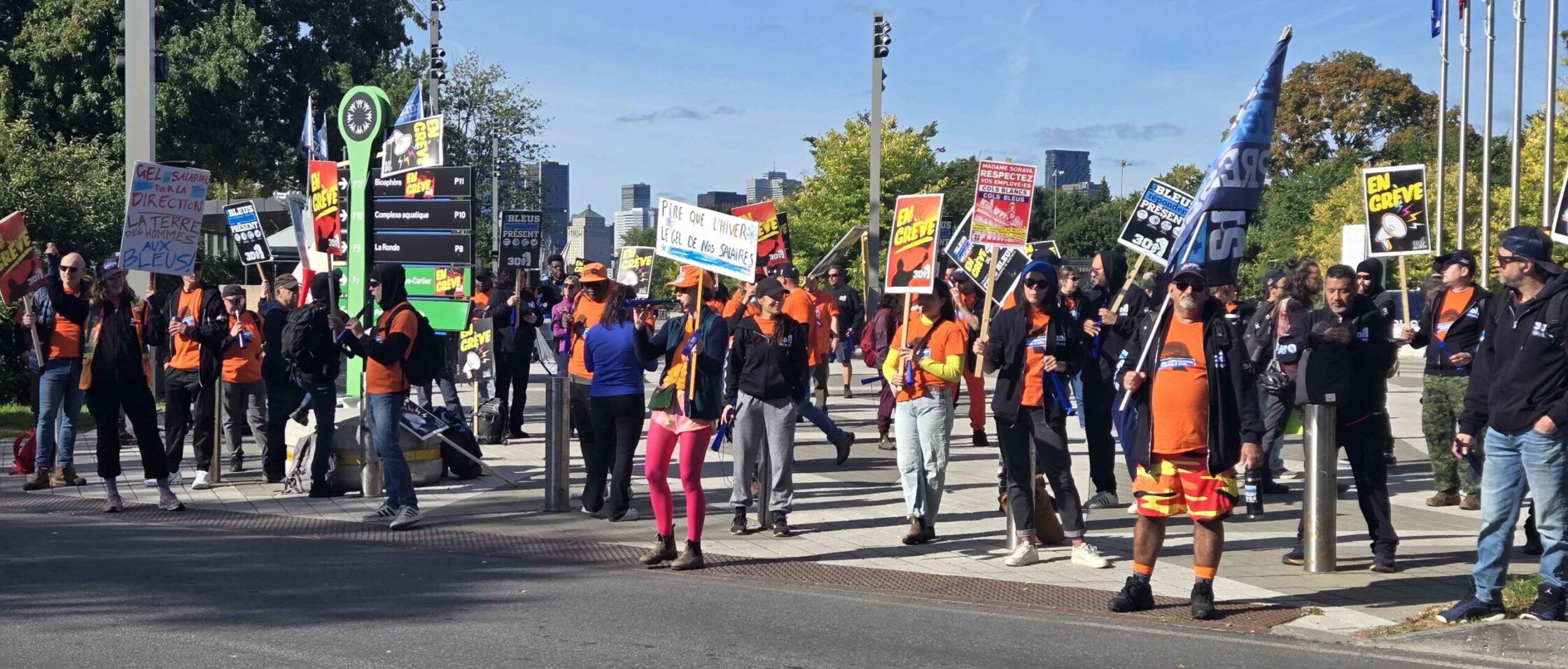
On Monday morning, approximately 300 workers at Jean-Drapeau Park in Montreal went on strike as negotiations with the employer reached an impasse. The park workers have been without a collective agreement for three years.
The strike actions coincided with the UCI Road World Championships, a major cycling event. The Société du Parc Jean-Drapeau, which manages the park, attempted to obtain an injunction against the strike, asking the Administrative Labour Tribunal to consider them essential workers.
Interference from the city and the employer
The employer’s position seems to be that a strike would only be justified at a moment when the workers’ services are not in high demand.
“The Corporation fully respects its employees’ right to strike, as well as the procedures established by law. The proceedings brought before the Administrative Labor Tribunal were not intended to challenge this right, but rather focused on the concept of essential services that must be provided in the context of a large-scale event,“ a spokesperson told The North Star.
“All weekend long, [the employer] argued that their employees were indispensable and important in this way and that,” says Nicolas De Ciccio, the president of CUPE local 301, which represents the workers. “We certainly hope to impress upon them that everything they said—all the nice things they said about their employees—needs to translate into good wages and good working conditions.”
De Ciccio says the city’s executive council also interfered with negotiations by imposing strict financial limits on any possible contract. “While we were negotiating, the managers of Jean-Drapeau Park told us that they had been told by the City of Montreal, ‘You can’t go any further than that because you’ll exceed my financial framework,’” he explains.
“This so-called financial framework is the one that the administration of Soraya Martinez and [city councillor] Claude Pinard has been hammering home to every group in negotiations for the past year or two, yet it is completely out of touch with the reality of the working world.”
Wages and benefits that don’t measure up
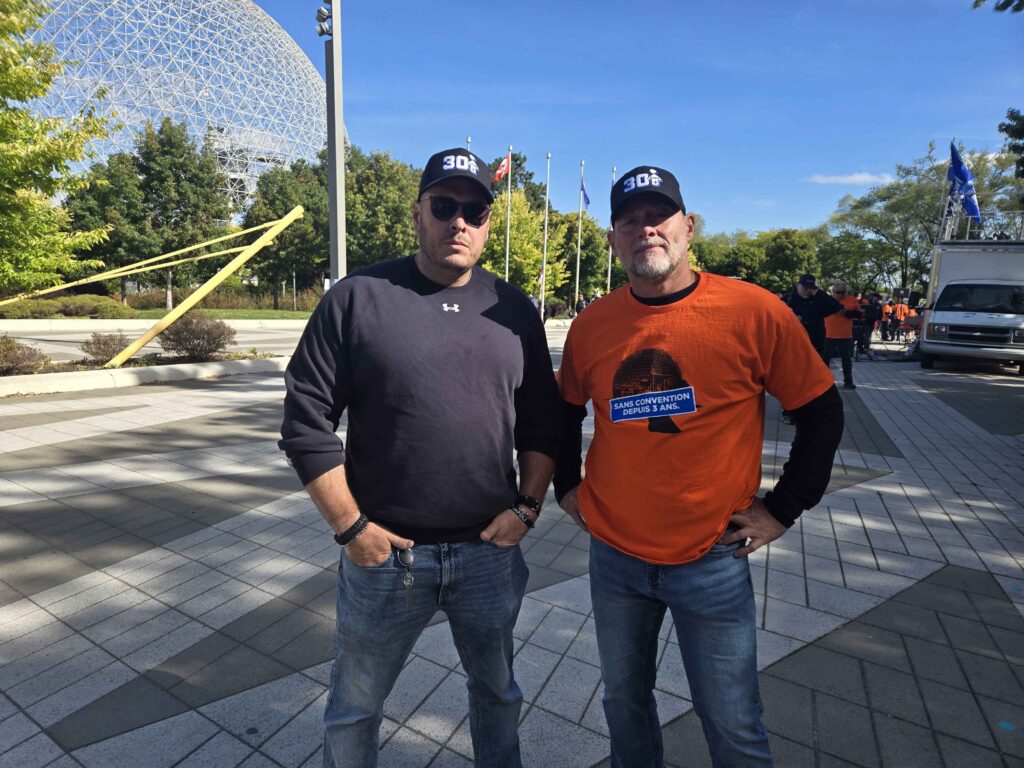
The park workers, who are governed by a different collective agreement than the city’s blue-collar workers, overwhelmingly rejected a “final” offer from the city on September 14. “For us as a union, [a final offer] is unacceptable,” remarked De Ciccio. “We will never recommend a final agreement from the employer. That’s not negotiation—that’s holding a knife to our throats.”
The proposed deal would have resulted in a wage freeze and put insurance and other benefits effectively out of reach for many of the park’s seasonal workers.
“They removed the five-year seniority clause on accessing health insurance,” explains Anne*, a park employee. “They set an hour threshold that our seasonal workers still don’t typically meet. So, people were pissed. People were insulted.”
Anne says the wages of workers at the park are far below those of their counterparts employed directly by the city or by the STM. “We’re getting paid nine to 13 dollars an hour less than a lot of people who do very similar work. If you’re working at the City of Montreal at their bottom salary tier, you’re emptying garbages, cleaning bathrooms, cleaning offices—all the same stuff that we do here.”
The city’s blue-collar workers are also in negotiations, having been without a contract since the end of 2024.
A question of tactics
The strike comes three months after the park workers voted to begin a campaign of pressure tactics when negotiations hit an impasse this summer.
“In early July, we secured a mandate to use pressure tactics, including an indefinite strike if necessary. We organized visibility campaigns—you could see the colourful stickers and T-shirts,” says Di Ciccio.
Anne says she and her colleagues would have liked to see the union take a more aggressive approach. “The union was talking about how […] we’re gonna do t-shirts and stickers and car magnets to piss off the boss while they’re walking through the parking lot. People wanted more. People wanted combativity. They wanted direct action.”
*A pseudonym has been used at the request of the interview subject.
1 Commentaire
[…] Jean-Drapeau Park workers strike during cycling event […]
Be part of the conversation!
Only subscribers can comment. Subscribe to The North Star to join the conversation under our articles with our journalists and fellow community members. If you’re already subscribed, log in.