
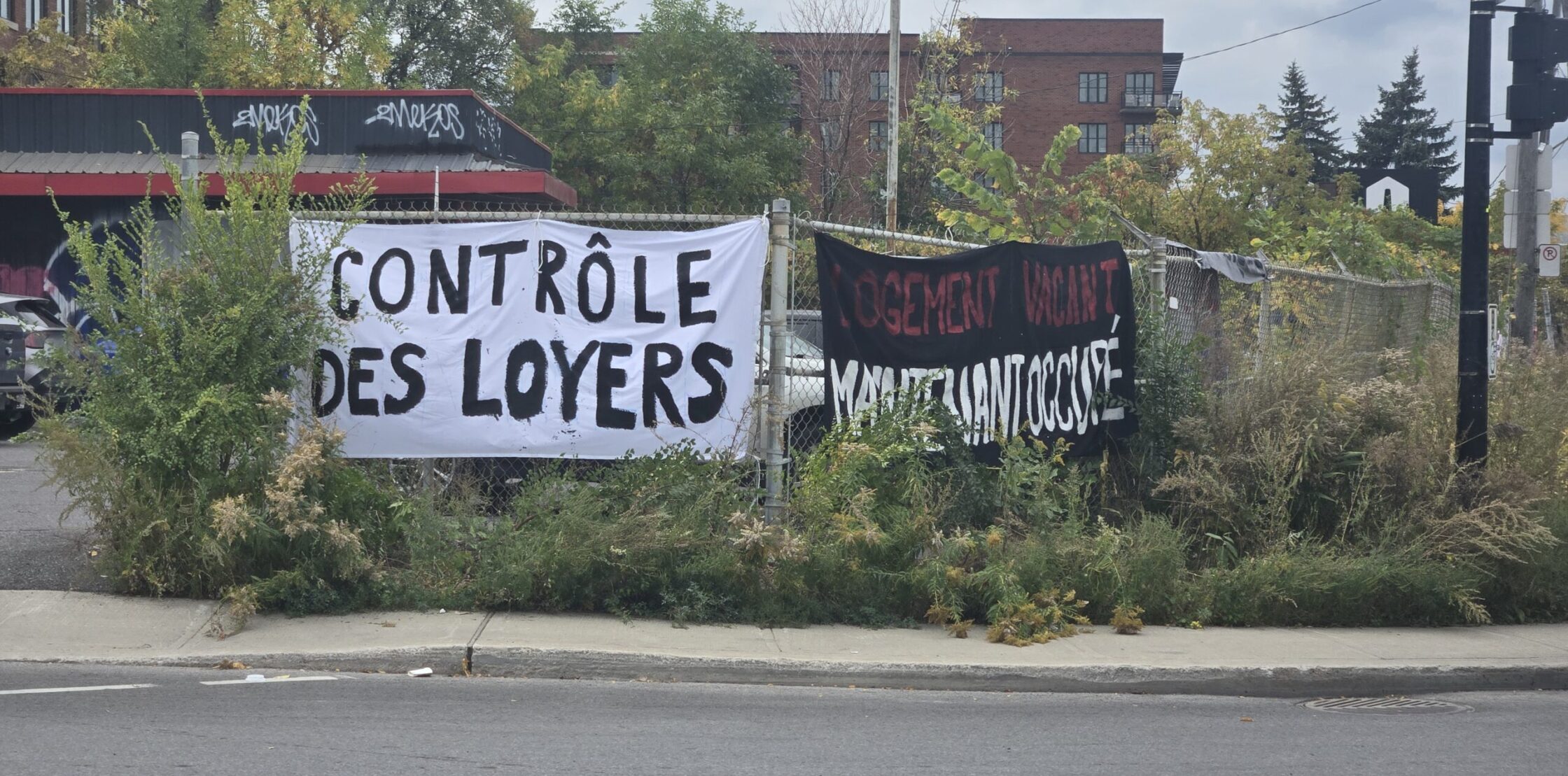
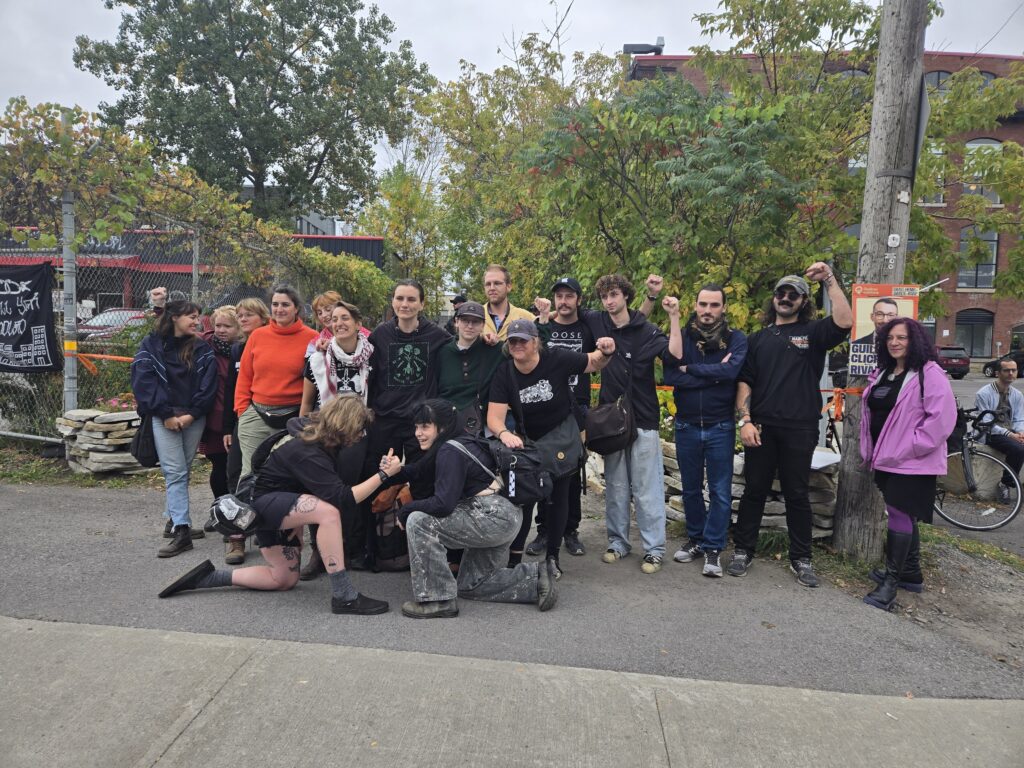
Housing activists occupied an abandoned building in Montreal‘s Côte-Saint-Paul neighbourhood for three nights before being removed by police on Thursday. As Quebec elections loom, the political squat drew attention to a lack of affordable rental housing that has grown dramatically worse in recent years.
The squat was organized by the Coalition Against Expensive Housing (COLOC), which unites several housing and community groups across the province. Organizer Flav Choquette-Giguère of the POPIR housing committee explained the motivation for the occupation at a press conference on Thursday morning:
“The [housing] crisis is marked by 100,000 vacant homes. While the number of people experiencing homelessness continues to rise, tens of thousands of people are on the waiting list for public housing, and people are living in all kinds of poor housing conditions. Abandoned homes are an insult to people who are poorly housed.”
Of these 100,000 vacant units, 20,000 are located in Montreal. The political squat coincided with the Riposte populaire (Popular Fightback), a province-wide week of action against the rising cost of living organized by housing, community and labour groups in the lead-up to Quebec’s provincial elections.
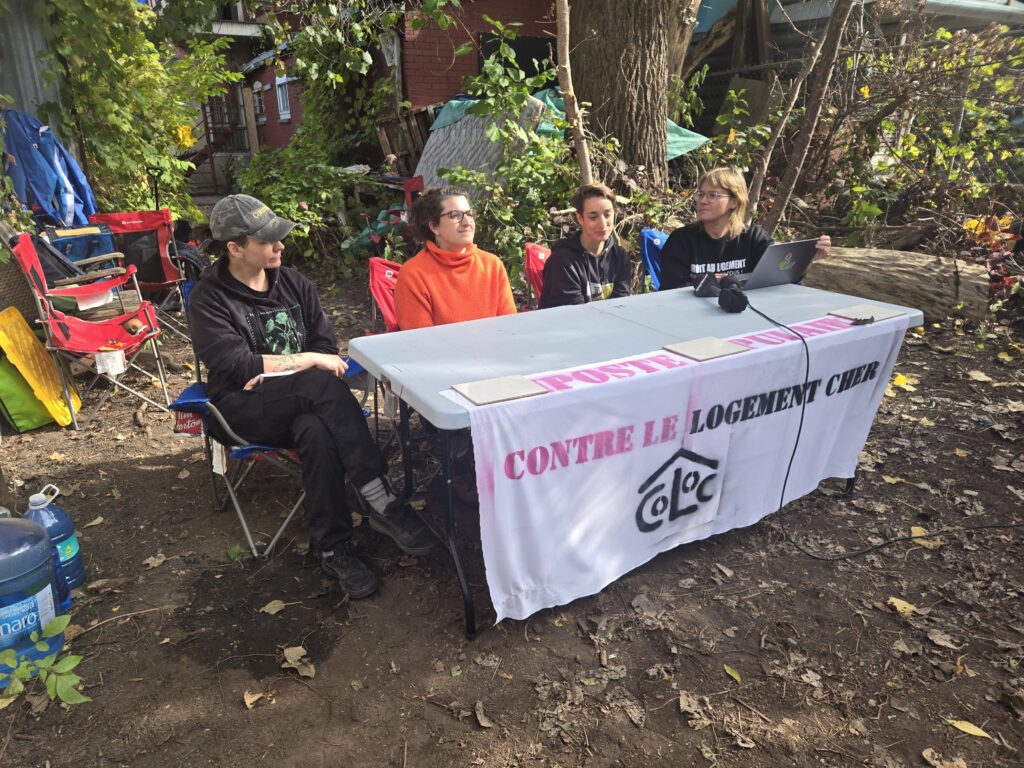
“Knowing full well that even the largest protests in recent years have not stopped the government from ignoring us, we decided to take our political action to the next level by squatting in a vacant building,” explained Choquette-Giguère.
“Squatting serves to bring attention to these demands—which were ignored during the election campaign—and to remind the public that we have the power to take action and mobilize.”
Inside the squat
At the triplex, activists had set up floor coverings, inflatable mattresses, and even a chemical toilet. Sympathizers delivered food, and a qualified neighbour helped remove the electrical panel to ensure the squatters’ safety.
Choquette-Giguère sees the abandonment of this building as an example of the flagrant waste of resources permitted by a market-based housing paradigm: “Workers don’t build housing to make the world richer. We build housing and extract resources so that people can live in them. Something like this, which six years ago was probably still livable, is being wasted so that a property owner can make money in 15 years, when he’ll be able to tear it down.”
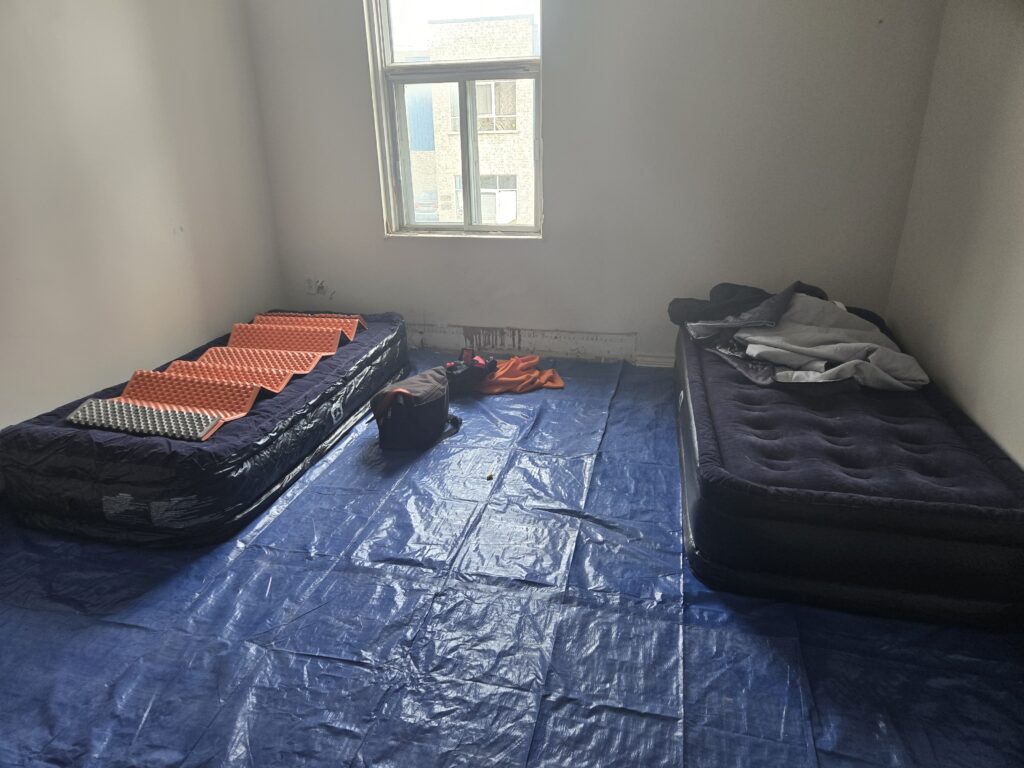
The squatters maintained a consistent presence at the building over three days and nights, with 10 people at a time sleeping in shifts. To keep up the momentum of the mobilization, they organized daily activities with supporters such as film screenings and a banner-making workshop.
The activists had hoped to maintain the squat at least until election day on October 5, but a group of 20 or so Montreal police officers forced them out of the property on Thursday afternoon.
Tenants’ needs ignored by electoral parties
Véronique Laflamme, spokesperson for the People’s Action Front for Urban Redevelopment (FRAPRU) finds the housing proposals of the province’s political parties are sorely lacking. “In fact, the right to housing wasn’t even discussed during the campaign. We keep hearing about the need to increase the supply, and that should worry us, because if we continue to flood the market with very expensive housing, all tenants will become poorer.”
In Quebec, “affordable housing” is defined as any housing whose cost is below the median market rate. According to the rental market analysis firm Door Insight, the median rent for a two-bedroom apartment in Montreal last month was $1,895 per month—nearly $23,000 per year.
The rhetoric of provincial party leaders has indeed focused on increasing the housing supply. All have promised to stimulate new construction through tax rebates, deregulatory measures, or both.
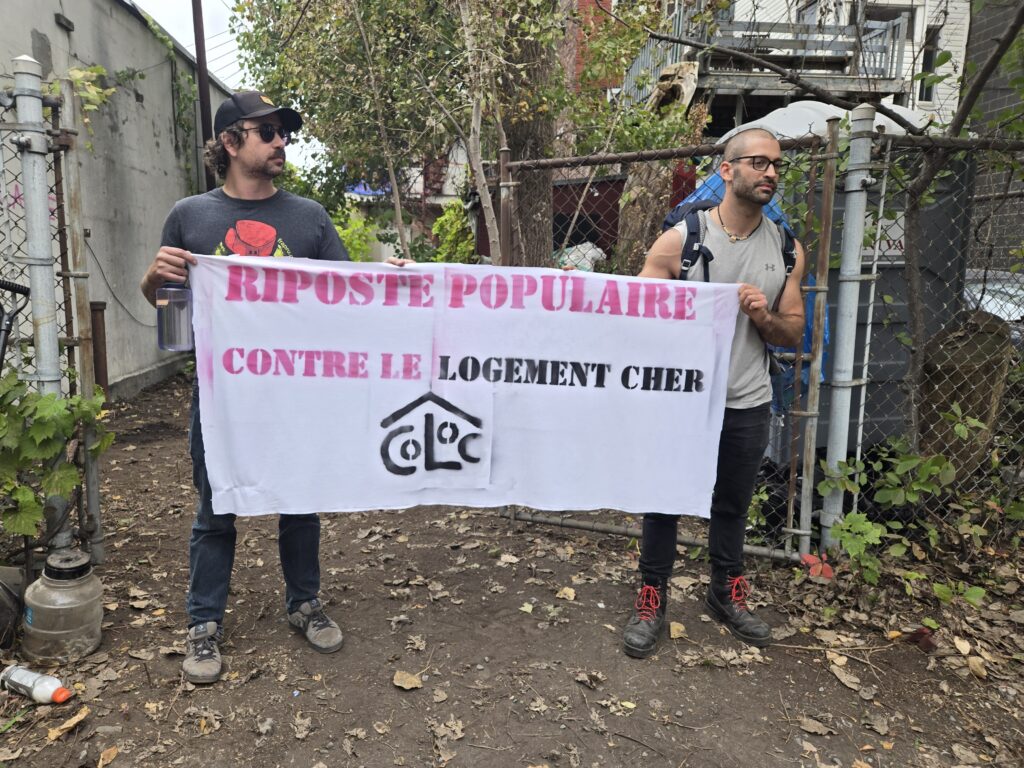
“Because of the supply-and-demand rhetoric—which claims that we simply need to build more to help tenants—we’re seeing hundreds of condos go up, even as high-rises in our neighbourhoods near downtown remain virtually empty. Residents earning less than $2,000 a month will find no relief from the so-called affordable housing currently being promised, which will cost more than $1,000 a month,” says Choquette-Giguère, pointing out that tenants’ incomes have not kept pace with the skyrocketing cost of housing.
Only Quebec Solidaire has proposed a modest rent control measure: capping rents at the rate of inflation, with exceptions for landlords who, for example, undertake major renovations.
Quebec Solidaire, however, did not take a position in favour of the squat. On Instagram, squat participant Lyn O’Donnell denounced the silence of the party’s local MP, Guillaume Cliche-Rivard. “Where is Quebec Solidaire?” she asks in a video that nears 2,000 likes.
Further action on housing
Also on Thursday, the COLOC held demonstrations in the northern town of Rouyn-Noranda, in Quebec City in front of the National Assembly, and in downtown Montreal.
While the squat and the Riposte populaire call for commitments from political parties, Choquette-Giguère hopes it will also help to promote a paradigm shift with respect to housing:
“It’s a collective asset. It’s our collective resources. It’s our collective labour. I think we need to adopt this perspective on our buildings—to say, ‘These are our buildings. You’ve used our collective natural resources. You’ve used our labour. If you don’t maintain them, we will.’”
Be part of the conversation!
Only subscribers can comment. Subscribe to The North Star to join the conversation under our articles with our journalists and fellow community members. If you’re already subscribed, log in.