
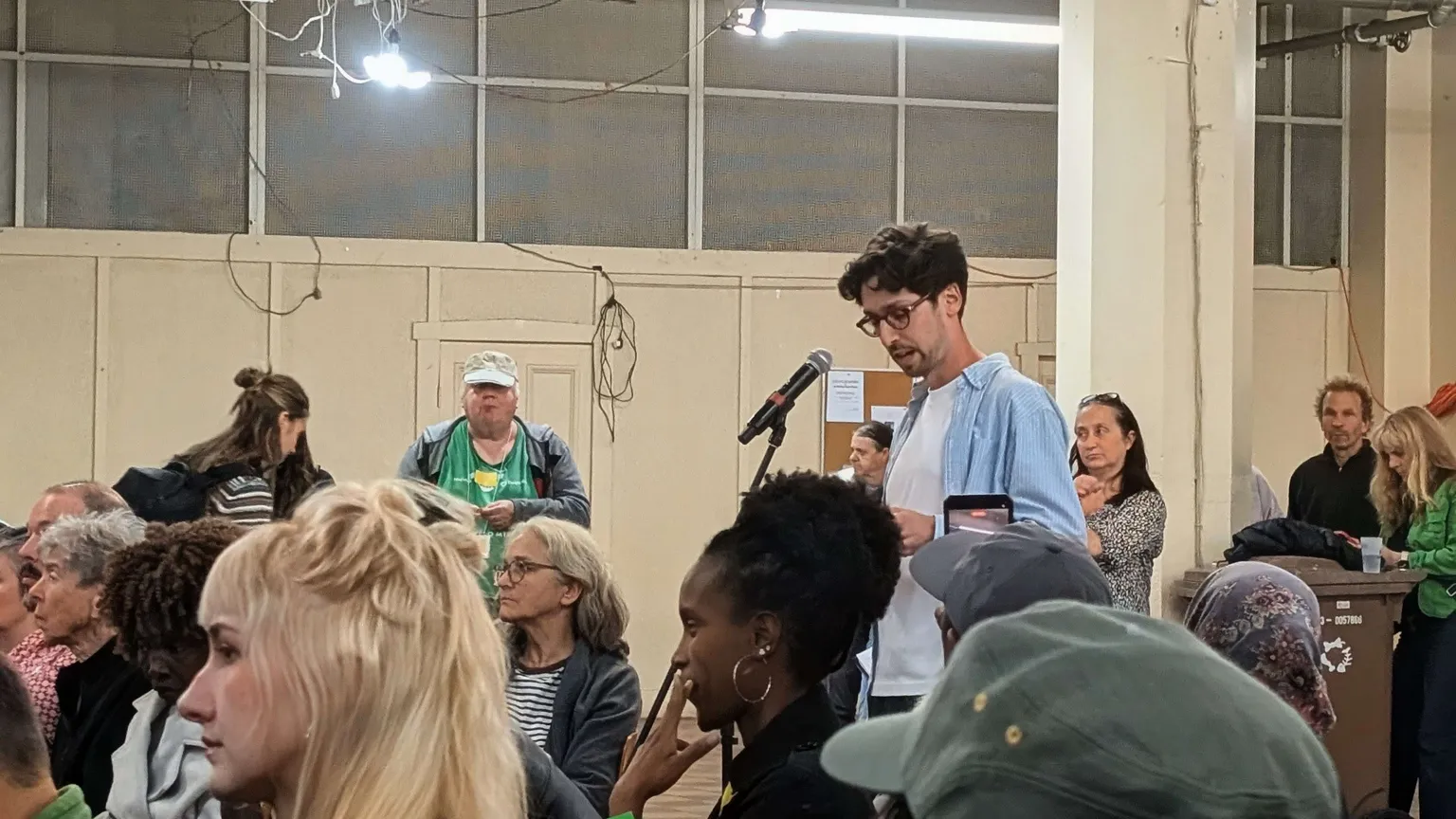
Is the Quebec election happening only on TV? Are politicians listening to the people? During this campaign, journalists from The North Star in Montreal decided to attend local debates in the city to assess the state of a system that has been sold to its people as one of the best democracies in the world.
Three debates were therefore selected as a sample: one in the Verdun riding, one in the Mercier riding, and one in downtown Montreal.
Verdun
At a debate organized by community organizations in Verdun on September 17, nine of the thirteen candidates went toe-to-toe. The most notable absence of the evening was the CAQ candidate, researcher and business owner Roseline Olory. She did not seem to consider it worthwhile to come and answer her constituents’ questions on topics such as the housing crisis and the genocide in Palestine.
After a question on the latter, Antoine Dionne-Charest, the Liberal candidate and son of former Premier Jean Charest (whom many remember for his corruption scandals), said he did not want to “import conflicts,” though he was forced to admit that the situation in Gaza is “a human tragedy.”
Whether he liked it or not, Charest found himself at the centre of the event’s discussions. Several members of the audience, as well as candidates in attendance, raised questions about the nepotism associated with his candidacy. The professional consultant did not see fit to reassure the audience on the subject, instead letting out sighs of annoyance and frustration when addressed as “Mr. Charest.”
Mercier
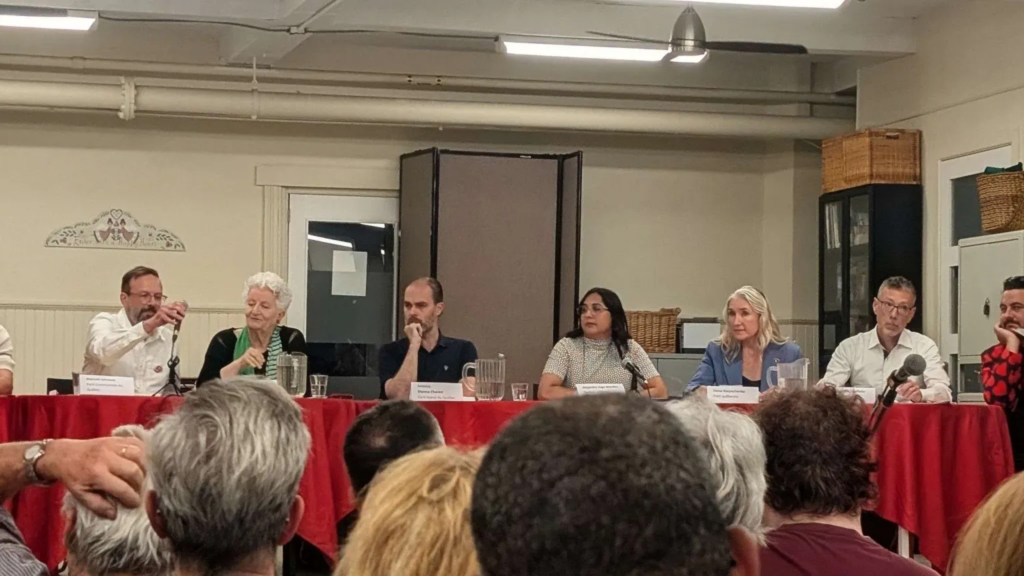
At the debate in Mercier on September 21, the CAQ was again absent—as were most of the other parties. Only Ruba Ghazal (Québec Solidaire), a former factory manager; Thierno Diallo (Liberal Party), the current Commissioner of Economic Development for the City of Montreal; and Adrien Welsh (Communist Party of Quebec), a professional activist, deemed it appropriate to answer questions from their constituents.
Since the event was organized by local community organizations, each candidate repeated ad nauseam their support for their causes, particularly Thierno Diallo. In fact, he repeatedly claimed to represent the underfunded community sector dedicated to helping the poorest, despite the fact that he works with small and medium-sized businesses.
The organizations in attendance asked questions on a wide range of topics, such as homelessness, food insecurity, and the housing crisis. Ghazal and Diallo took turns reiterating the millions their party intends to invest to address these issues, without ever proposing a definitive solution. Welsh, for his part, occasionally attempted to get to the root of the problems, but his academic and somewhat inaccessible language prevented him from connecting with the crowd.
Downtown Montreal
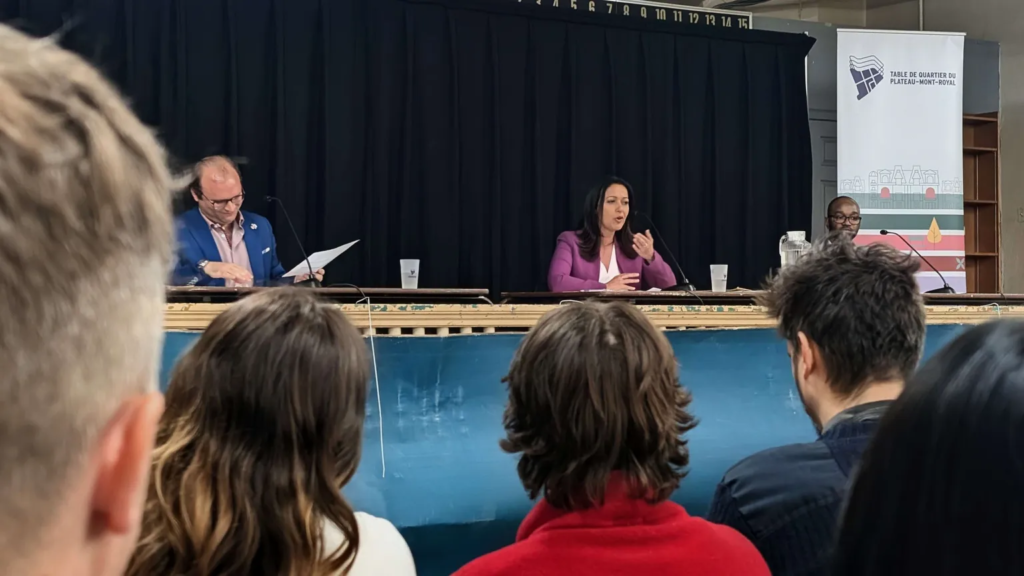
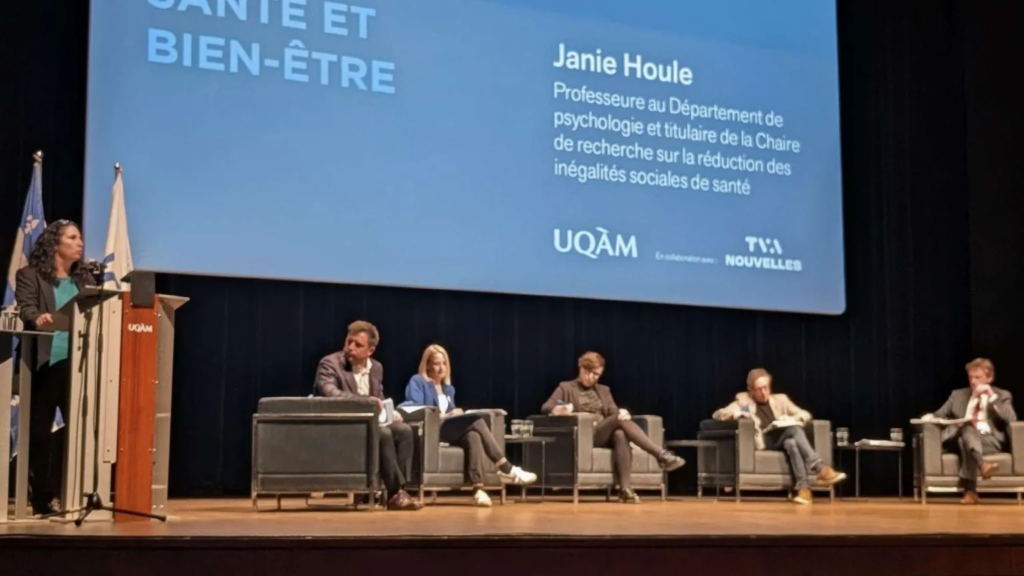
The debate “Let’s Think Big and Loud About the Quebec of Tomorrow,” organized on September 22 by the Université du Québec à Montréal and moderated by Pierre-Olivier Zappa of TVA, followed a slightly different format than the others. This time, there were no questions or audience participation. Instead, the candidates discussed three preselected topics presented by UQAM professors.
As a result, candidates from various ridings representing QS, the PLQ, the PCQ, and the PQ were able to debate in pairs on higher education, health care, and the environment.
As usual, the CAQ was absent from the event, as were all the smaller provincial parties, which do not appear to have been invited. The other candidates therefore took the opportunity to criticize the CAQ’s record and promote their party’s platform, often sidestepping the moderator’s questions.
Lawyer and former business owner Adrien Pouliot of the Conservative Party, in particular, drew a cold reception from the audience of young students by defending shale gas extraction as an environmental measure and attacking the “dogma” of the public health care system.
The elections are on TV
So, is the Quebec election taking place solely on TV? Judging by the local debates, it’s hard to answer with anything other than “yes.” Or at least “mostly.” Whether in terms of representation or content, the cracks were everywhere.
Wherever The North Star went, there were no nurses, factory workers, truck drivers, or hairdressers—only lawyers, consultants, researchers, business owners, intellectuals, and managers. In short, the vast majority of the population was absent from the candidates’ ranks.
It’s no better for the political parties, as local debates rarely brought together the five major parties—let alone the smaller ones—and almost never included all the candidates of the district.
And to say what? Often the same pre-written lines as in the major televised debates. The North Star was unable to identify any particularly original positions.
Questions from the audience sometimes served as a background, but more often than not they were ignored in favour of stock phrases. The candidates did not use these opportunities to get to know their constituents, much less their priorities.
At a time when commentators keep repeating that democracy is “fragile,” party leaders are praising the “democratic exercise” that the debates on TVA, Noovo, and Radio-Canada represented. If democracy is a television series carefully staged by the leaders’ communications teams, we shouldn’t be surprised by its lack of a solid ground.
Be part of the conversation!
Only subscribers can comment. Subscribe to The North Star to join the conversation under our articles with our journalists and fellow community members. If you’re already subscribed, log in.